



Folk Tales
Folk tales are anonymous narratives that recount an event either orally or in writing, combining both poetic (poetry) and prose (plain text) sections. In Turkish literature they emerged after the epic tradition and are regarded as a transitional form between fairy tales and modern short stories.
Folk tales enable children to learn how people in the past lived thought and expressed emotions. They help children understand cultural values language and imagination.
What Are Folk Tales?
Folk tales were typically narrated by ashiks. Proverbs and idioms are frequently used. These tales were transmitted orally from generation to generation and later recorded in writing. As a result various narrative styles emerged.

class=\
Names of Folk Tales in the Turkic World
The term folk tale is known by different names across the Turkic world. In Azerbaijani Turkish it is called “hekâye” in Kyrgyz “angeme” and in Turkmen Turkish “hekâya”.
In certain periods and regions folk tales were also referred to as “boy” “nağıl” or “sergüzeşt”.
How Did They Emerge?
Folk tales emerged after the decline of the epic period. The lengthy heroic narratives of epics gradually gave way to shorter and more realistic stories.
For this reason folk tales are considered a transitional form between epics and the novel.
Themes of Folk Tales
The most common theme in folk tales is love. The struggle of lovers to unite is frequently depicted.

class=\
Heroism and religious themes are also addressed. In some tales love and heroism are combined.
Heroes of Folk Tales
The main hero of these tales is usually an ashik. This figure replaced the “alp” archetype of epics. The heroes possess ideal qualities and are portrayed as brave patient and full of love.
General Characteristics of Folk Tales
Folk tales combine poetry and prose. Events are narrated in prose while emotions are expressed through poetry. Supernatural events are rare. The events and characters are closer to reality. Each tale concludes with a definite ending.
How Do They Differ from Epics and Fairy Tales?
Epics are longer and emphasize heroism. Folk tales are shorter and centered on love. Fairy tales are typically told to children. Folk tales appeal to audiences of all ages and are more detailed.
How Are Folk Tales Narrated?
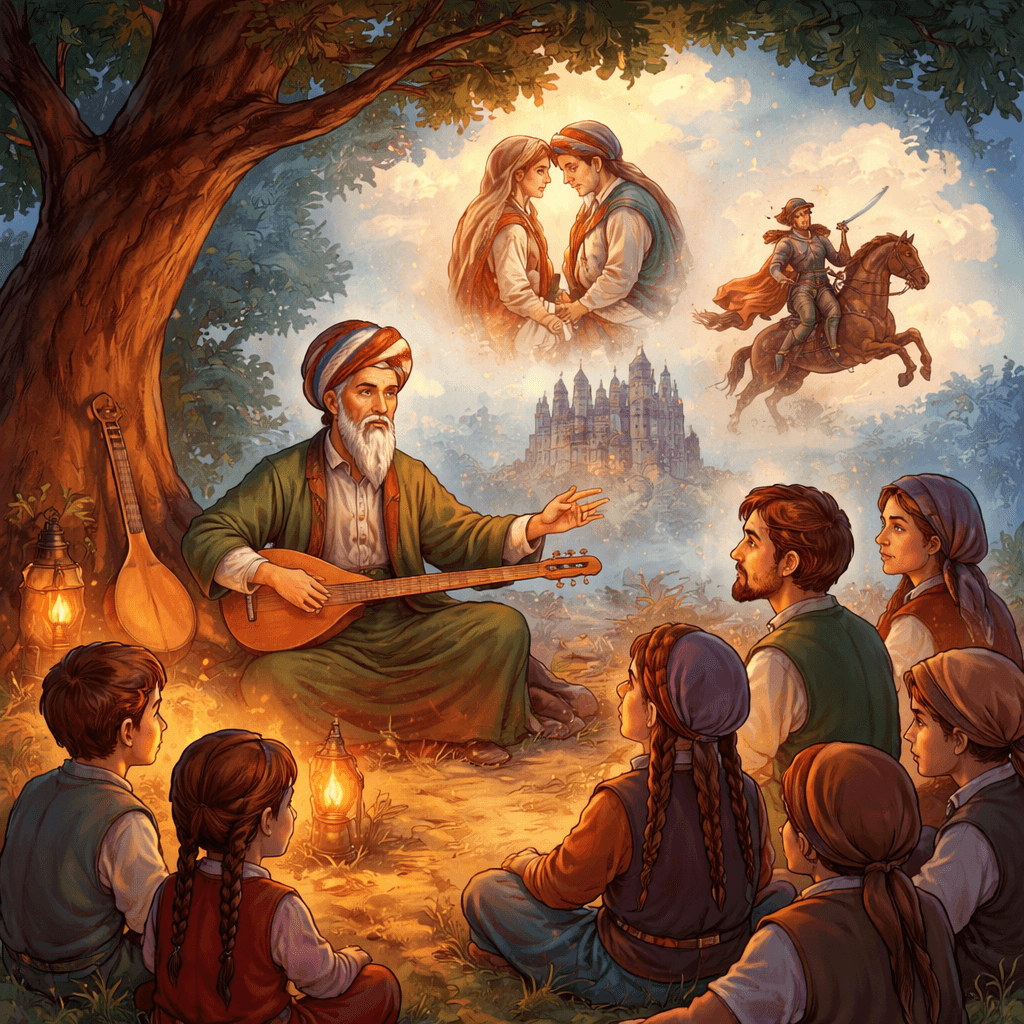
Folk tales are most commonly narrated by ashiks accompanied by the saz. The narrator speaks directly to the audience and draws them into the story. In oral narration tales may be longer. Written versions tend to be more structured.
Types of Folk Tales
Folk tales are categorized by theme into love tales heroism tales and tales combining love and heroism. Geographically they are known in Anatolia a portion of the Turkic world or throughout the entire Turkic region.
Why Are They Important for Children?
Folk tales help children understand their cultural heritage. They support language development enrich imagination and introduce social values.

class=\