




Gambel's Quail
If you saw a cute bird walking through the desert with a tiny, upside-down tear drop on its head, what would you think? This peculiar-looking bird is called the Gambel's Quail. They have adapted so well to hot and dry deserts that they can survive easily even under harsh conditions. Have you ever wondered about the secrets of a bird that lives in the desert? Let’s get to know these charming birds closely!
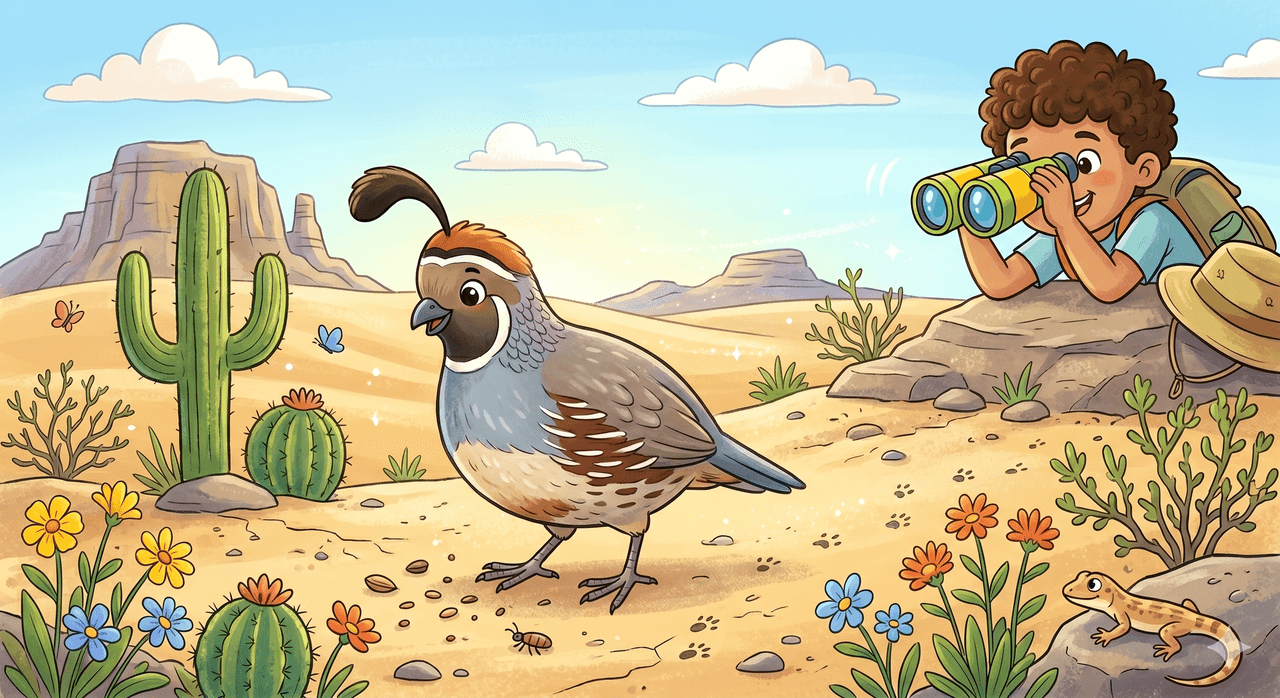
Gambel bıldırcınları çöl ortamında sürüler halinde koşturmayı çok severler. (Yapay zeka ile oluşturulmuştur.)
What Does the Gambel's Quail Look Like?
These birds have plump, rounded bodies. From a distance, they appear in shades of gray and brown, but upon closer inspection, you will notice a black patch on their belly against a buff-colored background. The funny, ornamental feather on their heads is called a topknot.
Male and female Gambel quails look different from each other. Males have black faces and necks, with thicker and more curled feathers on their heads. Females have paler coloring, no black markings on their faces, and finer feathers. An adult Gambel's quail is on average 28 centimeters long and weighs between 160 and 200 grams.
Where Do They Live?
These birds primarily live in the hot deserts of the southwestern United States, especially in Arizona. They choose areas rich in shrubs and thorny plants as their habitat. You can also find them in parts of Texas, California, Utah, Nevada, and some regions of Mexico.
Rather than flying long distances in the air, they prefer to run in flocks across the desert floor. At night, they roost (sleep) in dense shrubs or tree branches to feel safe. Females build their nests on the ground, usually hidden beneath a shrub or rock.
What Do They Eat and Drink in the Desert?
Although the desert is hot and dry, the Gambel's quail has found a solution! Ninety percent of their diet consists of plants. Throughout the year, they happily eat various seeds, leaves, and even cactus fruits.
They obtain the water they need from the green, juicy plants they consume. Thanks to this remarkable adaptation—the ability of a living organism to adjust to its environment—they can survive in arid deserts without ever needing to find a water source.
How Do They Protect Themselves?
The desert is home to many predators such as snakes, hawks, foxes, coyotes, and jackals. When threatened, Gambel's quail do not fly away. Instead, they use a clever tactic: they stay perfectly still. Because their feathers blend with the color of desert soil, when they hide among plants, they become masters of camouflage—blending into their surroundings and becoming nearly invisible.
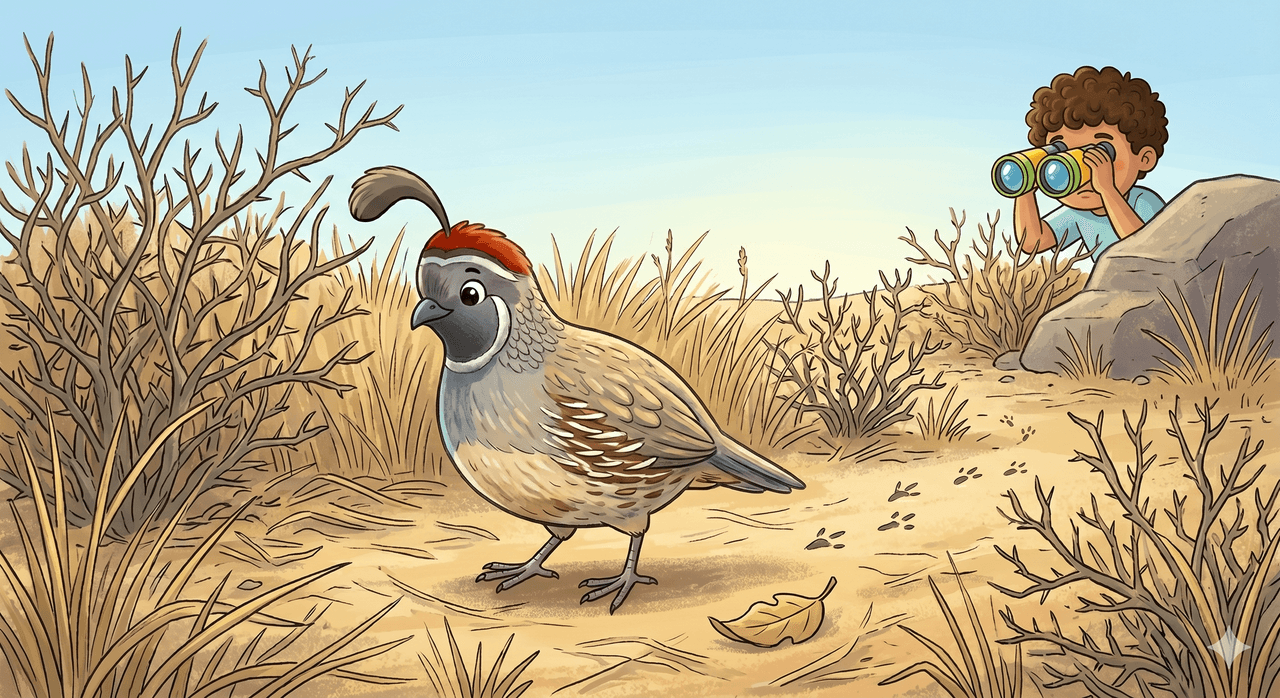
Gambel bıldırcınları kamuflaj yetenekleri sayesinde avcılardan kolayca saklanırlar. (Yapay zeka ile oluşturulmuştur.)
Time Travel
Did you know that these birds, whose natural home is the deserts of the Americas, were transported by ship to the distant Hawaiian Islands in 1928, 1958, and 1960? Today, Gambel's quail still live on the slopes of Mauna Loa volcano in Hawaii.