





Green parrot
Have you ever seen a bird flying in parks with green feathers and a red beak? If so, you have likely encountered a rose-ringed parakeet (Psittacula krameri). Although these birds are native to a different geographical region, they now thrive in urban green spaces. Let us take a closer look at these birds.
What Do They Look Like?
The length of a rose-ringed parakeet is largely made up of its tail. Male birds have a black or pinkish-red ring around their necks, which is precisely why they are known worldwide as the rose-ringed parakeet.
Females and juveniles lack this neck ring and have plain green plumage. In addition, their beaks are red.

(generated by artificial intelligence)
Where Do They Live?
The natural habitats of these birds are Central Africa and South Asia. However, humans have transported them to other countries since earlier centuries as pets. Escaped or released birds have established populations in 37 different countries, from Europe to Australia.
They were first observed in Türkiye in 1976 in Ankara. Rather than rural areas, they prefer urban parks and tree-lined spaces as their habitat. The anthropogenic heat emitted by buildings and the warmer urban climate compared to rural regions make it easier for them to survive during winter.
What Do They Eat?
Rose-ringed parakeets are herbivorous. Their diet includes grasses, flowers, nectar, hard-shelled fruits, vegetables, and various seeds.
While living in city parks, they feed on the fruits and seeds of plants such as acacia, mulberry, plum, and apple. During winter, when food sources become scarce, they also consume seeds remaining on branches and bird feed left by people in parks.
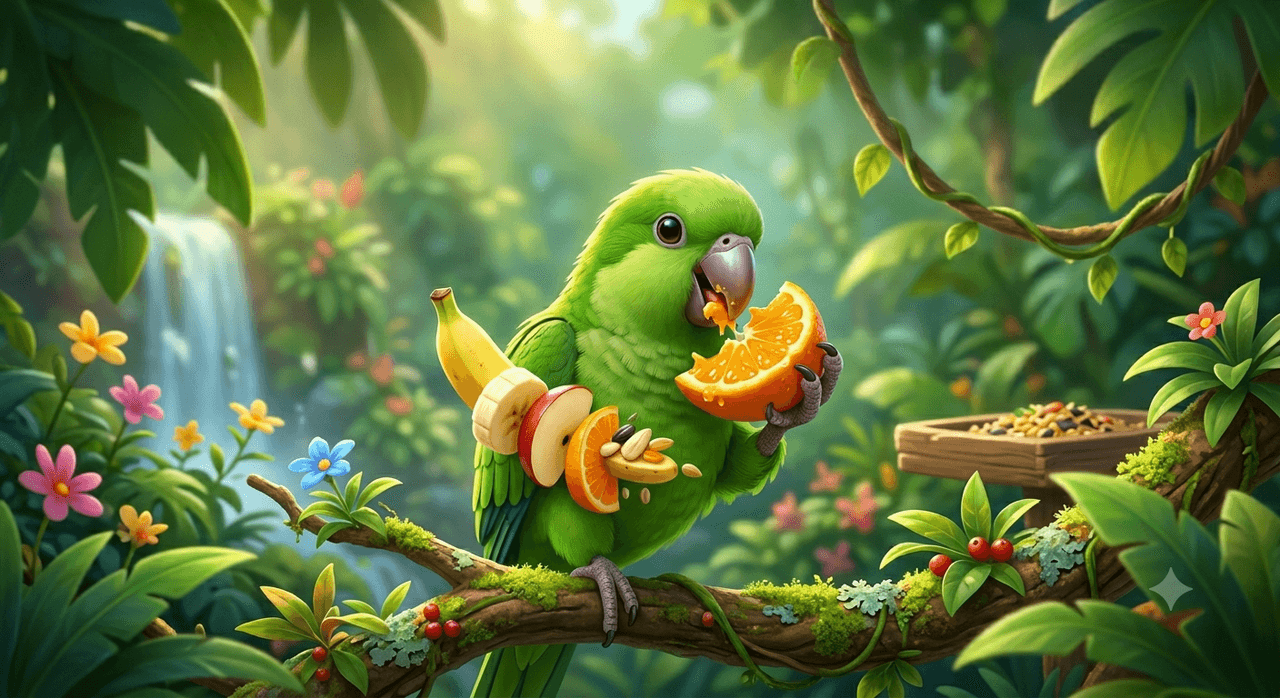
(generated by artificial intelligence)
How Intelligent Are They?
Research has shown that animals possess unique intellectual abilities and can pass these on to new generations. Rose-ringed parakeets have cognitive skills such as problem solving and memory of past events.
As social birds, they communicate with each other through visual and auditory signals. They also have the ability to mimic human speech. Their strong memory and rapid ability to adapt to new environments enable them to survive even in climates very different from their natural habitats.