



Hasan Paşa Hanı
Did you know that at the heart of Diyarbakır stands an ancient building that resembles a giant gift wrapped in black and white stripes? This structure once served as a massive caravanserai where travelers and camels rested centuries ago. Let’s step inside this historic building together!
Who Built This Caravanserai and When?
Hasan Paşa Hanı was commissioned around 450 years ago by Vezirzade Hasan Paşa, the governor of Diyarbakır. Hasan Paşa was the son of the renowned statesman of the era, Sokollu Mehmet Paşa. Construction began in 1572, but when Hasan Paşa was reassigned to another post, the project was completed by his successor as governor.
Why Are There Black and White Stripes?
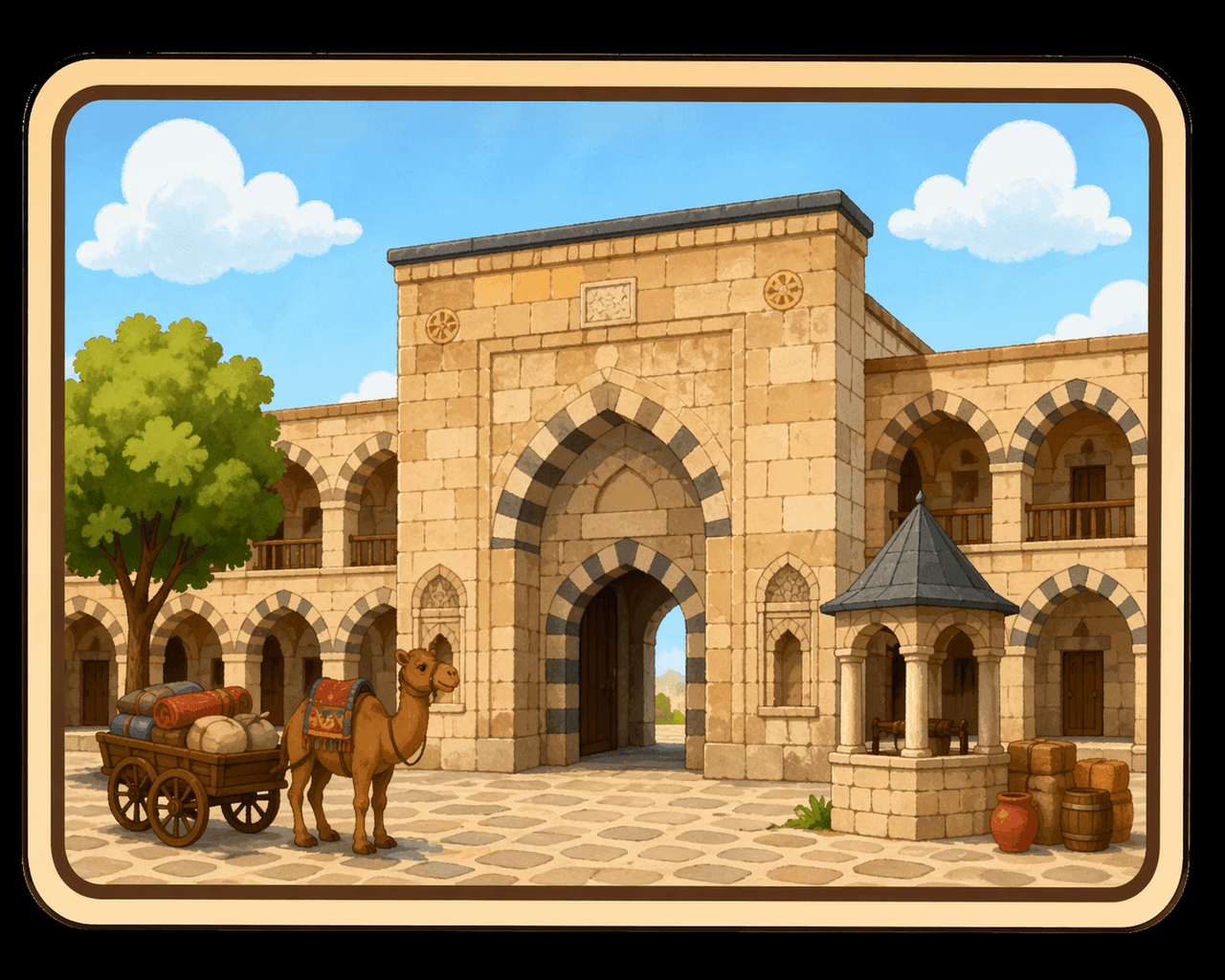
When you look at the exterior of the caravanserai, you immediately notice the horizontal rows of black and white stones. These stones are called basalt and were formed from lava flows from volcanoes surrounding Diyarbakır that cooled over time. The alternating arrangement of black and white stones creates an optical illusion that makes the building appear taller than it actually is.

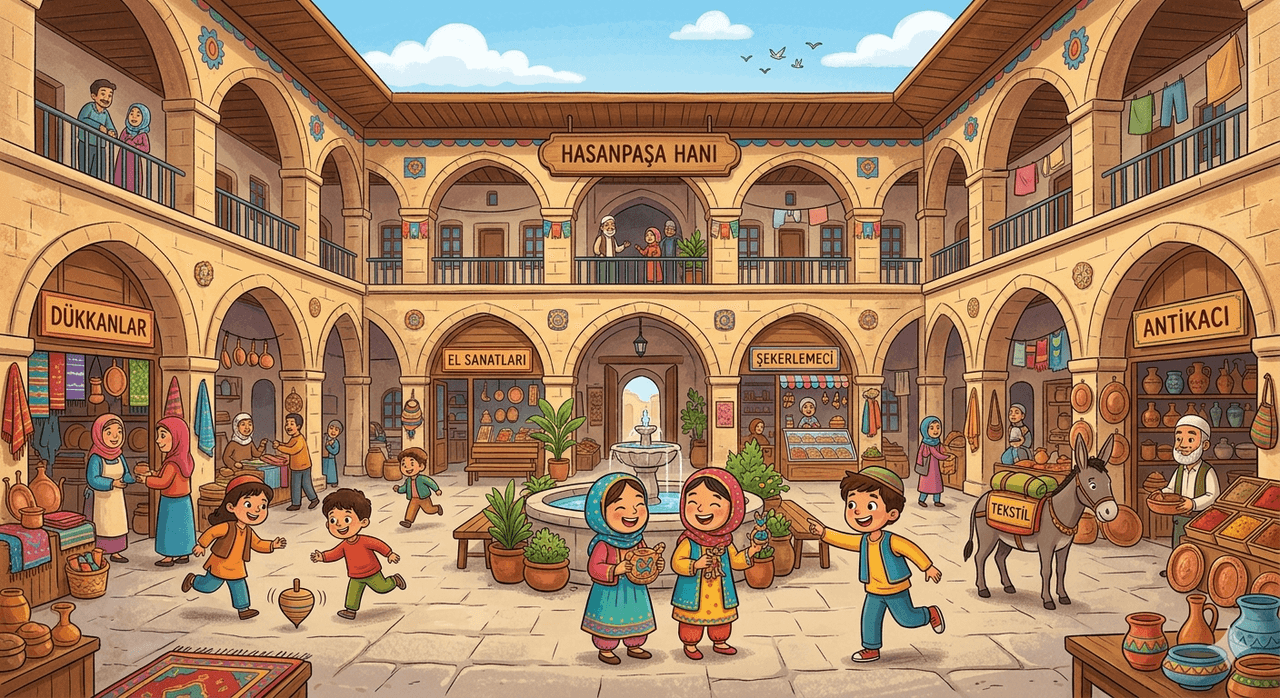
(image depicting Hasan Paşa Hanı) (Generated by artificial intelligence).
At the center of the caravanserai lies a large courtyard with a domed fountain—used for drinking water and washing hands—supported by six columns. This fountain is one of the most beloved and frequently photographed features of the building.
What Used to Happen Here in the Past?
In earlier times, Hasan Paşa Hanı stood along major trade routes. Caravans arriving from distant lands would stop here to rest. The dark and cool basement level of the caravanserai served as a spacious stable for camels and horses. Merchants slept and conducted business in the rooms on the upper floors.
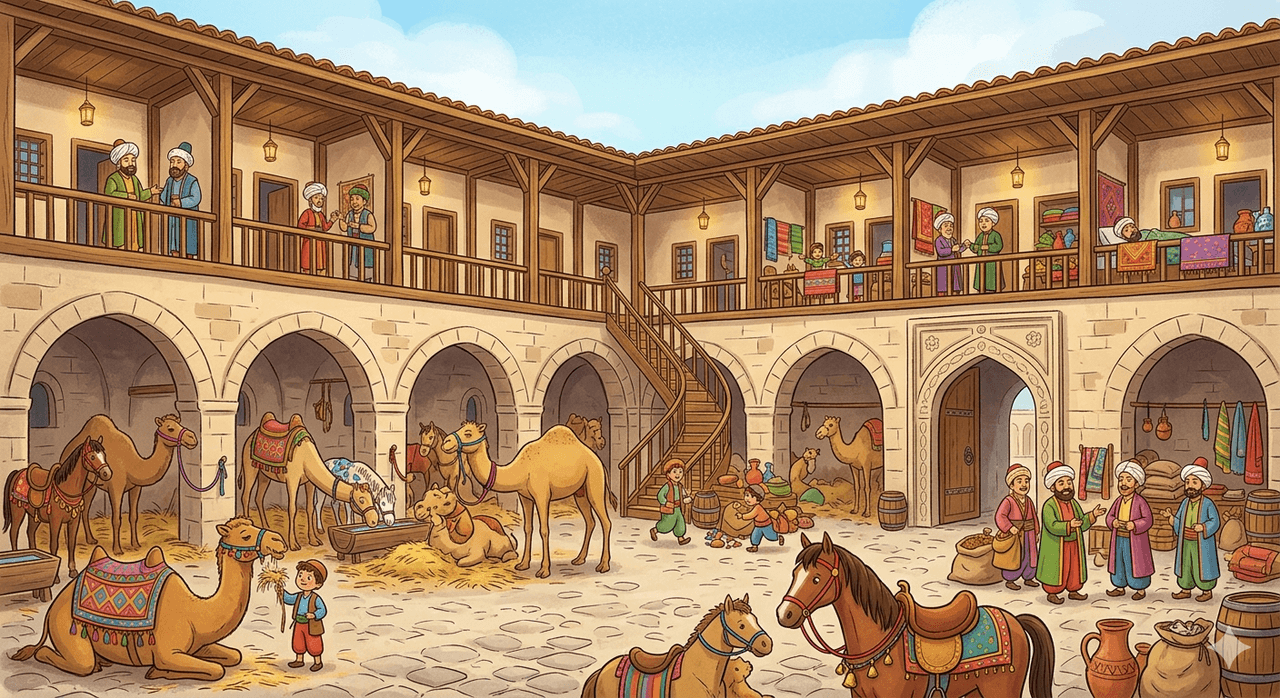
(image depicting caravanserais) (Generated by artificial intelligence).
How Can We Visit the Caravanserai Today?
Today, thanks to a major restoration completed in 2005, the caravanserai has been revitalized and meticulously cleaned. Instead of camels, people now walk its corridors. You can shop in the shops on the ground floor and sit on the balconies above, sipping tea while enjoying the beauty of this historic site.
A Journey Through Time
Built between 1572 and 1575, this caravanserai has stood for exactly 450 years since its completion. At that time, there were no automobiles; people and goods were transported by camels and horses.