




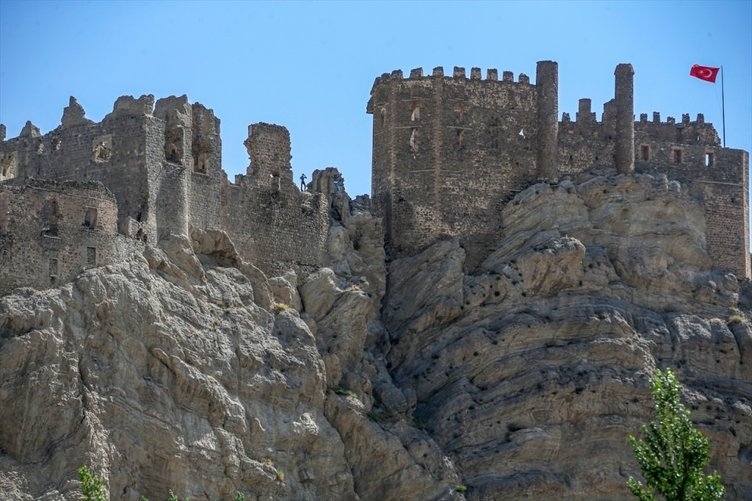
Hoşap Castle
Imagine a fortress that appears like an eagle’s nest, perched on a recorded cliff that is steep and sheer. Hoşap Kalesi stands majestically atop these rocks for centuries in the Gürpınar district of Van. Located in the region known as Güzelsu along the Van-Hakkari highway, this fortress is one of the most significant symbolic structures in the area, attracting the interest of history and culture enthusiasts.

Hoşap Kalesi (Ministry of Culture and Tourism)
Where Is Hoşap Kalesi and How Was It Built?
This impressive fortress is located approximately 60 kilometers from the city of Van. The history of the castle extends back thousands of years to the Urartian State, which inhabited these lands in antiquity. However, the structure as it appears today was constructed by the Mahmudi Beys during the Ottoman period.
A Journey Through Time
According to the inscription (kitabe) above the castle’s entrance gate, the fortress was commissioned in 1643 by Mahmudi Süleyman Bey... Thus, these stone walls are approximately 400 years old!
Hoşap Kalesi consists of two main sections: the outer fortress and the inner fortress. Upon entering, you are greeted by a grand palace complex.
- Inner Fortress: The most secure part of the castle. Here stands the Mahmudi Palace, which contains a harem (family quarters), a selamlık (guest reception area), and a seyir köşkü (viewing pavilion) offering panoramic vistas.
- Other Structures: Inside the fortress, in addition to the palace, there is a mosque, cisterns (water reservoirs), an oven, and even a dungeon where criminals were once held.

Hoşap Kalesi(Ministry of Culture and Tourism)
The Lion Gate and Iron Wings
One of the most striking features of the fortress is its entrance gate, which takes the form of a ceremonial crowned gate reminiscent of a chateau entrance. Lion reliefs flank the gate, giving the impression that they guard the fortress. Additionally, the original iron gate wings remain intact and fully functional.
Hoşap Bridge
Directly visible from the fortress, a graceful bridge spans the Güzelsu Creek. Built in 1671 by Zeynel Bey, this three-arched bridge, with inscriptions in multiple languages, is one of the fortress’s most important neighboring structures.