



How Are Seasons Formed?
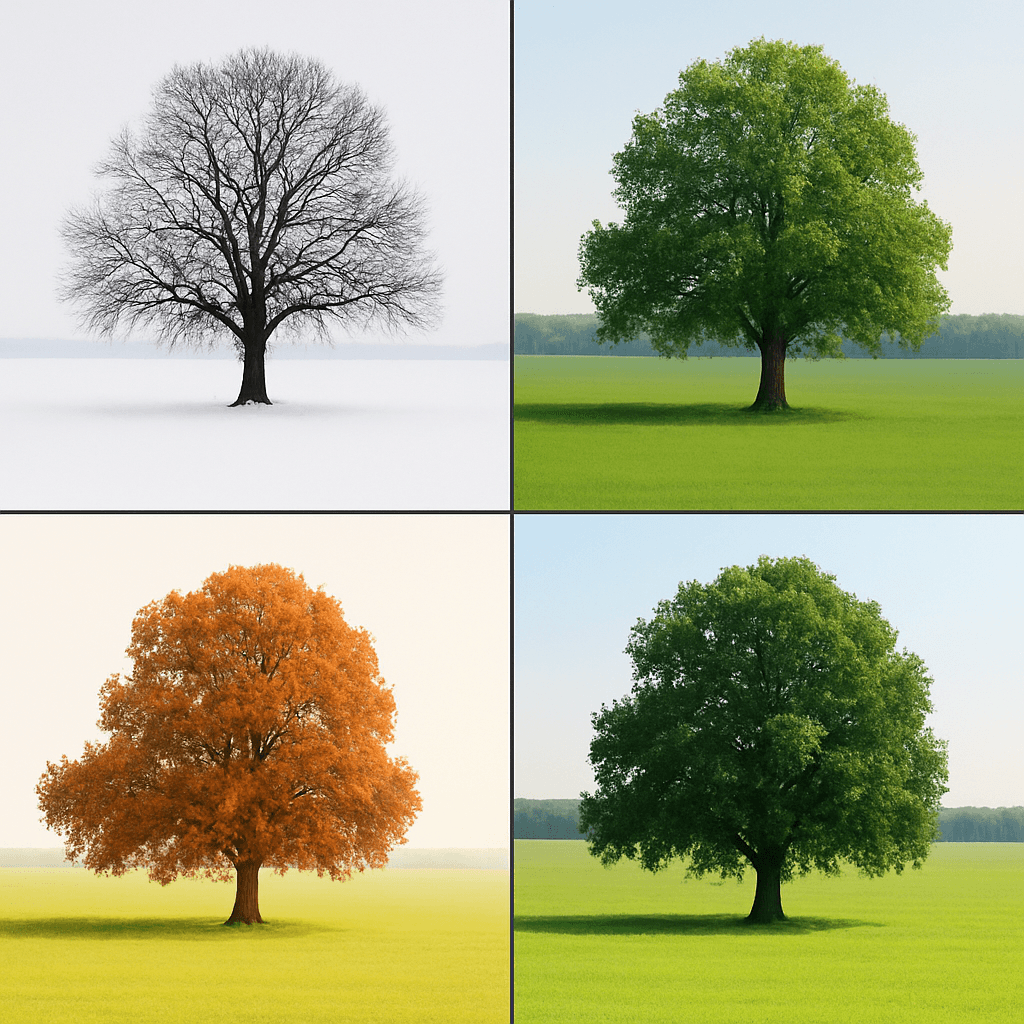
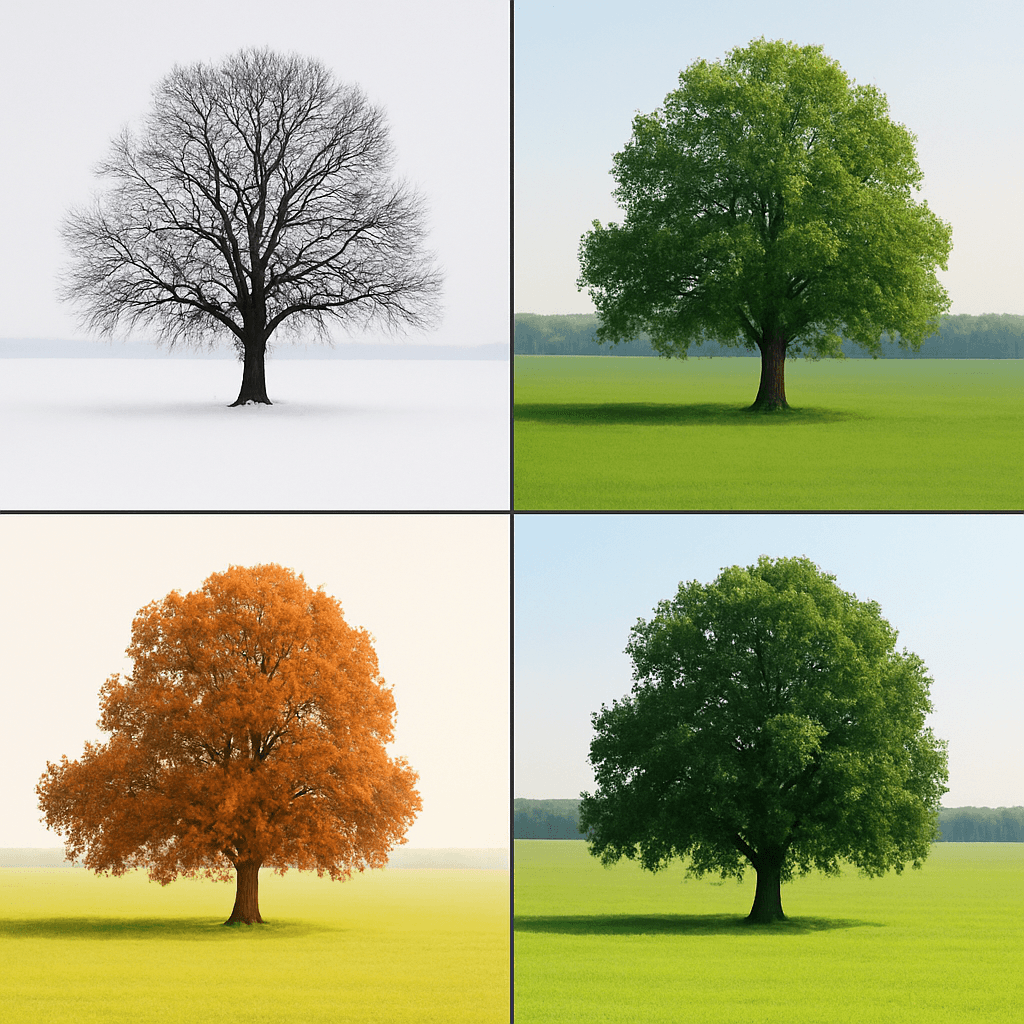
We swim in the sea during summer, play with snowballs in winter, nature comes alive in spring, and leaves turn yellow and fall in autumn. All these changes seem very normal to us, but behind them lies a crucial scientific fact: Earth’s movements and its tilted orientation.

(Generated by Artificial Intelligence.)
What Movements Does Earth Make?
Earth simultaneously performs two distinct movements:
- Rotation on its own axis: Completes in 24 hours and causes day and night.
- Revolution around the Sun (orbital motion): Lasts approximately 365 days and causes the seasons.
However, this orbital motion alone is not sufficient to explain the seasons. The key factor is the tilt of Earth’s axis.
What Does Axial Tilt Mean?
While Earth orbits the Sun, it also rotates on its axis. But this rotation is not perfectly upright. Earth’s rotational axis is tilted at an angle of approximately 23.5 degrees relative to the plane of its orbit. This tilt causes different regions of Earth to receive sunlight at different angles throughout the year. This is the true reason for the seasons!

Why Is the Angle of Sunlight Important?
When sunlight strikes a surface directly, the energy is concentrated over a smaller area, causing that region to heat up more. This occurs during summer.
When sunlight arrives at an oblique angle, the same amount of energy is spread over a larger area, resulting in less heating. This creates winter. Thus, the angle at which sunlight strikes the Earth’s surface is the most important factor determining the seasons.

Seasonal Turning Points: June 21 – December 21 – March 21 – September 23
June 21
- Sunlight strikes the Tropic of Cancer perpendicularly.
- Summer begins in the Northern Hemisphere.
- Days are longest and nights shortest.
- Winter begins in the Southern Hemisphere.
December 21
- Sunlight strikes the Tropic of Capricorn perpendicularly.
- Winter begins in the Northern Hemisphere.
- Nights are longest and days shortest.
- Summer begins in the Southern Hemisphere.
March 21 and September 23
- Sunlight strikes the Equator perpendicularly.
- Day and night durations are equal.
- March 21: Beginning of spring (Northern Hemisphere)
- September 23: Beginning of autumn (Northern Hemisphere)
Is Winter When Earth Is Closest to the Sun and Summer When Farthest?
No! This is a common misconception. Earth is closest to the Sun in January, yet the Northern Hemisphere experiences winter at that time. This is because the seasons are determined not by distance, but by the axial tilt and the angle of incoming sunlight.

Let’s Imagine: What If Earth’s Axis Were Not Tilted?
-Sunlight would strike every location at the same angle year-round.
-Day and night durations would always be equal.
-There would be no seasons.
-Temperatures would remain constant everywhere. Events such as snowfall, flowering, and leaf shedding would not occur. This would completely alter natural life cycles.

How Do Seasons Affect Nature?
Seasons affect not only temperatures but also:
-Animal migration
-Plant flowering or leaf shedding
-Agricultural timing
-Human clothing, diet, and lifestyle.
Thus, seasons are of great importance to all life on Earth.