


How Have Nonsense Rhymes Been Formed?
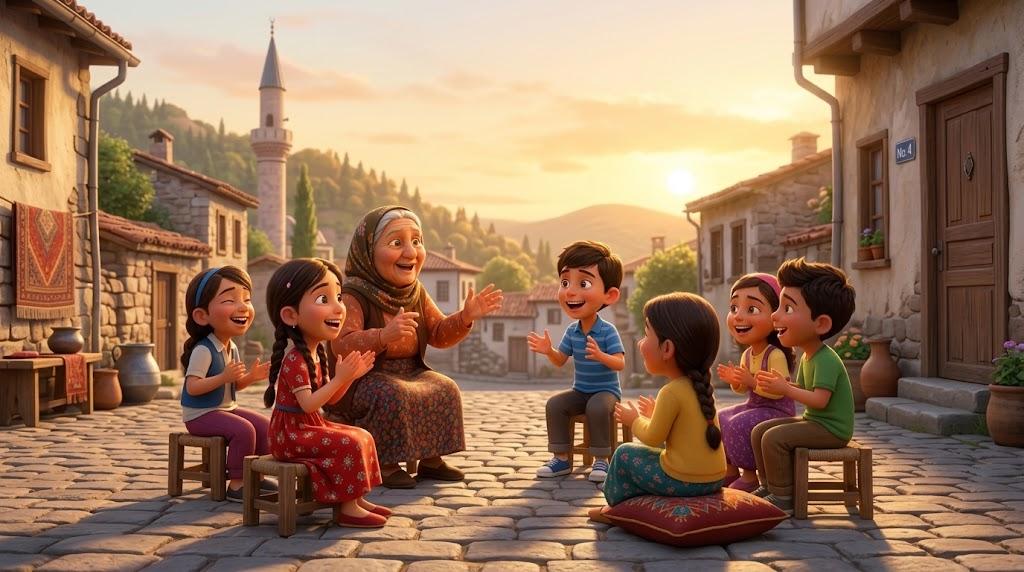
Tekerlemeler are anonymous folk culture products based on rhythm, sound similarities, and word repetition. Their historical origins extend back to oral culture. In periods when writing and visual elements were not widespread, people combined sounds and words in harmonious ways to develop their speaking and storytelling skills. Over time, these playful forms of expression evolved into the modern tekerleme format.
Generated with Artificial Intelligence.
Use of Linguistic and Sound Elements (External Structure)
In the creation of tekerlemeler, the primary determining factors are not the meaning of the conveyed information but rather its sound and rhythmic qualities. The following linguistic elements are employed in constructing tekerlemeler:
- Rhyme and Sound Similarities: The use of compatible sounds and endings at the ends of lines. This pleasing sonic harmony, similar to that in songs, allows the words to flow like a melody.
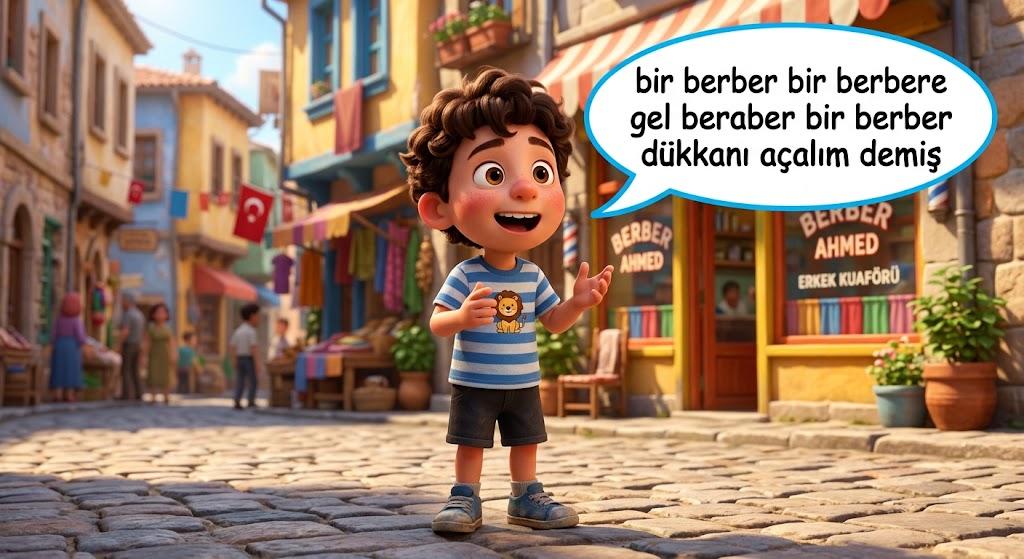
- Repetition of the Same Sounds and Letters: The consecutive occurrence of certain letters or syllables to create rhythm. For example, in the phrase "Al bu takatukaları takatukacıya götür...", the frequent repetition of specific sounds transforms the utterance into an entertaining challenge and helps the language gain momentum.
- Syllable and Word Repetition: The sequential arrangement of identical or similar words. The rhythmic recurrence of words ensures that tekerlemeler are easy to remember and memorize.
Generated with Artificial Intelligence.
Tekerlemeler are not bound by rigid formal rules; they reflect the free and relaxed manner of speech found in children’s world.
Meaning and Imagination (Internal Structure)
There is no necessity for tekerlemeler to follow a logical sequence. Their content can be structured in three distinct ways:
- Meaningful Tekerlemeler: Designed to convey numbers, days, colors, and basic behavioral rules in an entertaining manner.
- Nonsensical or Partially Meaningful Tekerlemeler: Created by stringing together sounds or imitations that have no specific meaning; their purpose is sonic aesthetics and humor.
- Imaginary and Contradictory Situations: A sequence of unnatural, absurd, or surprising scenarios is arranged to construct imaginative frameworks suitable for children’s mental worlds.
Play Requirement and Rules

Generated with Artificial Intelligence.
A significant portion of tekerlemeler emerged spontaneously to meet the needs of children’s games.
- Counting-out rhymes were developed to fairly select the “ebe” (it) or partner at the start of a game.
- Improvised phrases were created during play to amuse peers or enrich the game experience.
Influence of Historical Events and Environment
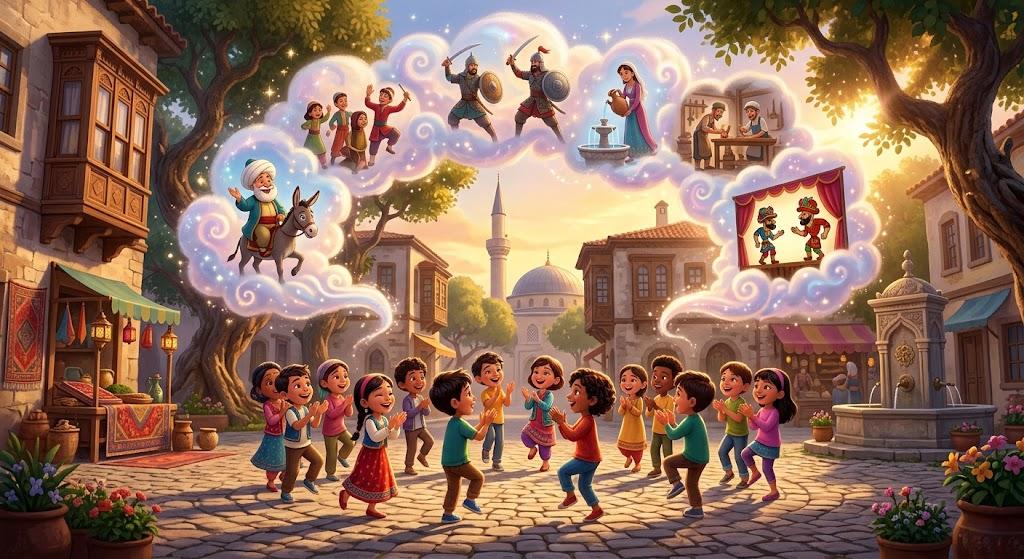
Generated with Artificial Intelligence.
Tekerlemeler are not fixed templates; they can be re-created by children and society according to the conditions of their time. Children have adapted events from their surroundings, stories they have heard, folk heroes, or figures from contemporary mass media—such as comic book characters, athletes, and artists—into existing rhythmic structures to generate new tekerlemeler.