



Kaftan
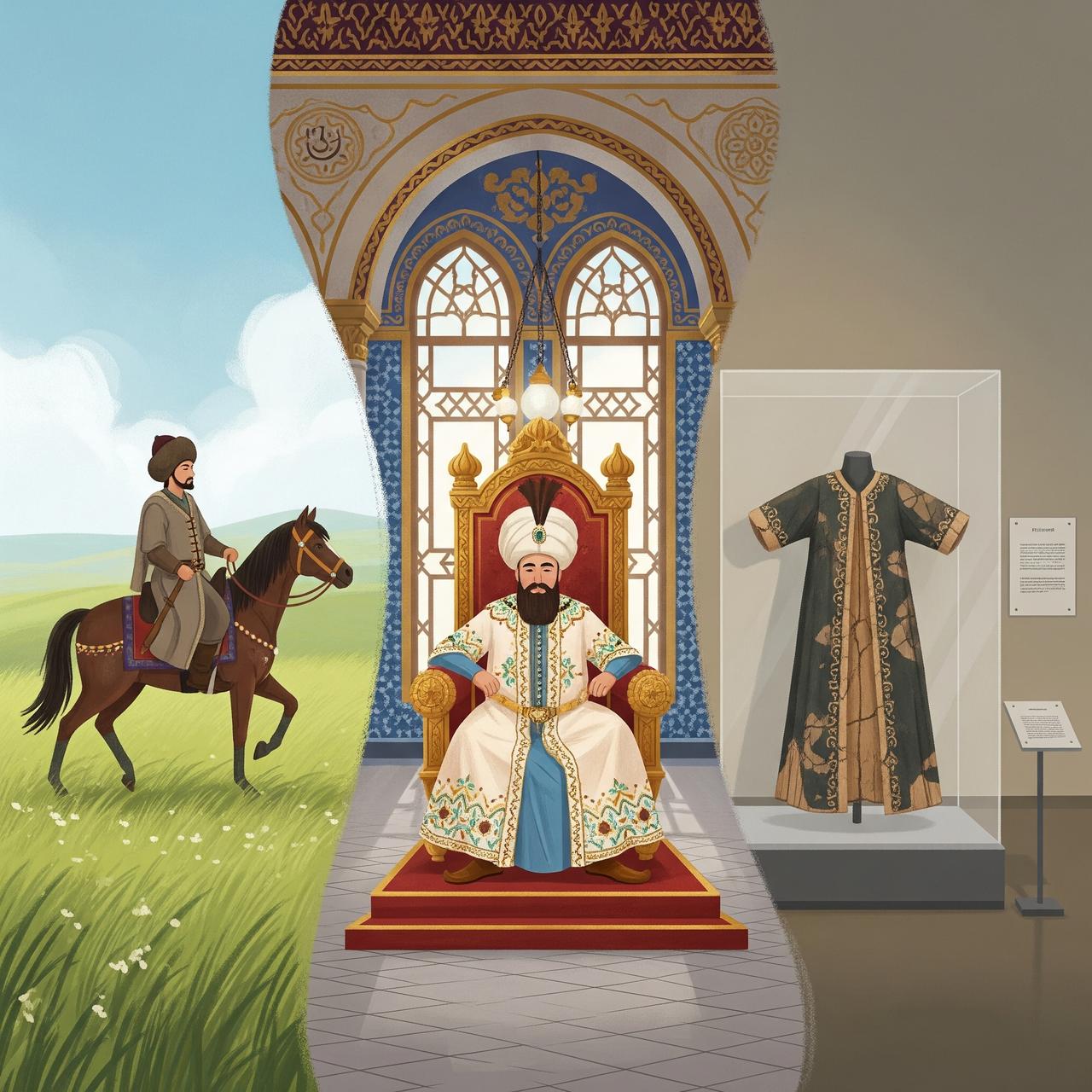
Kaftan,Have you ever seen the elaborate, long, and ornate garments worn by sultans in museums? These garments are called kaftans! A kaftan is not merely a piece of clothing; it was also a symbol of wealth, power, and high status. This distinctive garment, worn by kings, sultans, and heroes in the past, resembles a work of art woven in fabric.
A kaftan is typically a long-sleeved, open-front upper garment that reaches down to the feet, made from valuable fabrics such as silk or velvet. What makes it so special are the patterns, colors, and the quality of the materials used. By simply looking at a kaftan, one could determine the importance of the person wearing it.
The Ornate Garment of the Palace
In particular during the Ottoman Empire, kaftans held great significance. Sultans wore the most beautiful and expensive kaftans, which were crafted over months by specialized tailors and weavers working in the palace. These garments were embroidered with gold and silver threads and adorned with intricate designs.
When a sultan gifted a kaftan to a commander or a state official, it was considered a great honor. This practice was known as “hil’at giydirmek” and indicated how highly the recipient was regarded by the sultan. Sometimes, victorious commanders or successful envoys were rewarded with these valuable kaftans.
What Do Fabrics and Colors Signify?
Every detail on a kaftan carried meaning. The type of fabric, its color, and the patterns conveyed information about the wearer’s rank and status. For instance, sultans typically favored silk kaftans in red, blue, and gold embroidery. Red symbolized power, while blue represented nobility.
The patterns on kaftans were never chosen at random. Floral motifs such as tulips, pomegranates, and carnations, as well as distinctive spotted designs known as çintamani, were commonly used. The tulip symbolized beauty, the pomegranate represented abundance, and the çintamani pattern embodied power and majesty. These designs did more than enhance the garment’s beauty—they added deeper symbolic meaning, making each kaftan even more distinctive.
A Journey Through Time
The history of the kaftan extends far back to the ancient Turkic states of Central Asia. Thousands of years ago, Turkic peoples who lived on horseback wore such garments for ease of movement. Over the centuries, the kaftan evolved under the influence of various cultures and reached its most magnificent form during the Ottoman Empire. The kaftans woven in palace workshops reveal the fashion trends and advanced state of textile art of that era. Today, many of these kaftans are carefully preserved in museums such as Topkapı Sarayı.