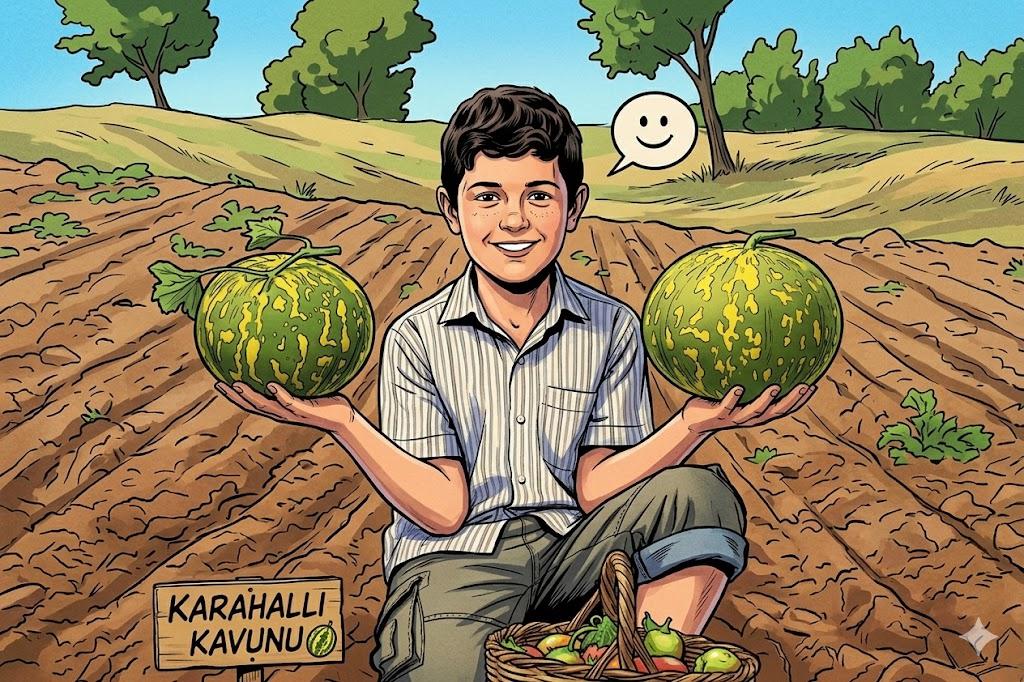




Karahallı Düğleği (Kavun)
This special fruit, grown in the Karahallı district of Uşak, is one of the region’s most important agricultural products. One of its most distinguishing features is its ability to thrive with very little water.
What Are the Characteristics of Karahallı Melon?
This melon typically weighs between 2 and 6 kilograms and has a slightly round or oval shape. Its outer rind is thin, yellow-green in color, and marked with irregular green stripes. The inner flesh is orange with a faint yellowish tint. Among the local population, this melon is also known by various names such as Karahallı Düğleği, Cemile Düğleği, or Çoban Almaz.
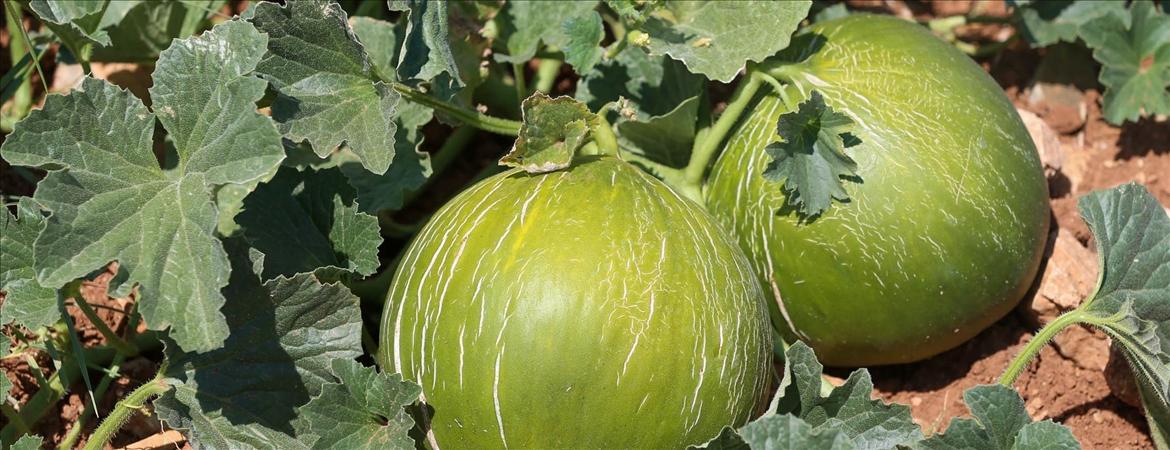
Karahallı Kavunu (Anadolu Ajansı)
Where and How Does It Grow?
Karahallı kavunu grows in clay soils at elevations between 905 and 1036 meters above sea level. The clay soil structure retains moisture well, enabling the plant to withstand high summer temperatures. Seeds are typically sown between April 23 and May 6. This melon variety grows naturally during its growing season with almost no irrigation, artificial fertilizer, or pesticides.
When Is the Harvest Season?
These melons take longer to mature than those grown in other regions, ripening after approximately 130 days. The harvest season begins in the second week of August and continues until the end of September. Ripeness is determined by the brightening of the rind color and the intensification of its spots. Due to their thin rinds and fragility, they are transported in special baskets arranged in single rows to prevent bruising.
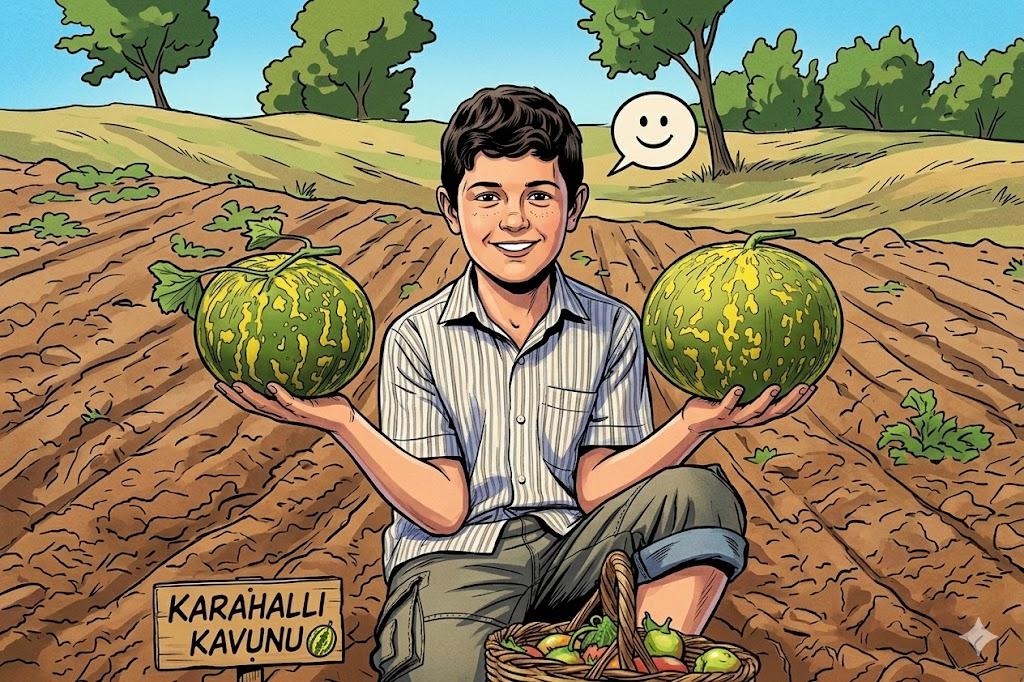
Karahallı Düğleği (yapay zeka ile oluşturuldu)
Why Is It Protected?
In 2023, the Karahallı melon was officially registered with a Geographical Indication under the name “Menşe Adı” to preserve its unique characteristics. This certification formally confirms that the melon can only be produced in this specific region. Farmers use “parent seeds” saved from the previous year’s harvest to cultivate this melon each year. This practice ensures that the melon’s genetic structure and flavor are passed down unchanged from generation to generation.