



Kula Volcanoes
The Meeting Place of Fire and Stone
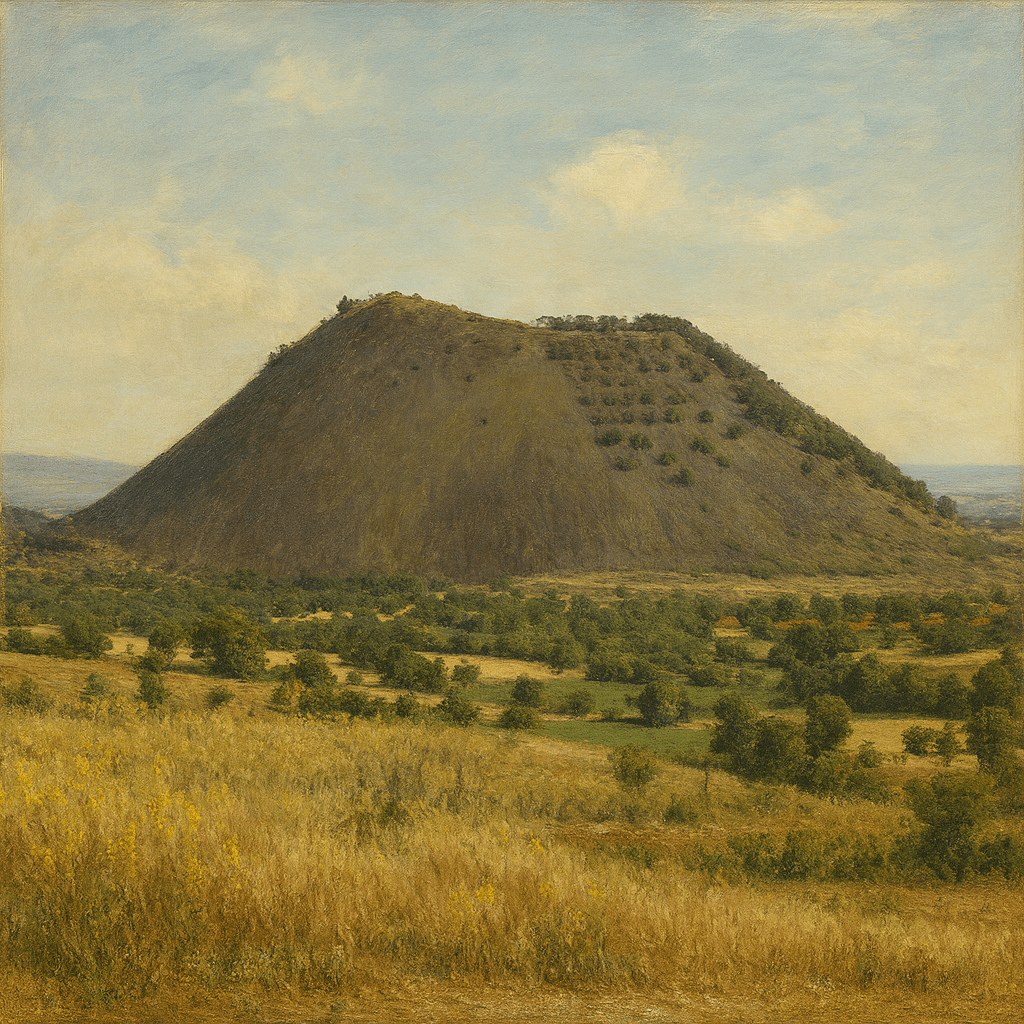
The Kula Volcanoes are a unique region located in the Kula district of Manisa, also known as “The Burnt Land.” In ancient times, lava flows erupted onto the surface, shaping the soil and rocks. Although these volcanoes are now extinct, the lava flows, craters, and volcanic cones they left behind have transformed the area into an open-air museum.

Generated by Artificial Intelligence
Where and How Were the Kula Volcanoes Formed?
The Kula Volcanoes are notable for their black volcanic hills, visible even from the İzmir-Ankara highway. Hundreds of years ago, molten rock fragments from deep within the Earth rose to the surface, forming these hills. Repeated volcanic eruptions at different times led to three distinct volcanic periods in the region, known as Burgaz, Elekçitepe, and Divlittepe.
Characteristics of the Volcanoes in the Region
Maar-type volcanoes: Most feature wide, circular craters.
Fissure volcanism: Lava emerges and spreads through long cracks in the ground.
Aa-type lava: Characterized by a rough, jagged, and rigid surface.
Hornitos: Natural formations created when lava builds small mounds during flow.
Some cones have double craters, while others appear freshly formed. Most of the lava flows in the region consist of basalt rock.
The Creative Power of Nature
The Kula Volcanoes offer a unique observational site for both geology enthusiasts and nature lovers. This area is part of the UNESCO Global Geoparks Network. While walking here, you can trace the paths of lava flows that originated millions of years ago and examine the different rock types surrounding the volcanic cones.
Three-Dimensional Representation
Kula Volcanoes (ArcGIS)