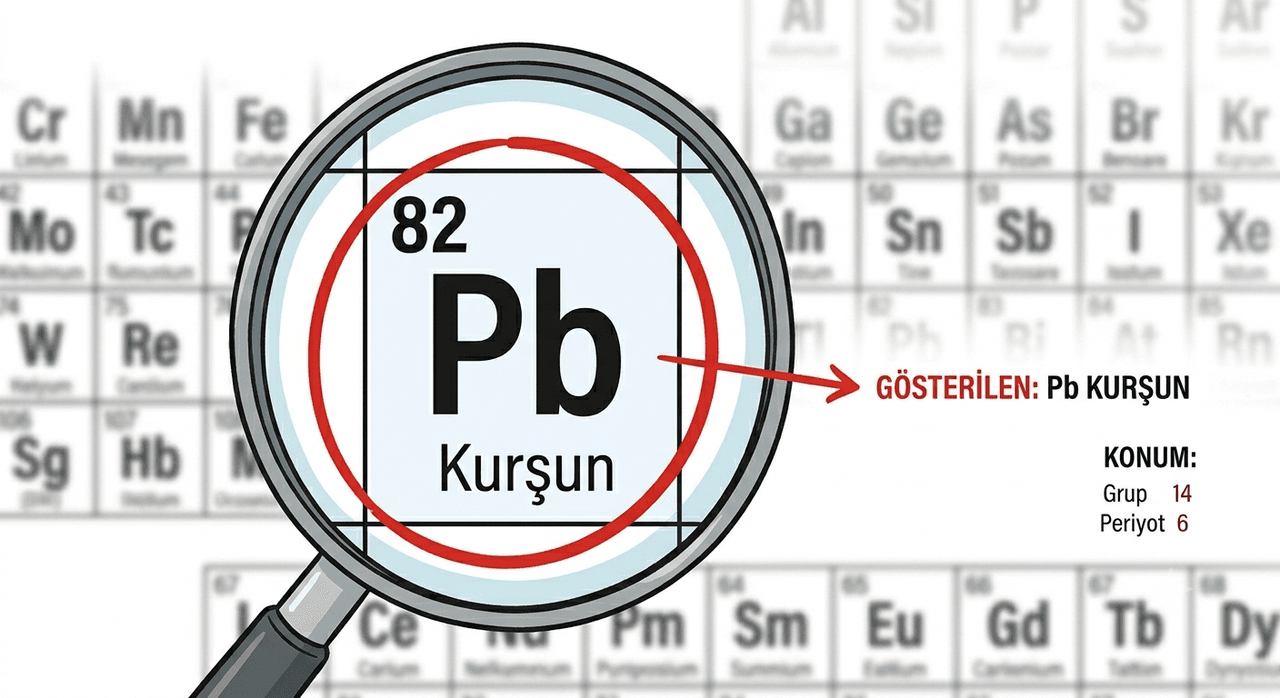




Lead Element
Have you ever thought that铅 pencils actually contain lead? In fact, these pencils contain a different substance called "graphite," but lead is one of the oldest and most interesting metals on our planet. This silvery-gray metal is both very heavy and so soft that you can shape it with your fingers. Let’s explore the world of this heavy yet soft metal together!
Where Is Lead Found and What Are Its Properties?
Lead is an element found in small amounts in the Earth’s crust. Scientists represent it on the periodic table with the symbol "Pb." Its most striking property is that it is much denser and heavier than many other metals.
This metal is so soft that it can easily be rolled into sheets and worked into various shapes. It is also highly resistant to corrosion, meaning it does not degrade easily when in contact with water. Because of these properties, humans have used lead for thousands of years in a wide variety of applications.
Okul laboratuvarında elinde mıknatısla farklı metal nesneleri inceleyen bir çocuk(Yapay zeka ile oluşturulmuştur.)
Where Is Lead Used Today?
Once common in many everyday items, lead is now used primarily in specialized applications. Its most widespread use is in car batteries. Lead is also found in the protective clothing worn during X-ray procedures in hospitals, as it acts as a shield against harmful radiation.
Lead is also preferred for insulating underwater cables and in the roofing of some large buildings. However, because it is now known to be harmful to human health, its use in toys, paints, and kitchenware has been banned.
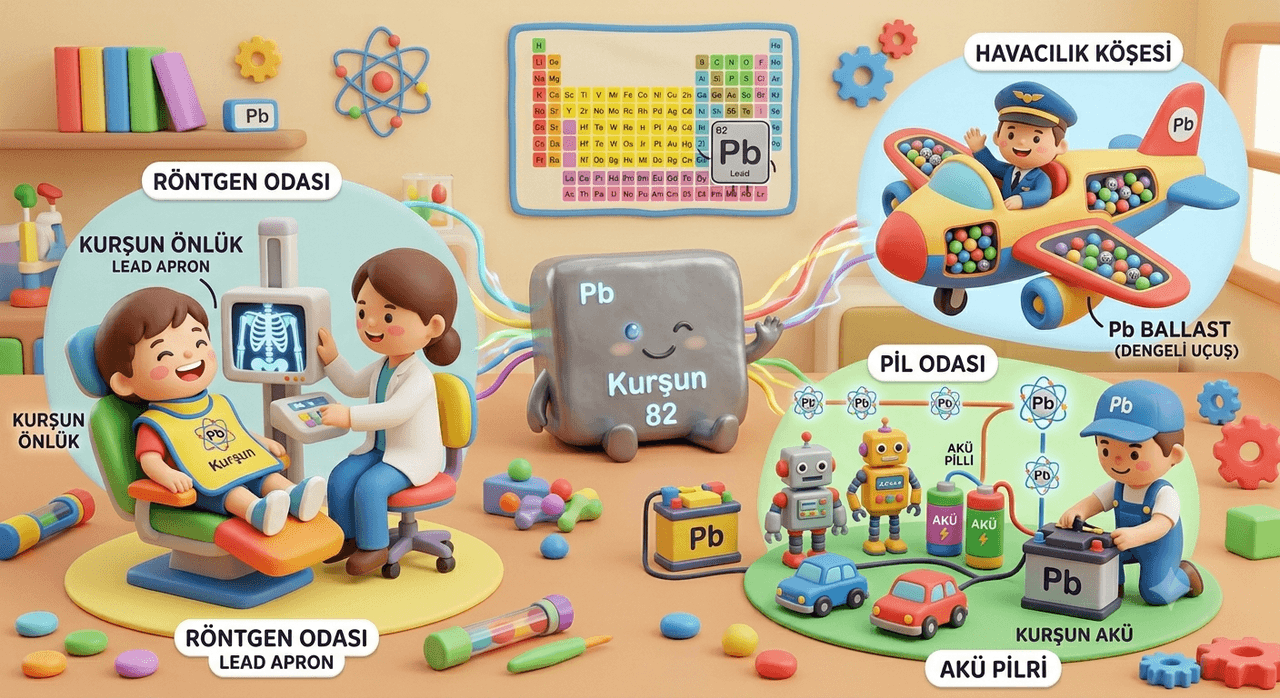
Kurşun elementinin kullanıldığı yerlere örnek.(Yapay zeka ile oluşturulmuştur.)
Why Should We Be Careful Around Lead?
Lead is a substance that does not naturally disappear from the environment and can accumulate in the human body. Exposure to lead is especially dangerous for children, as it can damage their developing brains and bodies. Lead may be found in peeling paint from old houses or in some older water pipes.
The best way to protect ourselves is to wash our hands frequently with soap and to eat a healthy diet. Consuming foods rich in calcium, iron, and vitamin C helps prevent the body from absorbing lead.
🕰️ Time Travel
The ancient Romans used lead extensively around 2,000 years ago to make water pipes and kitchenware. During the Middle Ages, alchemists believed that lead could eventually transform into gold when buried underground. Of course, this never happened, but these experiments contributed to the development of the science of chemistry.