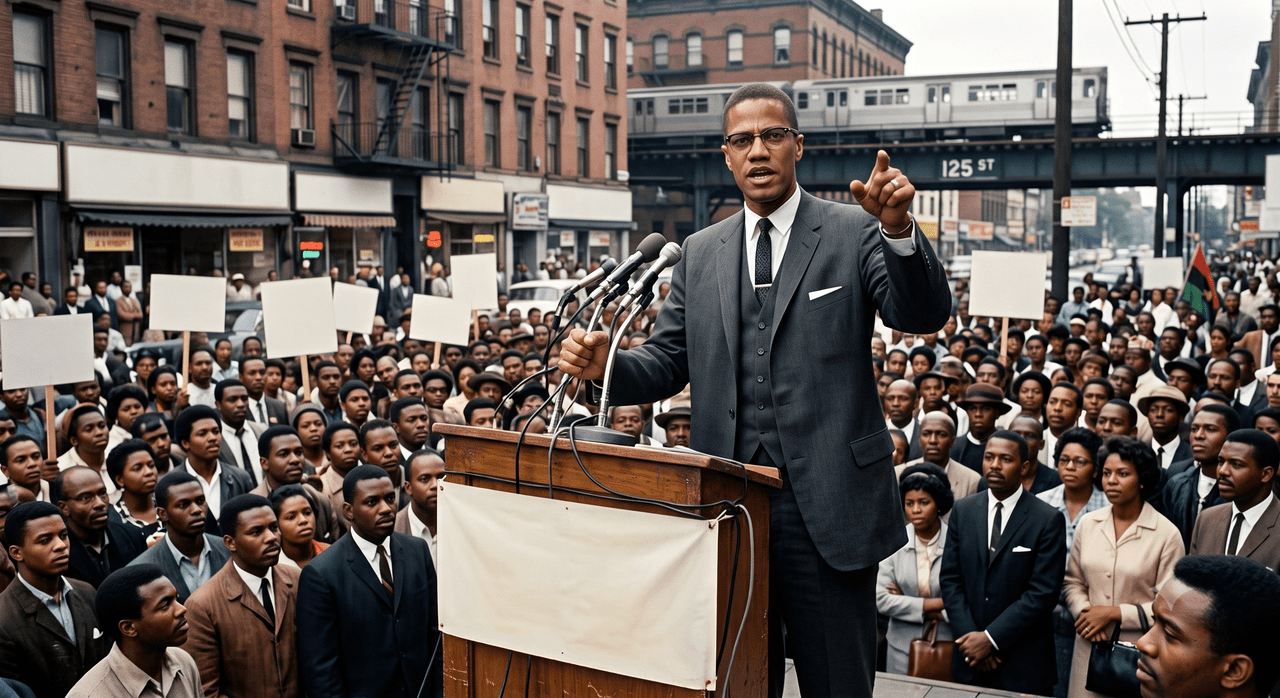




Malcolm X
Malcolm X, born in 1925 in the United States, was one of the most important civil rights leaders who dedicated his entire life to fighting racism and pursuing justice and equality. Malcolm X worked tirelessly for a fair world where people would not face discrimination because of their skin color, and he died in 1965, his courageous speeches and transformative life leaving a lasting legacy.
A Difficult Childhood and Family
Malcolm X was born as Malcolm Little in Nebraska. His childhood was marked by great hardship and suffering. His family was forced to move frequently due to threats and attacks by racist groups. After losing his father at a young age and with his mother becoming ill, Malcolm was placed with foster families along with his siblings.
School Years and the Meaning of the Surname "X"
Although he was an exceptionally bright and successful student in school, he was discouraged from pursuing his dream of becoming a lawyer due to the discriminatory conditions of the time. Due to the injustices he experienced and mistakes made during his youth, he spent a period in prison. However, his time in prison became a turning point; he spent his days reading hundreds of books in the library and developing himself. Arguing that during slavery, Africans had been stripped of their true surnames, he abandoned the surname "Little" and adopted the letter "X" as his surname, symbolizing his lost and unknown African roots.

Writing the work of Malcolm X. (Generated by artificial intelligence)
The Struggle for Justice and Rights
After his release from prison, Malcolm X launched a vigorous campaign to defend the rights of Black people. He sought to foster self-confidence and unity within the community. He was a powerful and courageous speaker who proudly raised his voice against oppression and injustice. His words and determination quickly resonated across the world.
The Pilgrimage to Mecca and Universal Brotherhood
The most profound transformation in Malcolm X’s life occurred when he traveled to Mecca and performed the Hajj pilgrimage. There, he witnessed people from all corners of the world—differing in skin color, language, and culture—worshipping side by side in complete equality. This experience broadened his perspective significantly. Adopting the name "El-Hacc Mâlik el-Şahbâz," he embraced a universal understanding of brotherhood, asserting that people should be judged not by their race but by their character and human values.
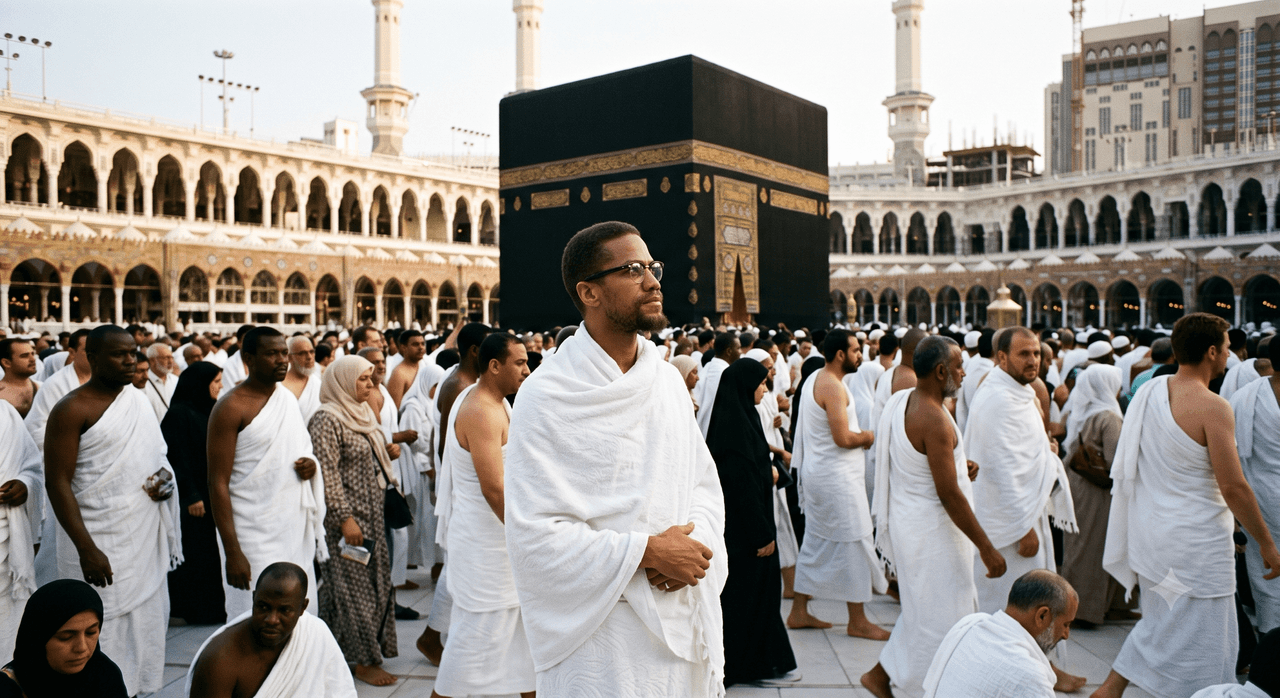
Malcolm X visited the Kaaba after becoming a Muslim to embrace his faith. (Generated by artificial intelligence)
His Legacy and Inspiring Life
Malcolm X was assassinated at the age of 39 on February 21, 1965, during a speech. Yet his ideas and courage were never forgotten. He became a symbol of how a person can transform themselves through education, of the necessity to embrace change once truth is found, and of the imperative to never give up the fight for justice.
Final Words
Malcolm X reminds us:
"The future belongs to those who prepare for it today."
His life is one of the most inspiring stories of learning from mistakes, reading, self-improvement, and standing firm against injustice no matter the cost.