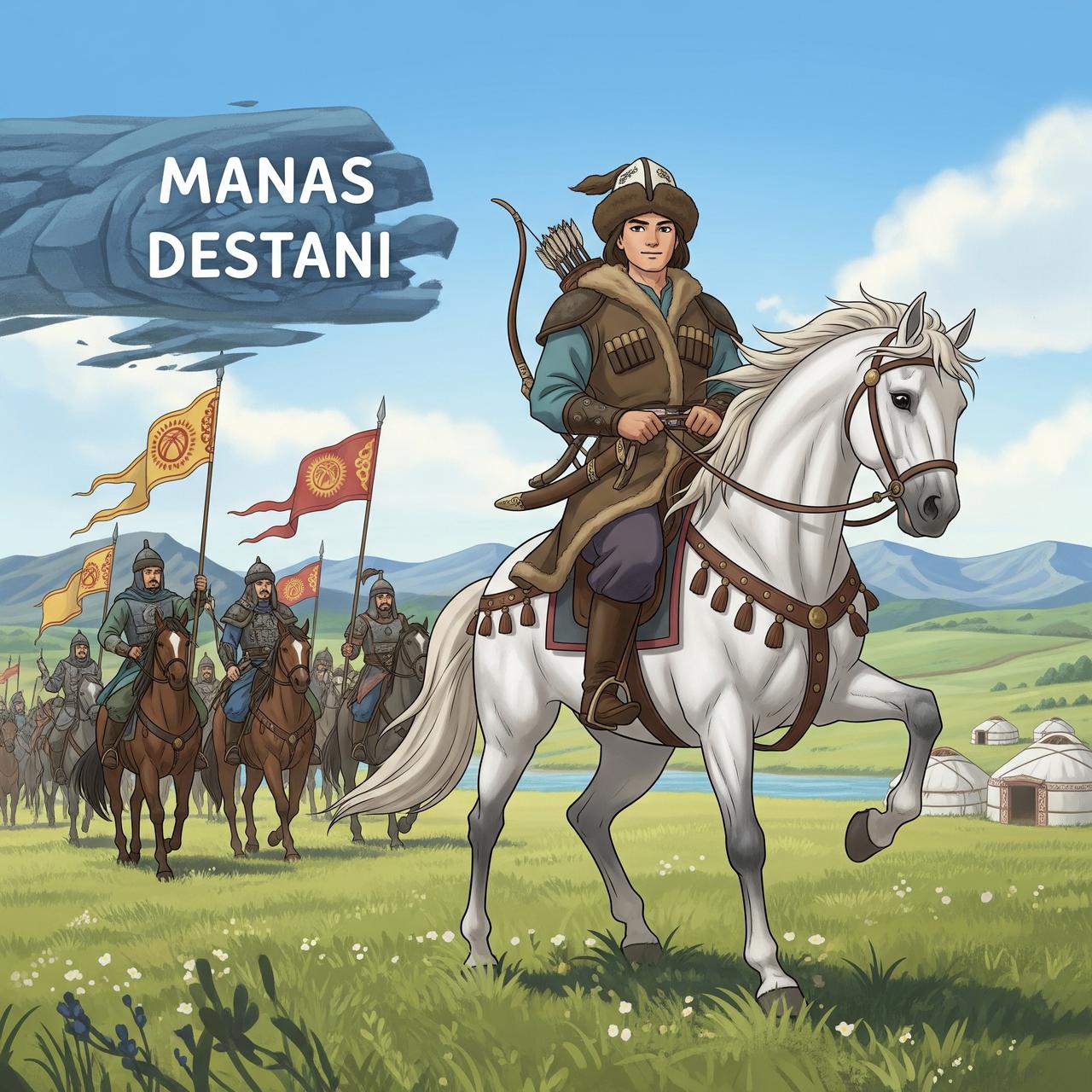


Manas Epic: The Heritage of the Kyrgyz People
The Manas Epic, what do you say to encountering a vast epic that tells the thousand-year-old story of the Kyrgyz people? This epic is called Manas. It is a monumental tale that recounts not just the bravery of a single hero but the courage, friendship, and dreams of an entire people, passed down through generations until today. The Manas Epic is more than just a book; it is the living memory of the Kyrgyz.
The Manas Epic narrates the adventures of its namesake hero Manas and his family. It is so long that it is recognized as one of the longest epics in the world. It contains battles, heroic deeds, clever solutions, and deep friendships. Let us open the doors to this great adventure together!
The Heroes Take the Stage
At the heart of the Manas Epic stands Manas, a courageous leader who fights to unite and protect his people. He is not only a powerful warrior but also a just ruler. Manas’s greatest dream is to bring together the scattered Kyrgyz tribes and forge them into a strong nation.
You should also know that Manas does not walk this path alone. One of his greatest supporters is his wise and forward-thinking wife, Kanikei. Kanikei is not merely a spouse but also Manas’s most trusted advisor. She helps ensure sound decisions are made during difficult times and always thinks of her people’s well-being. For example, she once sensed a trap set by those jealous of Manas and warned him in time.
There is also Almambet, Manas’s closest friend and most loyal companion in battle. Although Almambet comes from a different people, he stands beside Manas as a wise hero. His loyalty and friendship with Manas form one of the most touching stories in the epic. Almambet is a wonderful example showing that differences need not stand in the way of friendship.
The Storytellers Who Keep the Epic Alive: Manaschis
How did such a long epic reach our time? The answer lies in special storytellers known as manaschis. Manaschis hold a vital place in Kyrgyz culture. They are the cultural bearers who memorize the epic and pass it from generation to generation. Becoming a manaschi is not merely a matter of having a good memory.
Many manaschis believe that this gift was bestowed upon them divinely, often through a dream. In this dream, one of the epic’s heroes—most often Manas himself—appears and assigns the person the duty of telling the epic. After this experience, the individual begins to feel and recount the epic as if they had lived it themselves. That is why each manaschi’s performance is unique and personal.
Manaschis are like the wise elders of their society. They do not merely recite the epic; they also teach their listeners the history, traditions, and values of their ancestors. Accompanied by the kopuz, a stringed instrument, they perform for days at a time. They raise their voices like a hero, lower them like a mother, and draw every listener into the heart of the story. This tradition is so valued that it has been safeguarded by UNESCO as part of the “Intangible Cultural Heritage of Humanity.”
A Journey Through Time
Close your eyes and travel back about a thousand years to the vast steppes of Central Asia. The roots of the Manas Epic reach back to the time when the Kyrgyz established a great state around the Yenisei River. Back then, people did not live in houses as they do today but in large, ornate tents called “boz üy.” Livestock herding was the primary means of livelihood, and horses were an indispensable part of life.
The armor, swords, and horses mentioned in the epic reflect the life of that era. For instance, Manas’s famous horse, Ak Kula, is not merely a mount but also his closest companion and trusted ally in battle. In those times, a hero’s horse was among his most prized possessions.