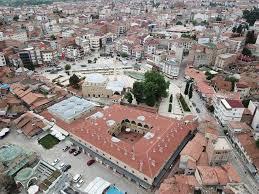




Merzifon Stone Inn (Amasya)
Merzifon Taşhan is a large structure located in the Merzifon district of Amasya that historically served as accommodation for travelers and merchants. These hans were places where people on long journeys could safely stop to rest and store their goods. As one of the significant works of the Ottoman Empire period, Merzifon Taşhan illustrates how trade functioned at the time.

Merzifon Taşhan (Culture Portal)
Time Travel
Although the exact date of construction of Merzifon Taşhan is not known, documents indicate that it was built during the third quarter of the 17th century, between 1650 and 1675. This structure is part of the külliye, a complex of major works commissioned by Kara Mustafa Pasha of Merzifon, one of the most renowned grand viziers of the Ottoman Empire.
Kara Mustafa Pasha was a prominent figure from Merzifon. By commissioning the Taşhan, he not only gifted his hometown with an important monument but also ensured the comfort of those traveling along long trade routes.

Merzifon Taşhan (Culture Portal)
What Was the Purpose of the Taşhan? 🚪
The Taşhan fulfilled the dual roles of both a caravanserai and an urban han. Caravanserais were large hans where merchants and caravans traveling long distances could stay. Urban hans, by contrast, served as places for traders operating within the city to lodge and store their goods. This han combined both functions.
The ground floor contained shops where merchants could sell their goods. The upper floors consisted of rooms for travelers and guests. The Taşhan was a vibrant center of commerce.

Merzifon Taşhan (Culture Portal)
Physical Characteristics (Architecture) 🧱
The Taşhan was constructed using cut stone and brick. Its plan is rectangular with a large courtyard at its center. The courtyard served as the heart of the han, where travelers gathered, rested, and tethered their animals. The main entrance is on the southern facade, featuring ornamental cornices that project outward above the doorway.
Due to the sloping terrain, the northeast section of the han is three stories high, while the other sections are two stories. The ground floor housed the stable. Stable refers to the area where animals were kept, a vital component of hans during that period. Two elegant fountains are also located within the courtyard.