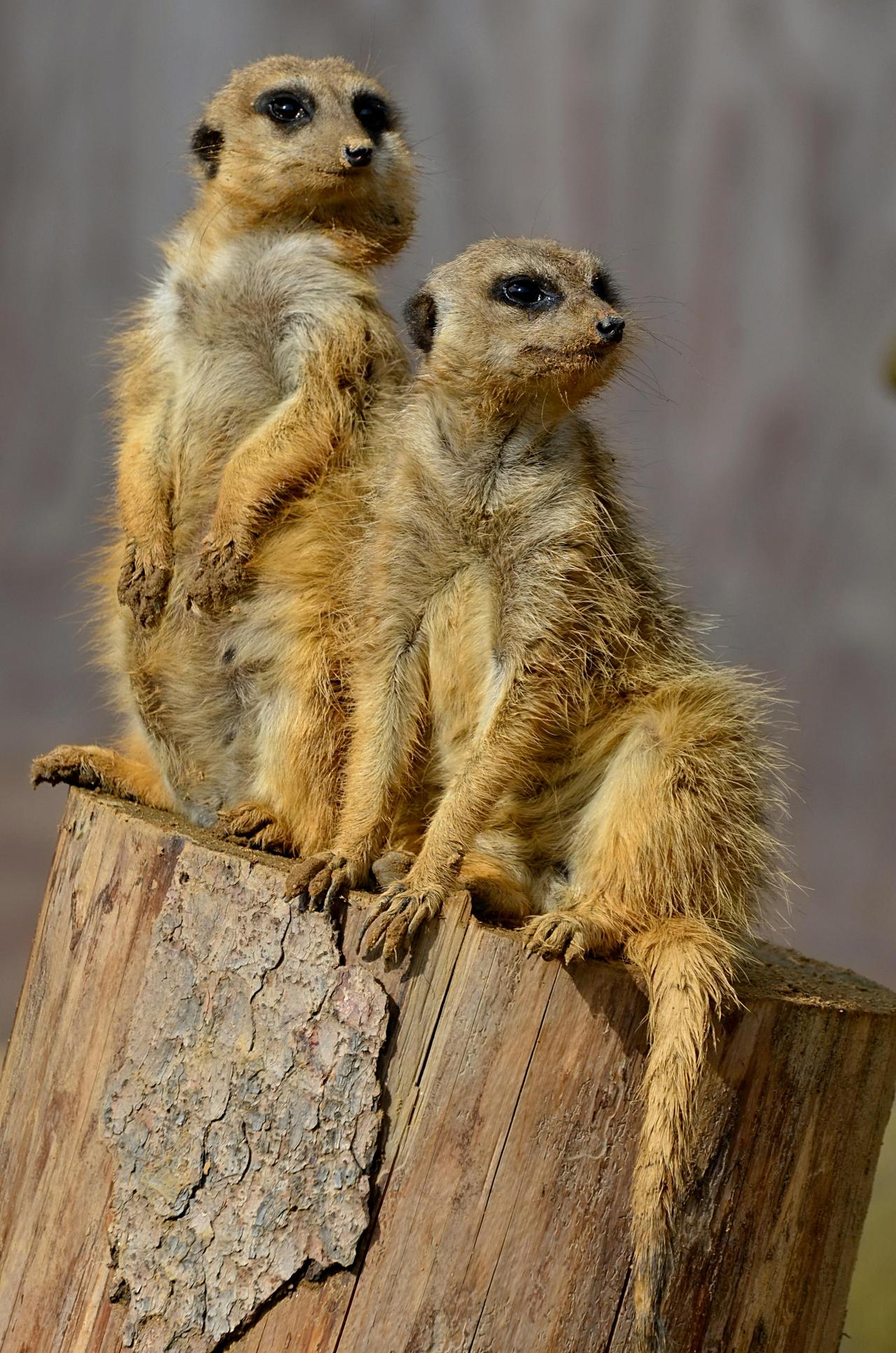




Mirket
Meerkat (Suricata suricata) belongs to the family Herpestidae. They are sentinel animals of deserts and savannas. One of their most distinguishing features from other small mammals is their ability to stand upright on their hind legs to survey their surroundings. Their large eyes and long, slender tails are also notable. They use their tails both for balance and to navigate movements within their group.
What Colors Do They Have?
The fur color of meerkats can vary slightly depending on their habitat.
Their fur is generally yellowish-brown, gray-brown, or light beige. Dark brown stripes run along their backs. Black patches around their eyes give them a distinctive and appealing appearance.
Their undersides are lighter in color, typically whitish or pale cream.

A Meerkat on Watch (Pexels)
How Large Do They Grow?
The body length of meerkats, from head to tail tip, ranges from 40 to 73 cm. Approximately 17 to 25 cm of this length is made up by the tail. Their weight typically falls between 600 and 1000 grams.
What Do They Eat?
In the wild, meerkats feed on:
- Small insects
- Spiders
- Scorpions
- Lizards
- Bird eggs
- Plant matter
Where Do They Live?
Meerkats typically inhabit semi-arid grasslands and deserts in southwestern Africa.
They are most commonly found in:
- Botswana
- Namibia
- South Africa and Angola
They prefer open savannas, desert edges, and grasslands as their habitat.

Meerkats Digging in the Soil (Pexels)
Contributions to the Ecosystem
Meerkats help maintain ecological balance by feeding on insects, spiders, and harmful pests. While digging for insects and roots, they aerate the soil, which promotes plant growth and supports the overall health of their ecosystem.
Conservation Status
Meerkats are classified by the International Union for Conservation of Nature (IUCN) as “Least Concern.” This indicates that their wild populations are currently not at risk.