




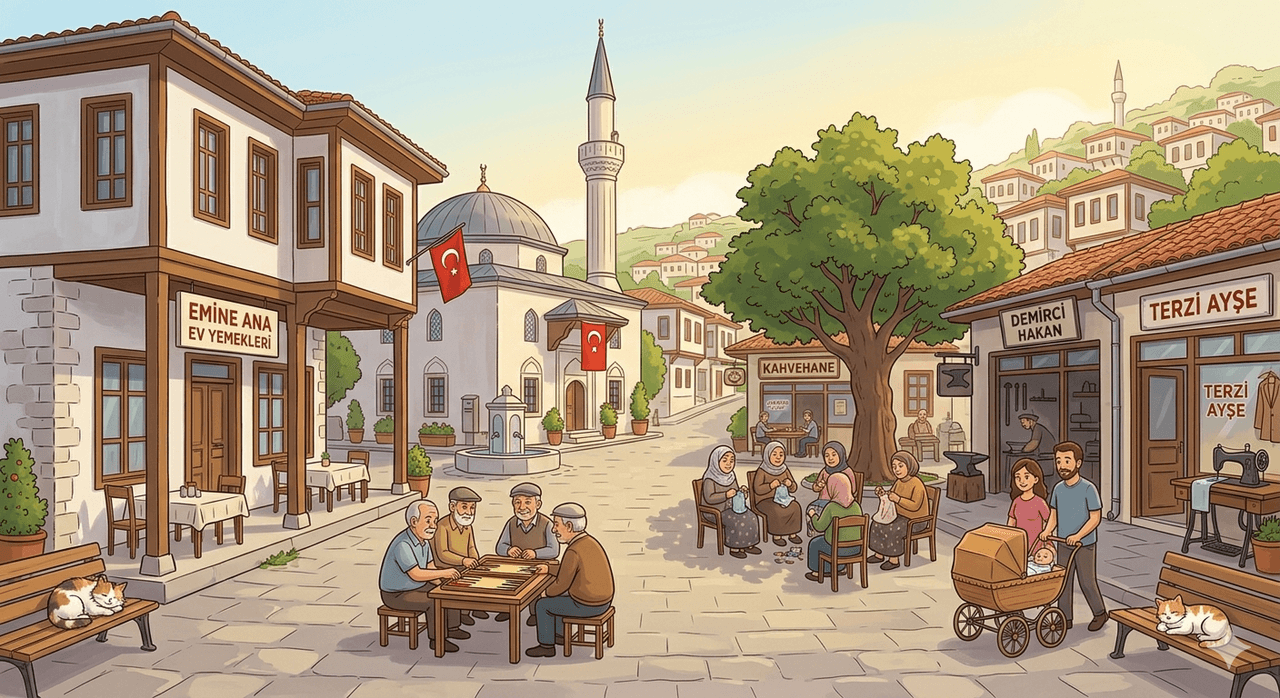
Neighborhood: Our Warm Home Together
When you open your front door and step outside, where do you feel you are? Perhaps in a park where you play ball with your friends, or on that familiar street where you greet the grocer. It is to this small place, where all these shared spaces come together and people live together in love, that we give the name neighborhood. A neighborhood is not merely a row of houses side by side; it is also a vast family.
What Does Neighborhood Mean?
The word “mahalle” comes to us from Arabic and originally carries the meanings of “to descend to a place, settle, and reside.”
Throughout history, people have chosen to live in small groups to feel safe and easily meet their needs.
These settlement units gradually became the most important parts of cities.
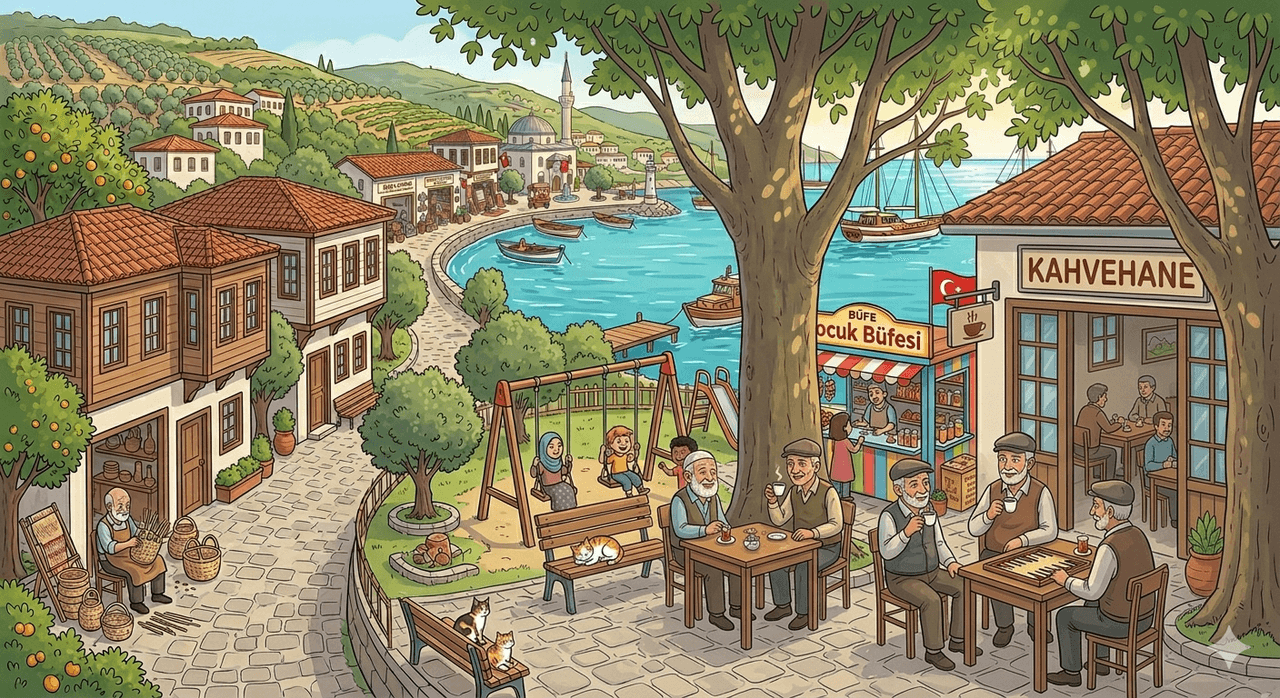
Daily life of neighborhood residents
(Generated by artificial intelligence.)
Life and Solidarity in the Neighborhood
In olden times, living in a neighborhood meant everyone helping one another. Neighborhood residents felt responsible for everything that happened in their area and would immediately rush to help a neighbor in need.
Even during the Ottoman period, people of different religions and cultures lived together peacefully as “neighbors” in the same neighborhood.
The physical structure of neighborhoods also supported this solidarity. Especially dead-end streets provided a private space for residents, making it difficult for outsiders to enter and ensuring children could play safely while preserving privacy.
Moreover, each neighborhood had a mosque, mescid, or a fountain at its center, where people gathered to chat.
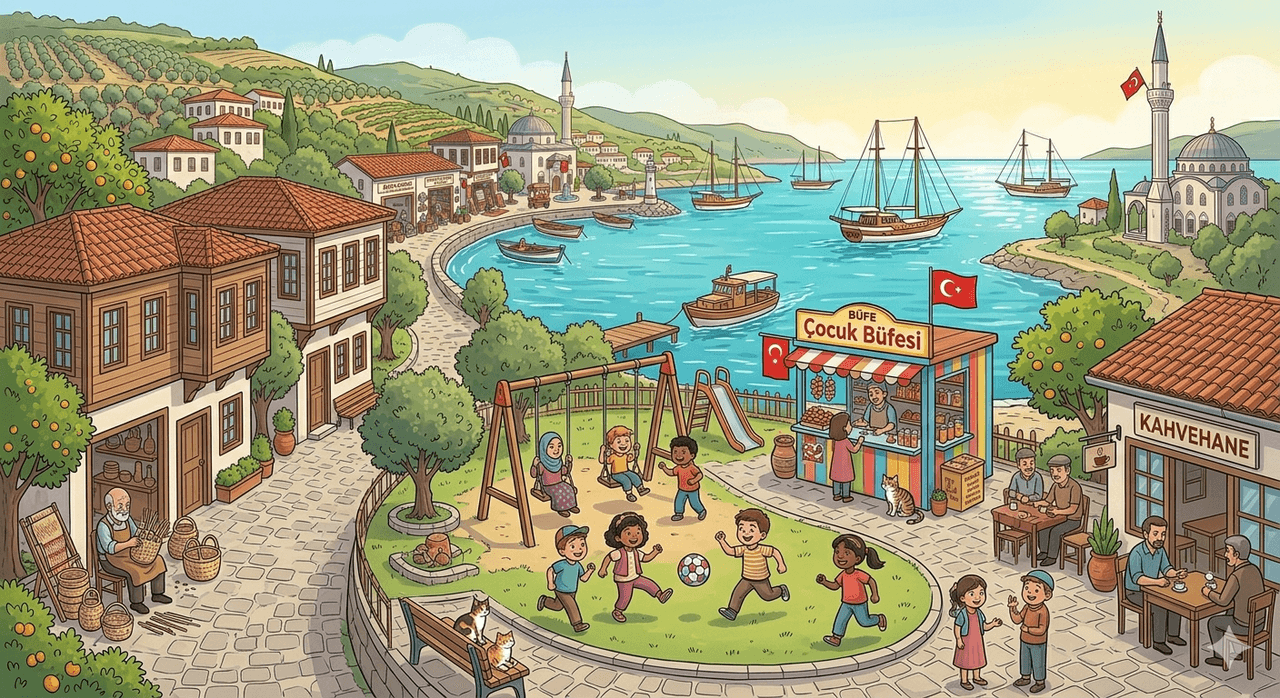
Children playing in the neighborhood park
(Generated by artificial intelligence.)
Who Manages the Neighborhood?
Who then maintains order in the neighborhood? In ancient times, this duty was carried out by individuals known as “reis” or “sheikh.”
During the Ottoman period, the most authoritative figure in the neighborhood was typically the imam.
Births, marriages, and even the arrival of a new resident were all recorded under his knowledge.
Today, the institution we still know as muhtarlik has been established.
When we have a problem concerning our neighborhood or need official paperwork, we go to the muhtar. The muhtar is both the representative of the neighborhood community and the link to the state.
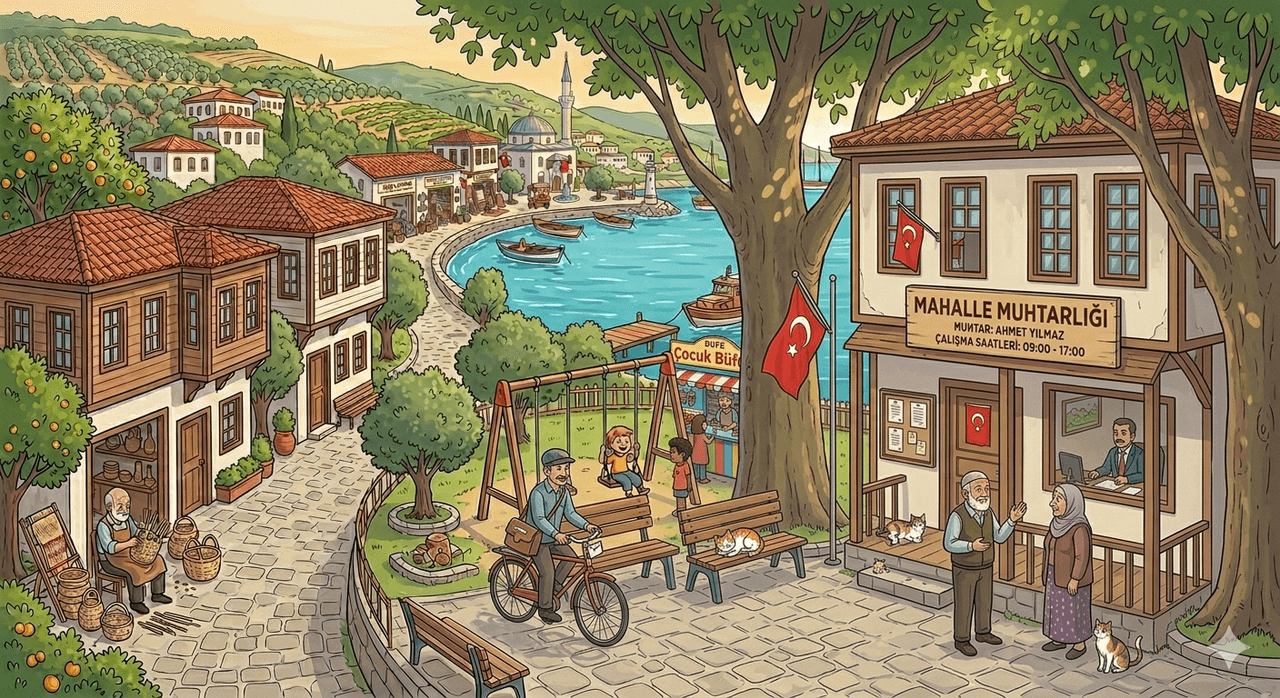
Neighborhood muhtarlik
(Generated by artificial intelligence.)
Some of the earliest known neighborhood settlements were established thousands of years ago around the Kaaba in Mecca. The grandfather of the Prophet Muhammad (peace be upon him), Qusay ibn Kilab, organized the city by creating distinct mahalles for different tribes to settle in. Since that time, the neighborhood has been regarded as the heart of Islamic cities.