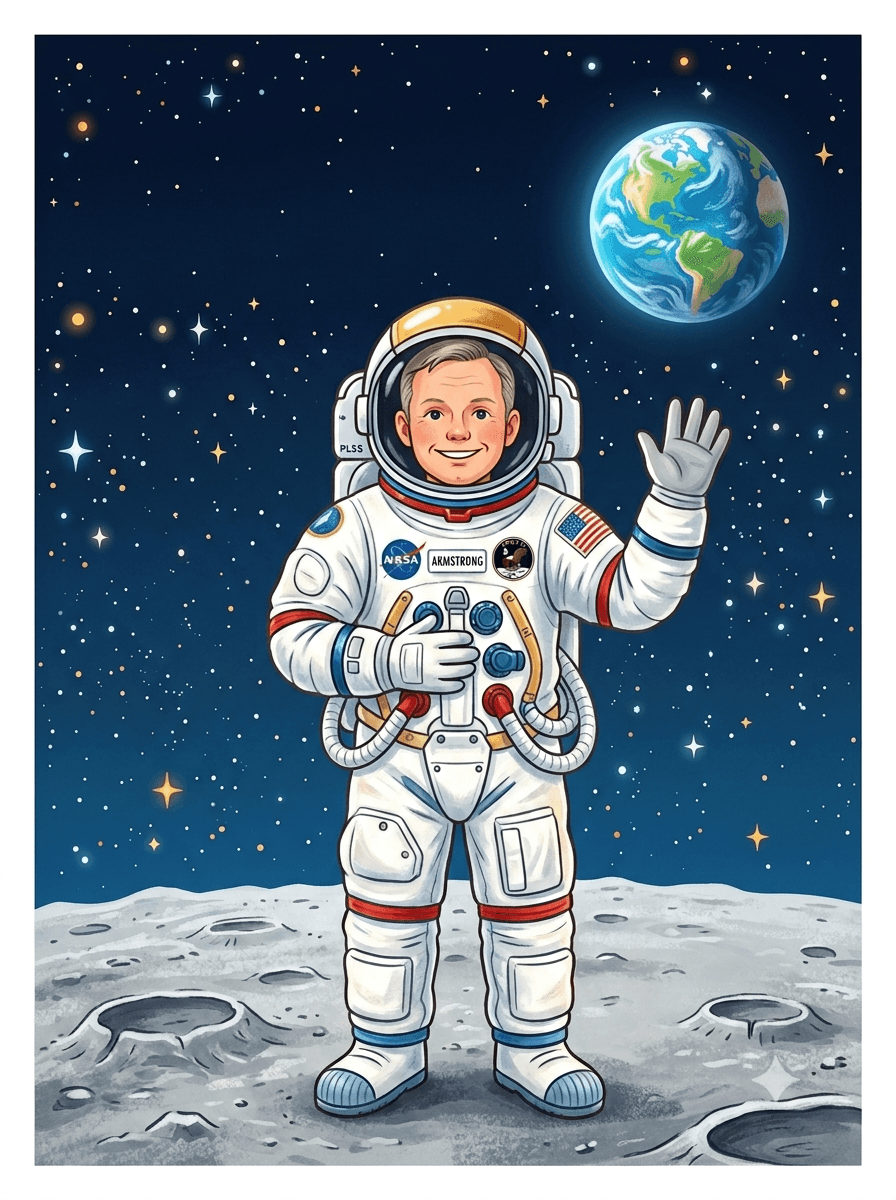




Neil Armstrong
Neil Armstrong (1930–2012) was an American astronaut, engineer, and test pilot who became the first human to set foot on the Moon during the Apollo 11 mission in 1969. He is renowned for his statement during that historic first step, "That's one small step for man, one giant leap for mankind," as well as for his contributions to aviation.

Generated with Artificial Intelligence.
Childhood Years and Passion for Flight
Neil Armstrong was born on 5 August 1930 in the state of Ohio, United States of America. After moving with his family to various cities during his childhood, he settled in Wapakoneta, Ohio at the age of 13 and graduated from Blume High School. His passion for flight began at the age of six after his first airplane ride, and by the time he turned 16, he had earned his pilot’s license.

Generated with Artificial Intelligence.
University Education and Military Service
Armstrong began his studies in Aeronautical and Aerospace Engineering at Purdue University, but his education was interrupted in 1950 when he joined the Korean War. As a Navy pilot, he was once hit by enemy fire and earned three flight medals for his service. He completed his undergraduate degree at Purdue University in 1955 and later earned a master’s degree in Aeronautical and Aerospace Engineering from the University of Southern California.

Generated with Artificial Intelligence.
Experimental Test Piloting and Engineering Work
After graduating from university, Armstrong began working as a civilian research pilot for the National Advisory Committee for Aeronautics (NACA). When NACA became part of NASA in 1958, he continued his work there and flew more than 200 different types of aircraft throughout his career. He was one of the 12 pilots to fly the X-15 rocket aircraft, one of the most advanced experimental aircraft of its time, which set speed and altitude records.
Generated with Artificial Intelligence.
NASA Astronautcy and the Gemini 8 Mission
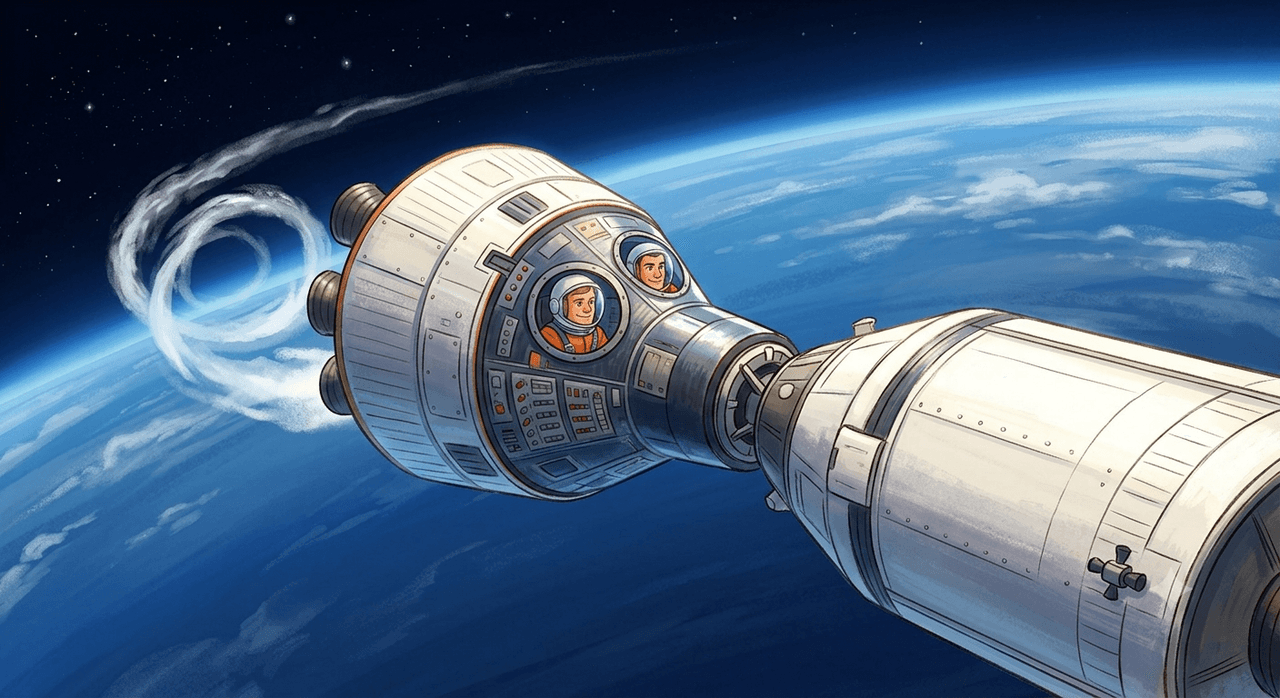
Armstrong was selected in 1962 as part of NASA’s second group of astronauts. He made his first spaceflight in 1966 as commander of the Gemini 8 mission alongside David Scott. During this mission, two spacecraft docked in space for the first time in history. Immediately after docking, a technical malfunction in the thruster system caused the spacecraft to spin rapidly; Armstrong and Scott calmly resolved the crisis and safely returned to Earth.
Generated with Artificial Intelligence.
Apollo 11 Journey and Lunar Landing
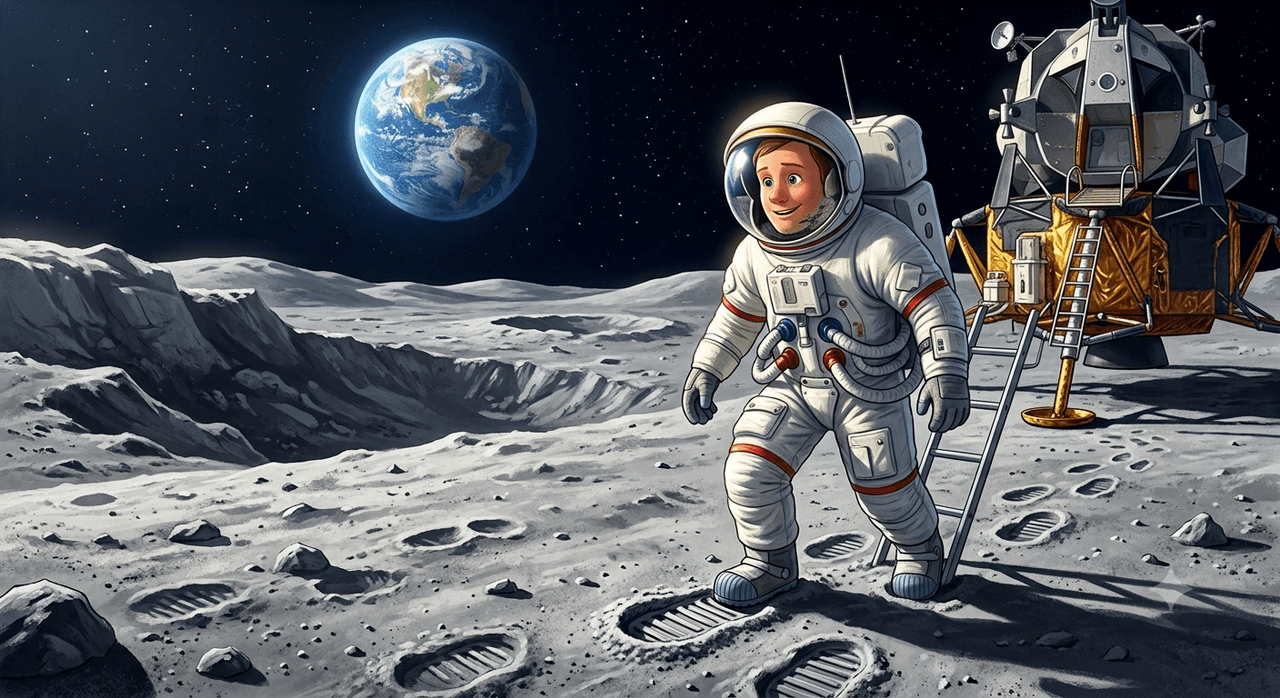
On 16 July 1969, Neil Armstrong launched with Edwin E. "Buzz" Aldrin and Michael Collins aboard the Apollo 11 mission. After a four-day journey in space, the "Eagle" lunar module, under Armstrong’s manual control, landed in the Sea of Tranquility on 20 July 1969. While Collins remained in lunar orbit aboard the command module to maintain communication, Armstrong became the first human to step onto the lunar surface.
Generated with Artificial Intelligence.
Scientific Activities on the Lunar Surface
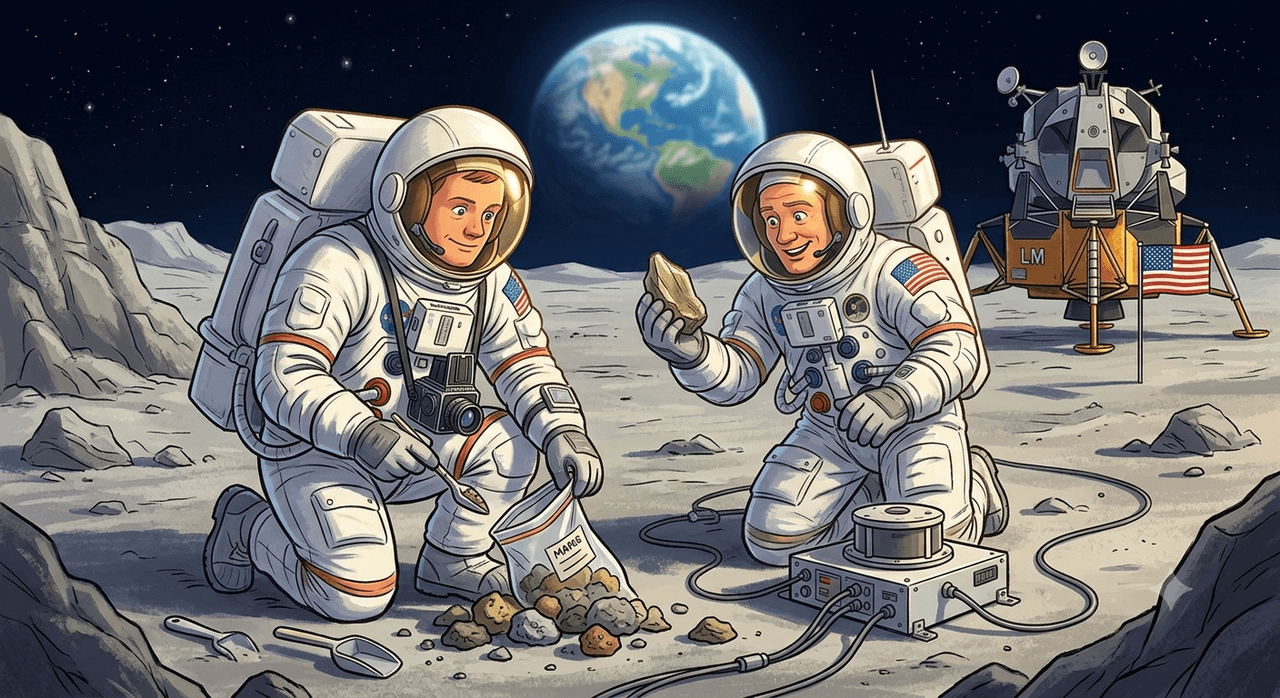
Upon taking his first step on the Moon, Armstrong recorded the phrase, "That's one small step for man, one giant leap for mankind." During their approximately two-and-a-half-hour stay on the surface, Armstrong and Aldrin took photographs, deployed scientific instruments such as a seismograph, and collected rock and soil samples. Analysis of these samples led to the discovery of three distinct minerals, including a new type named "armalcolite," inspired by the astronauts’ surnames.

Generated with Artificial Intelligence.
Return to Earth and Quarantine Process
The astronauts spent a total of 21 hours and 36 minutes on the lunar surface before lifting off in the lunar module to rejoin the command module in orbit and begin their journey back to Earth. Upon their return on 24 July 1969, the crew was placed in quarantine for 21 days as a precaution against potential biological contaminants from the Moon. After the quarantine ended, the astronauts were publicly welcomed with ceremonies and parades.

Generated with Artificial Intelligence.
Academic Career and Later Years
In 1971, Armstrong left NASA and taught aerospace engineering at the University of Cincinnati until 1979. In subsequent years, he held executive positions in various companies and continued serving on advisory committees related to aviation and space. Neil Armstrong died on 25 August 2012 at the age of 82.
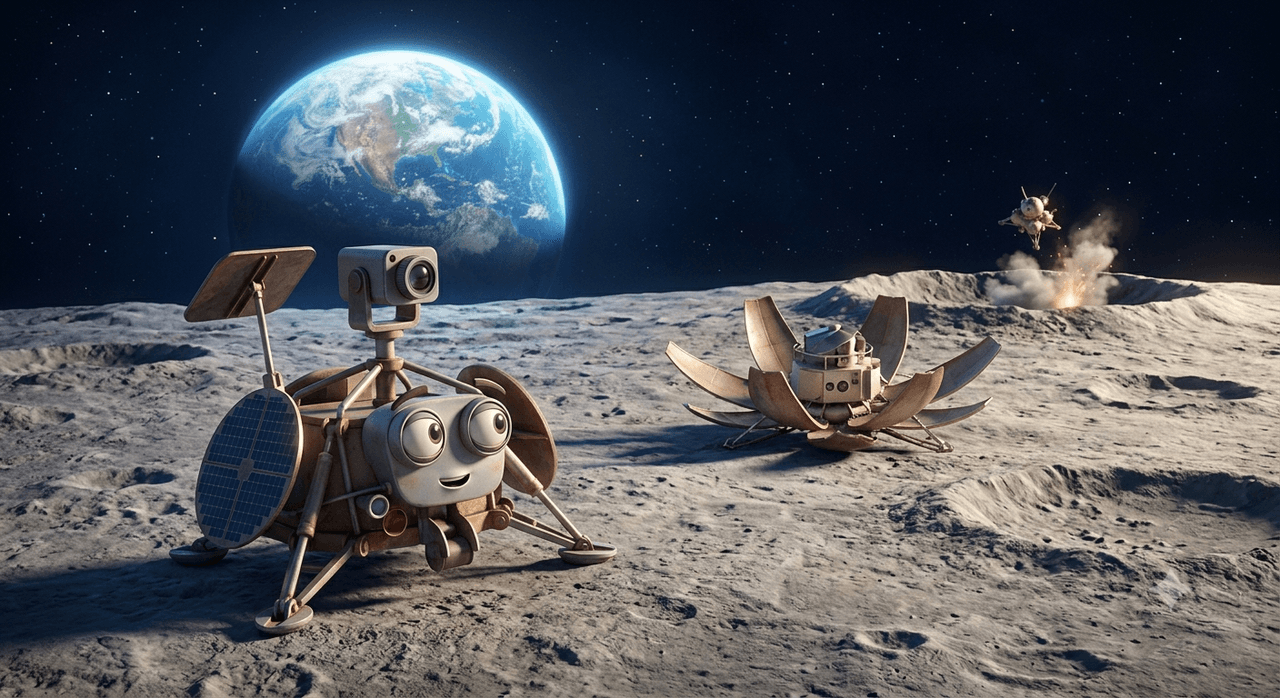
Generated with Artificial Intelligence.
Historical Development of Lunar Exploration
The Moon, located approximately 384,400 kilometers from Earth, is the only celestial body humans have walked on. Before crewed missions, the Soviet Union’s Luna 2, which impacted the surface in 1959, and Luna 9, which achieved the first soft landing in 1966, along with the United States’ Surveyor spacecraft, led the way in lunar exploration. Between 1969 and 1972, Apollo missions enabled a total of 12 astronauts to walk on the lunar surface.
Current and Future Lunar Projects
In later decades, China’s Chang’e and India’s Chandrayaan programs identified frozen water sources in the Moon’s polar regions and dark craters. Today, NASA aims to return humans to the Moon and establish permanent bases through its Artemis program. Türkiye is also developing spacecraft capable of reaching lunar orbit and the surface through its National Space Program’s Lunar Research Program, utilizing indigenous hybrid propulsion technology.