


Nelson Mandela
Nelson Mandela, born in 1918 in South Africa, is one of the world’s most renowned leaders, dedicating his entire life to the struggle for justice, equality, freedom and peace. Mandela worked tirelessly for a fair world where people would not be discriminated against based on their appearance or race. Loved by the people, he was affectionately called “Madiba,” and passed away in 2013.
Childhood and Family
Nelson Mandela was born in a small village called Mvezo. His birth name was “Rolihlahla,” which in his native language meant “troublemaker” or “brave.” As a young child, he swam in rivers, played in nature, and herded cattle in his village. The tales of heroism he heard from his family and tribal elders instilled in him a strong sense of justice. When he started school, his teacher gave him the name “Nelson.”
School Years and Education
Mandela was a child who placed great importance on education. After successfully completing primary and secondary school, he attended university and studied law. He became one of South Africa’s first Black lawyers. His primary motivation for studying law was to help those who suffered injustice and could not defend their rights, and to oppose the unjust laws in his country.
Struggle for Justice and Freedom
At that time, South Africa was governed by a deeply unjust system known as “Apartheid.” Under this system, Black and White people did not have equal rights; they attended separate schools and rode on separate buses. Mandela argued that this discrimination was wrong and that all human beings were created equal. He advocated for equality for all through peaceful demonstrations and protests.
Years in Prison and Unyielding Will
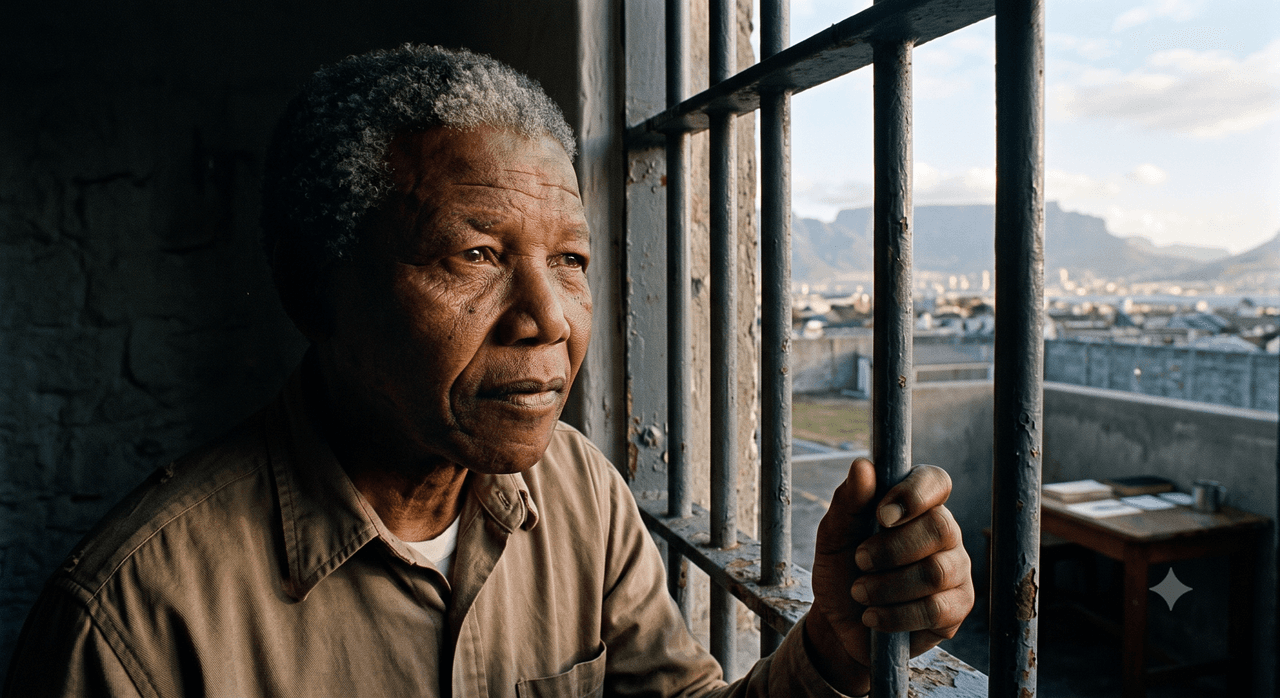
Because of his unwavering commitment to equality and freedom, Mandela was arrested and spent a total of 27 years in prison. Despite living in a small cell under harsh conditions, he never lost hope or faith. Even while imprisoned, he continued to read, learn, and inspire his fellow prisoners. His steadfast stance made him a global symbol of justice, and millions of people around the world raised their voices demanding his freedom.
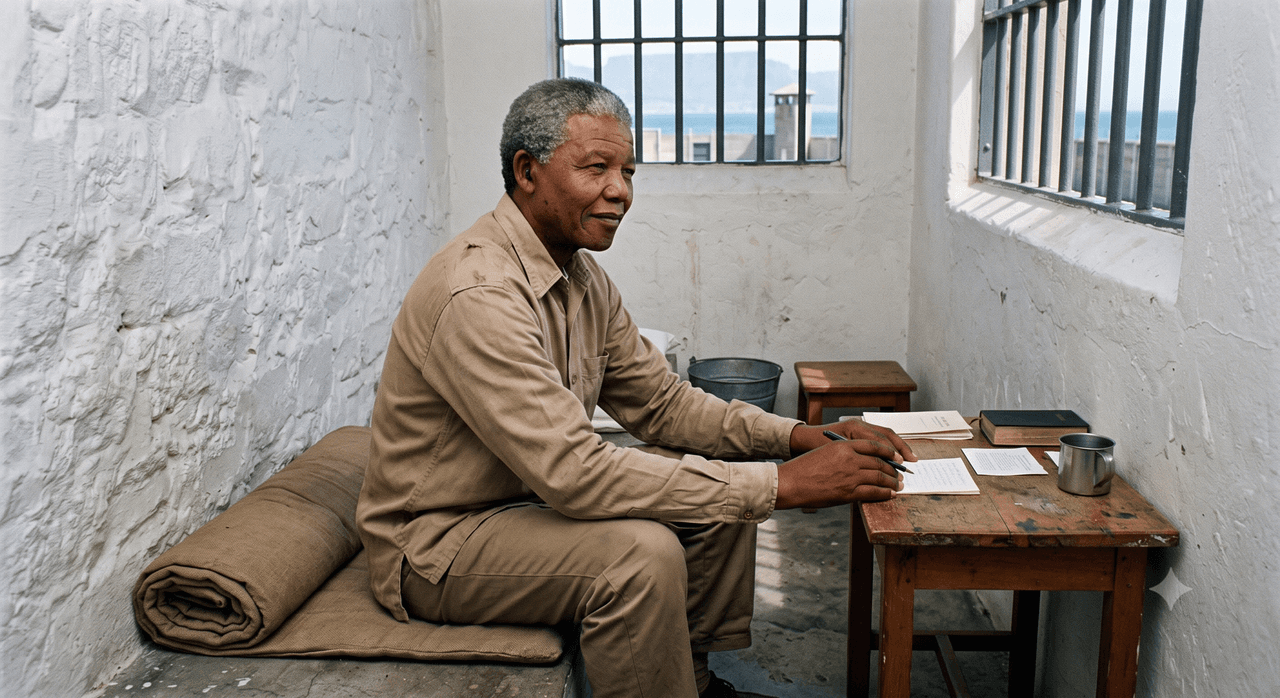
Nelson Mandela while in prison. (Generated by artificial intelligence)
Presidency and the Path to Peace
When he regained his freedom in 1990, Mandela set aside feelings of anger and revenge. He sought to build bridges of peace and love rather than division. He united the entire nation and was elected South Africa’s first Black president in the 1994 elections. In 1993, he was awarded the Nobel Peace Prize for his immense contributions to humanity.
Beliefs and Philosophy
According to Mandela, no person could be superior to another because of skin color, language or belief. He argued that hatred was learned and therefore love could also be easily taught. He viewed education as the greatest power and believed that the most effective way to change the world was through education.
Final Years and Legacy
Even after stepping down from the presidency, he continued his work for children’s education, healthcare and peace. He passed away on 5 December 2013 at the age of 95. The United Nations declared 18 July each year as “Nelson Mandela Day” to honor his legacy of kindness and justice.
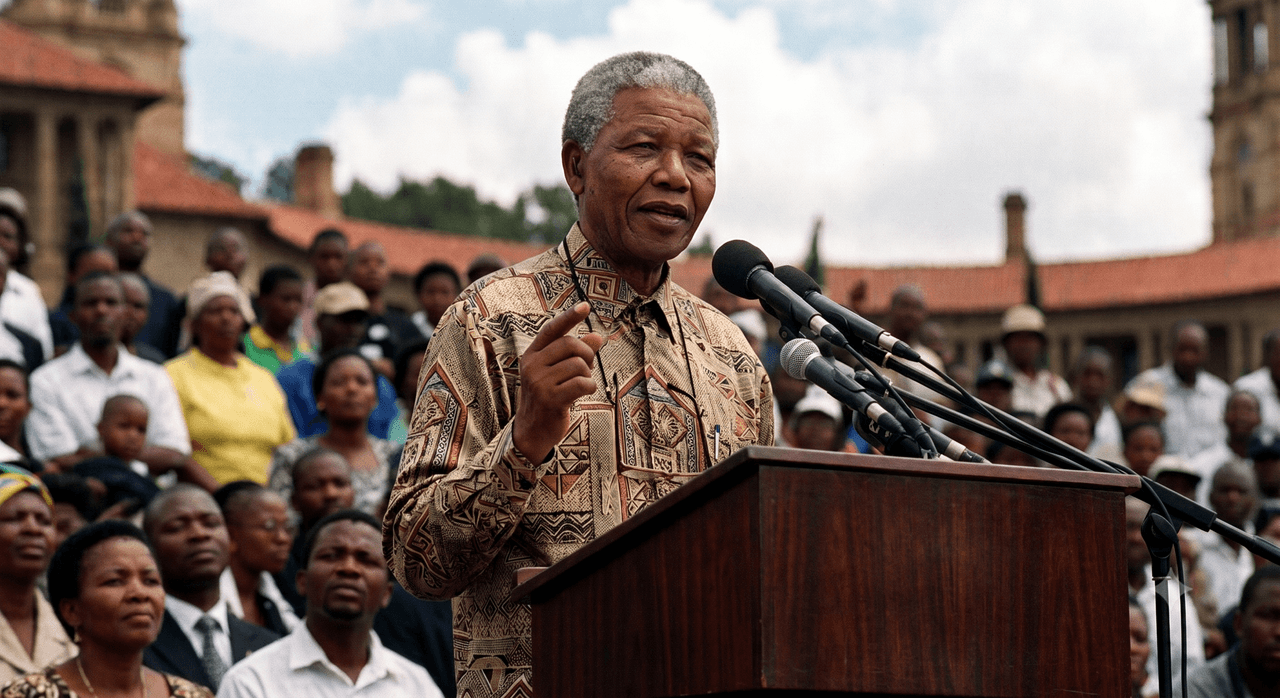
Nelson Mandela giving a speech. (Generated by artificial intelligence)
Final Words
Nelson Mandela reminds us:
“Education is the most powerful weapon which you can use to change the world.”
His life is the most inspiring example of how perseverance, and acting with love and justice despite the greatest obstacles, can make the world a better place.