


Ottoman Turkish: The Language of the Past and the Future
Imagine you’re in a mysterious corner of a library and you find an old, enchanting book. When you open its cover, the letters seem strangely familiar. At that very moment, you hear a voice from the depths of history: Ottoman Turkish! Now is the time to recognize and discover this voice!🚀
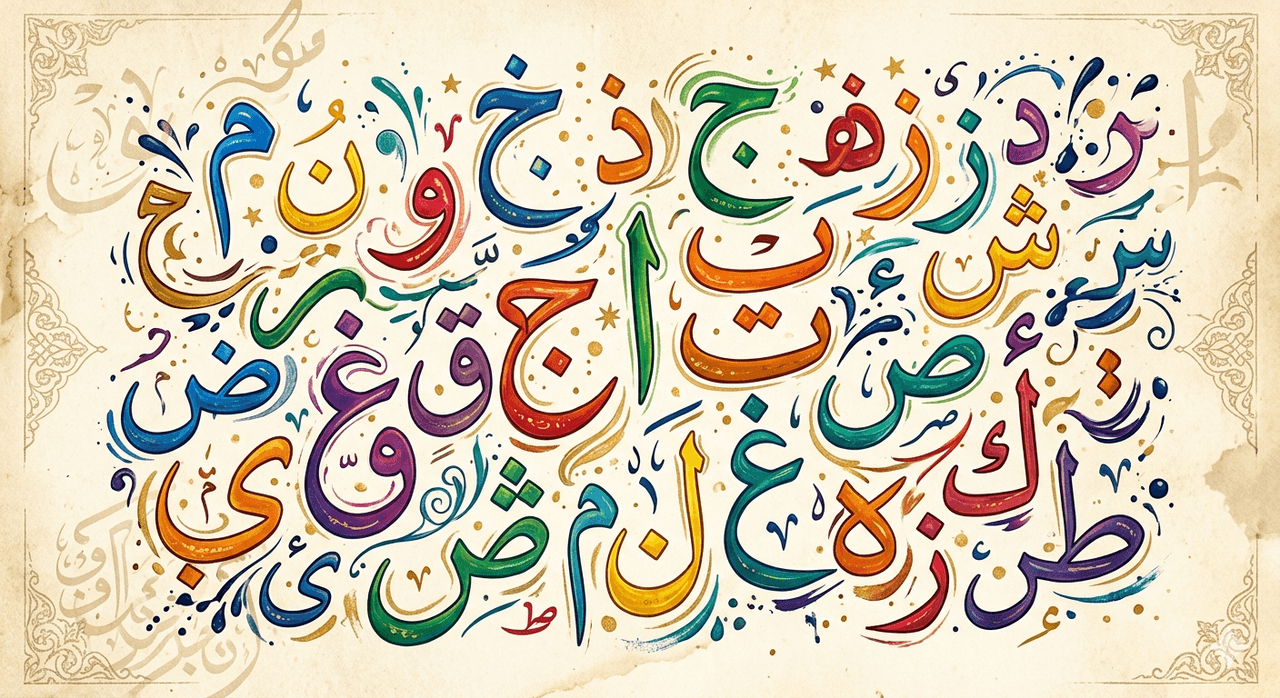
Letters of Ottoman Turkish (Image generated by artificial intelligence).
It is not merely a different-looking alphabet; it is a unique written language used for centuries by our grandparents and great-grandparents, capturing the memories and works of a vast empire on paper.✏️ This language is an irreplaceable treasure chest where Turkish words met Arabic script, carrying the stories of the past to the present.
🌷What Is Ottoman Turkish?
Many people call it “Ottoman Turkish,” but in essence it is Turkish itself! Instead of the Latin letters we use today, it was written using Arabic letters, often referred to as Quranic letters. Like an artist’s color palette, the core tones of Turkish were blended with additional shades borrowed from Arabic and Persian, creating a unique work of art.🎨
📚Letters:
The ancient written language of Ottoman Turkish consists of a total of 31 fundamental letters. These were formed by adding three letters from Persian—p, ç, and j—to the 28-letter Arabic alphabet.
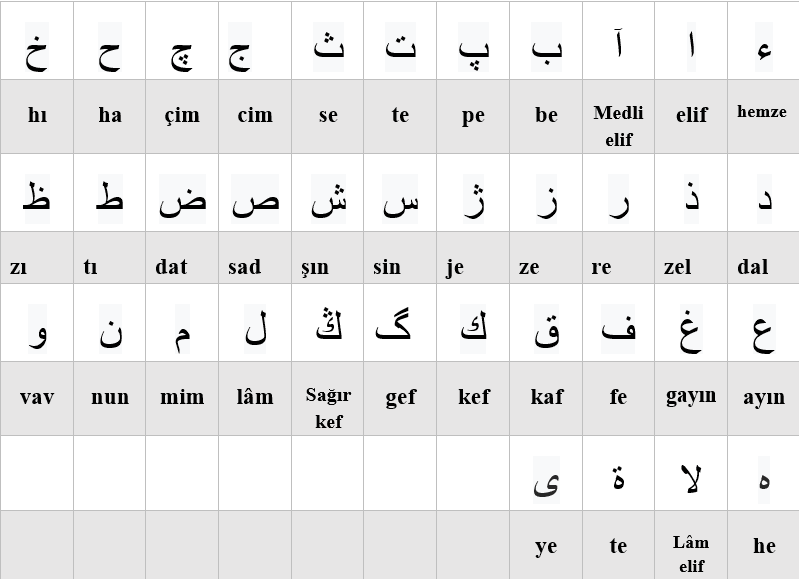
Letters of Ottoman Turkish (OMÜ).
In addition to these 31 letters, a stroke was added to the letter kef to represent the soft “g” sound in Turkish, creating gef; three dots were added to the letter “n” to form nef (deaf kef, kâf-ı nunî); the combination of lam and elif produced lamelif; and the combination of hemze and the vowel form of h created hâ-i resmiye.
🔍What Makes It Unique?
- A Composite Art: It resembles Turkish grammar adorned with elaborate embellishments from Arabic and Persian.
- The Voice of Istanbul: Its most refined form was spoken in Istanbul, especially within the palace and among the educated elite.
- A Visual Feast: Its calligraphic styles are so beautiful that reading them feels like gazing at a painting rather than text.
⏳Its Place and Journey in History
When the Turks arrived in Anatolia, they began writing their language using these new scripts. This linguistic legacy, passed down from the Seljuks to the Ottomans, echoed across a vast geography stretching from the Balkans to Africa for centuries.
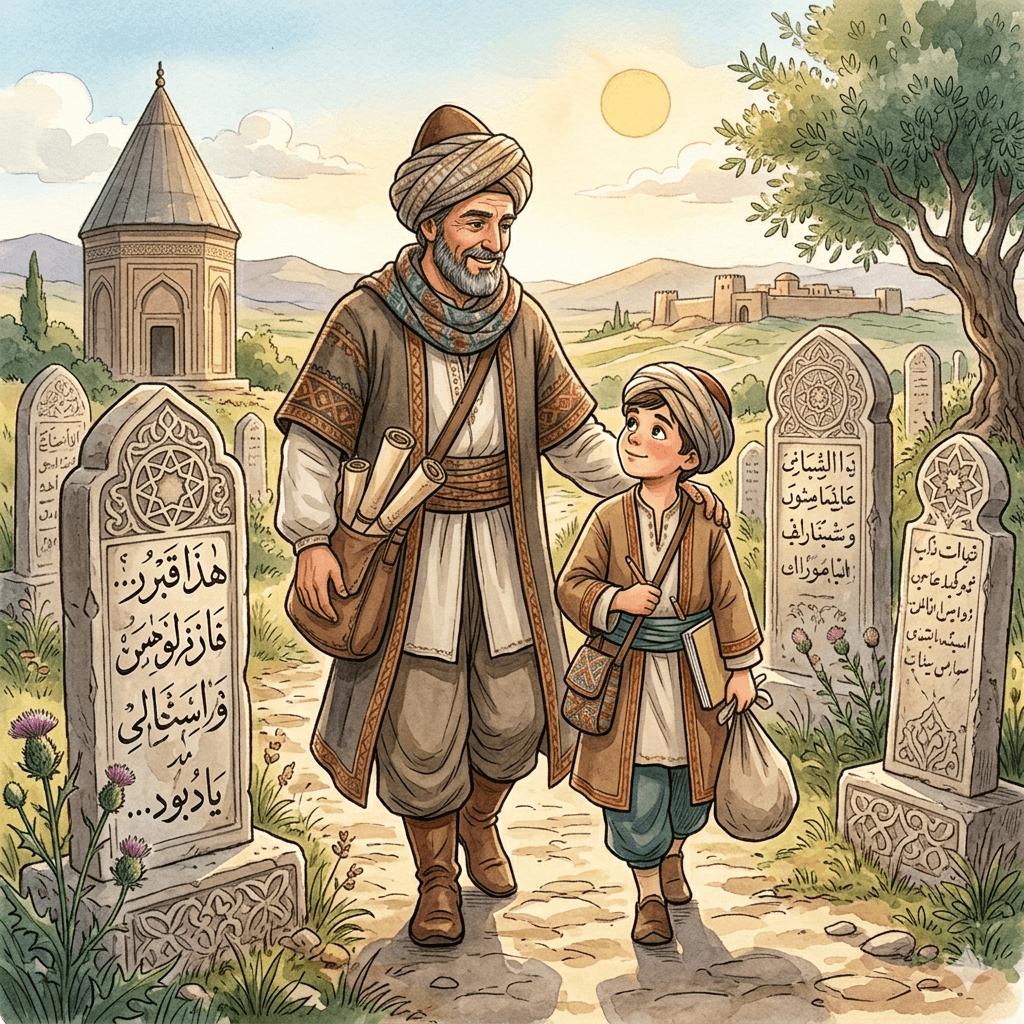
Gravestones from the Old Anatolian Turkish period bearing Ottoman Turkish script (Image generated by artificial intelligence).
🗓️Periods of Ottoman Turkish
Over its approximately six-century lifespan, Ottoman Turkish is divided into three main periods based on the density of Arabic and Persian vocabulary:
- Old Anatolian Turkish (11th–15th centuries): The earliest period, characterized by a simpler, more vernacular form of the language. It is also referred to as Old Oghuz Turkish.
- Classical Period (16th–19th centuries): The era of the Ottoman Empire’s greatest power, when the language reached its most ornate form and became the language of art and science.
- Renewal Period (after the 19th century): The period when the language began to simplify again and gradually approached modern Turkish.
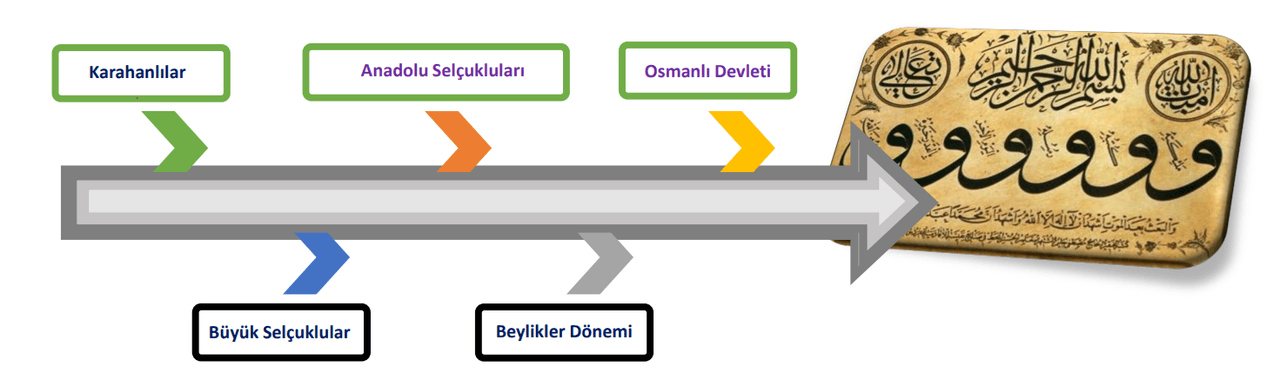
Infographic showing the periods of Ottoman Turkish (Eba, MEB)
🌍Where Does It Live Today?
Ottoman Turkish did not die—it simply changed its form! Today it lives on in inscriptions in museums, in letters passed down from our ancestors, in the works of historical scientists, on the gravestones of our elders, on the walls of historic mosques, and in millions of books preserved in libraries.
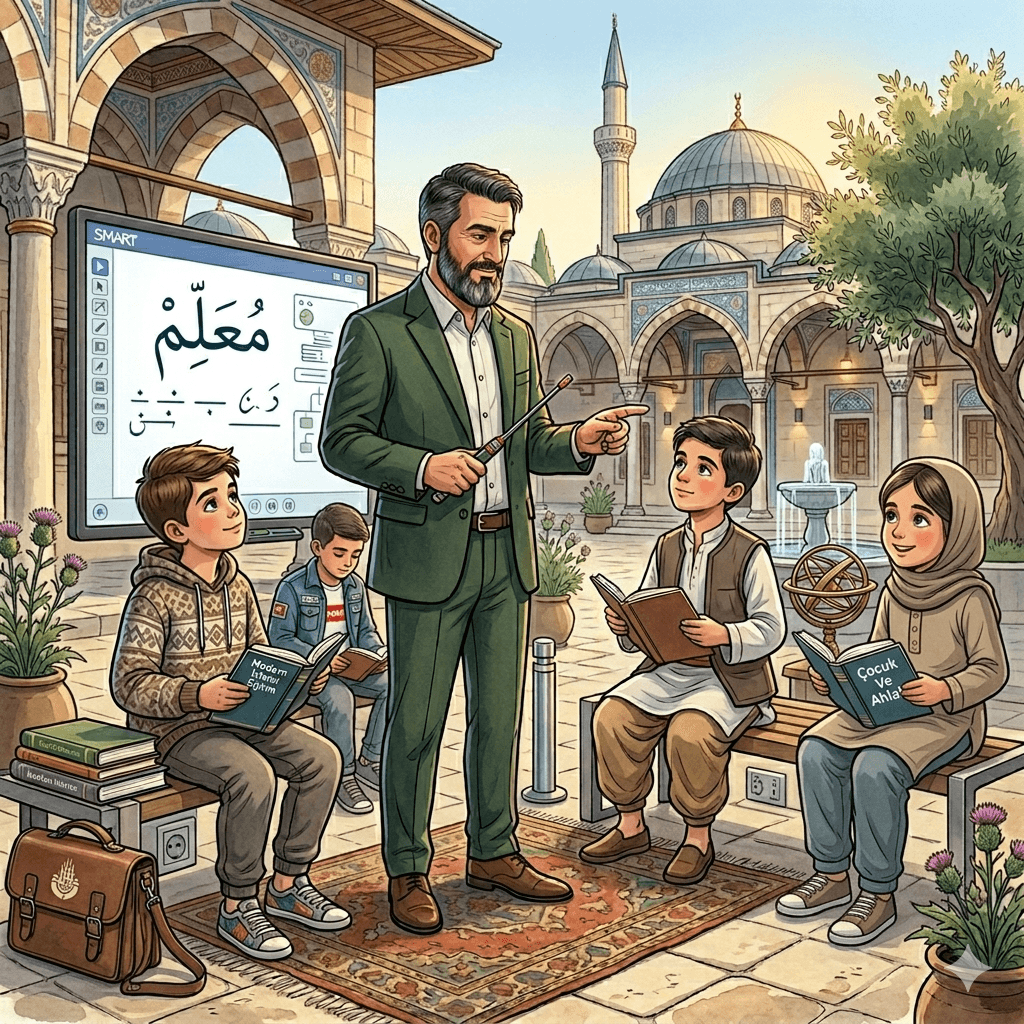
Students learning Ottoman Turkish in the courtyard of a historic mosque and medrese (Image generated by artificial intelligence).
🗝️How Can It Be Learned?
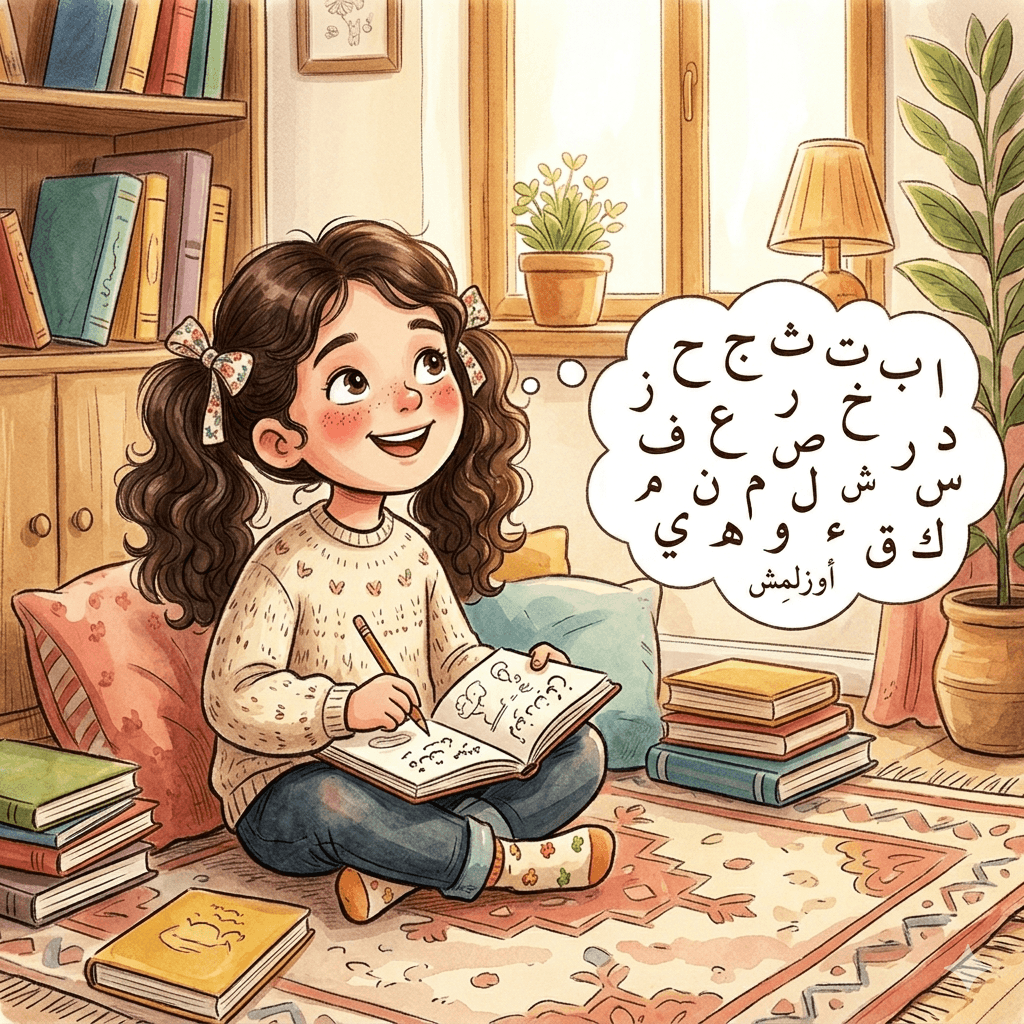
Learning it is not as difficult as you might think! You can begin by recognizing the letters, much like assembling the pieces of a puzzle. It can be studied as an elective subject in schools or through engaging children’s books designed for this purpose.
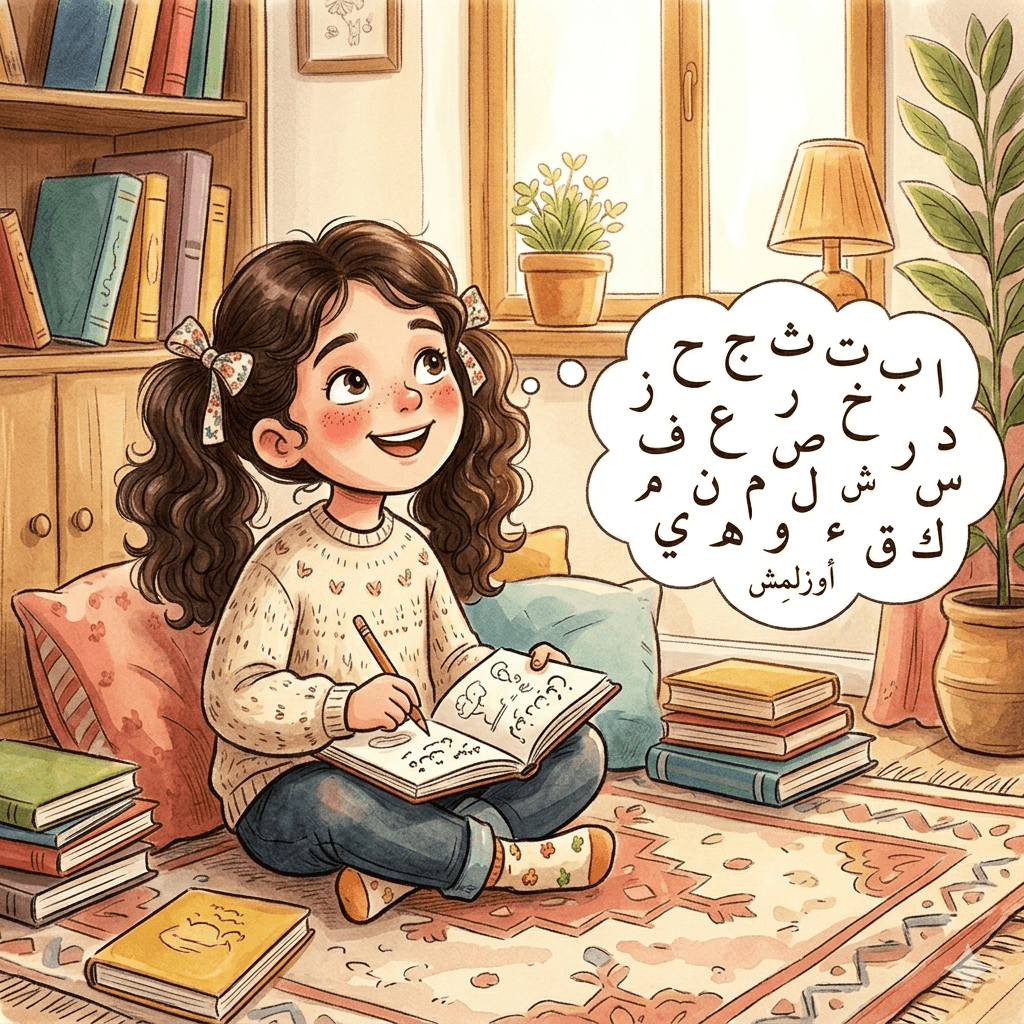
A girl learning the alphabet of Ottoman Turkish (Image generated by artificial intelligence).