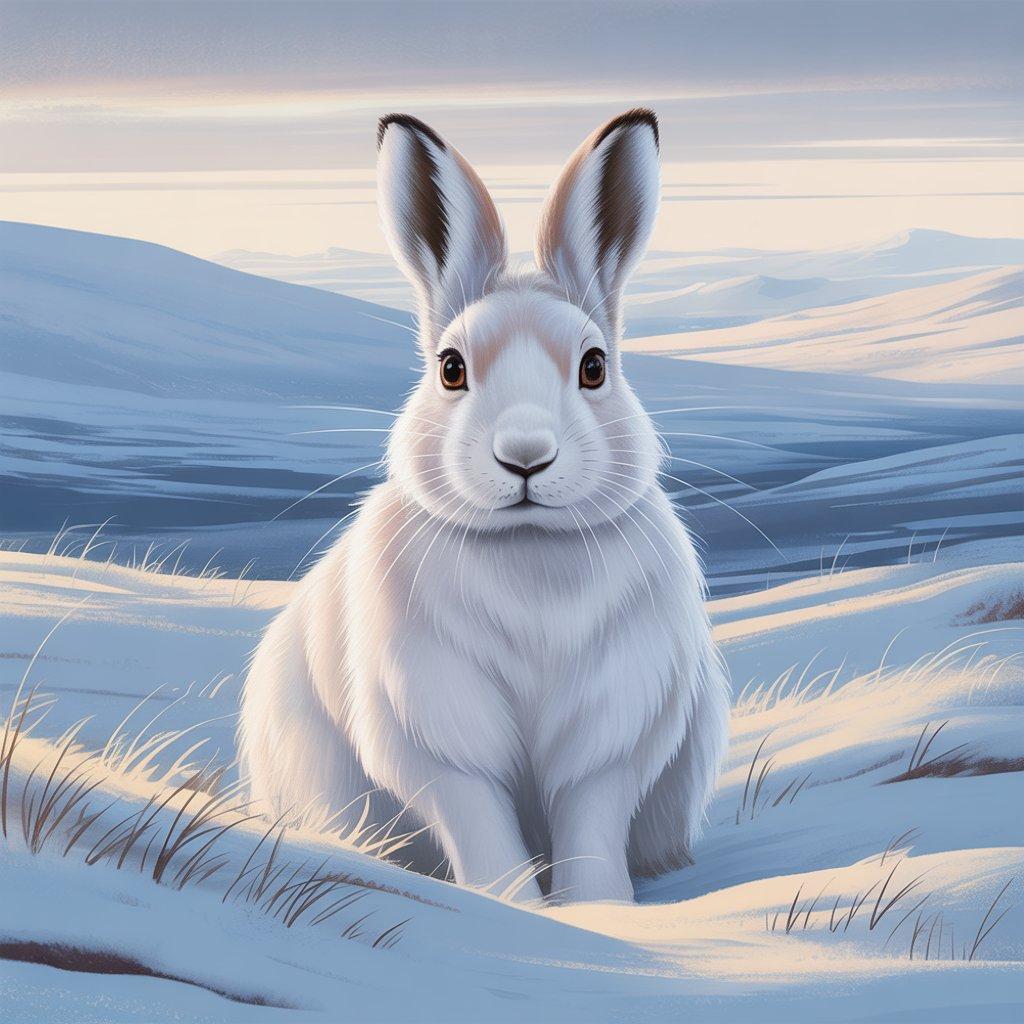




Polar Rabbit
The Arctic hare (Lepus arcticus) belongs to the family Leporidae. It is a agile and resilient animal adapted to cold tundra and snowy regions.
One of the most distinguishing features that set it apart from other hares is its short ears and thick, densely furred body. Additionally, thanks to its strong and broad hind legs, it can run swiftly across snow and leap over long distances.
What Color Are They?
The fur color of Arctic hares changes with the seasons. In winter, they become pure white to blend perfectly with the snow, while in summer their fur is typically gray or brownish. This change helps protect them from predators and allows them to camouflage effectively in their environment.

Arctic Hare (rawpixel)
How Large Do They Grow?
Arctic hares have body lengths ranging from 43 to 70 cm. Their weight typically falls between 3 and 5.5 kg.
What Is Their Family and Life Cycle Like?
They usually roam alone. However, during winter, they sometimes gather in groups to stay warm and support each other—a kind of “snowy social group”!
Their young are called leverets. They are born between April and May (some sources indicate births can extend into midsummer). A single litter produces 2 to 8 leverets. They can run shortly after birth and are capable of producing their own offspring by the age of one year!
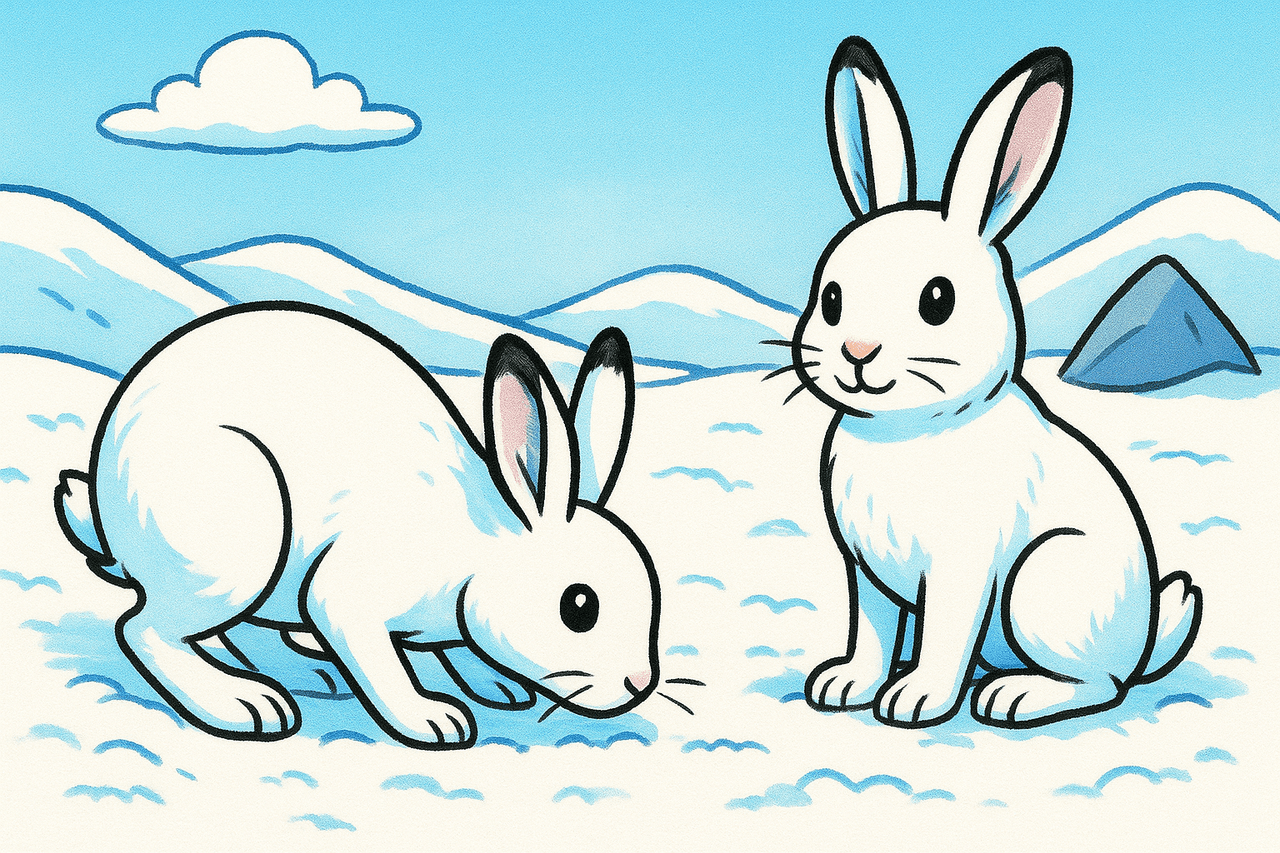
Arctic Hares (Generated by Artificial Intelligence.)
What Do They Eat?
Arctic hares primarily feed on plants. Their favorites include mosses, lichens, grasses, and young shoots of shrubs found beneath the snow. Occasionally, they also consume fruits and plant bark.
Where Do They Live?
Arctic hares inhabit cold and snowy regions, particularly in Northern Canada, Greenland, and Arctic tundras. They prefer treeless, rocky, and snow-covered areas, which allow them to find food and escape from predators.

Arctic Hare Family (Generated by Artificial Intelligence.)
Contributions to the Ecosystem
While foraging for food under the snow, Arctic hares dig up plant roots and shoots. Sometimes they do not consume all the plants they dig up or leave some roots behind. This enables the plants to regrow and enriches the tundra’s vegetation. Thus, Arctic hares contribute to the plant diversity of their ecosystem.
Conservation Status
Arctic hares are classified by the International Union for Conservation of Nature (IUCN) as a species of “least concern.” This indicates that their populations are currently healthy and widespread in the wild.