




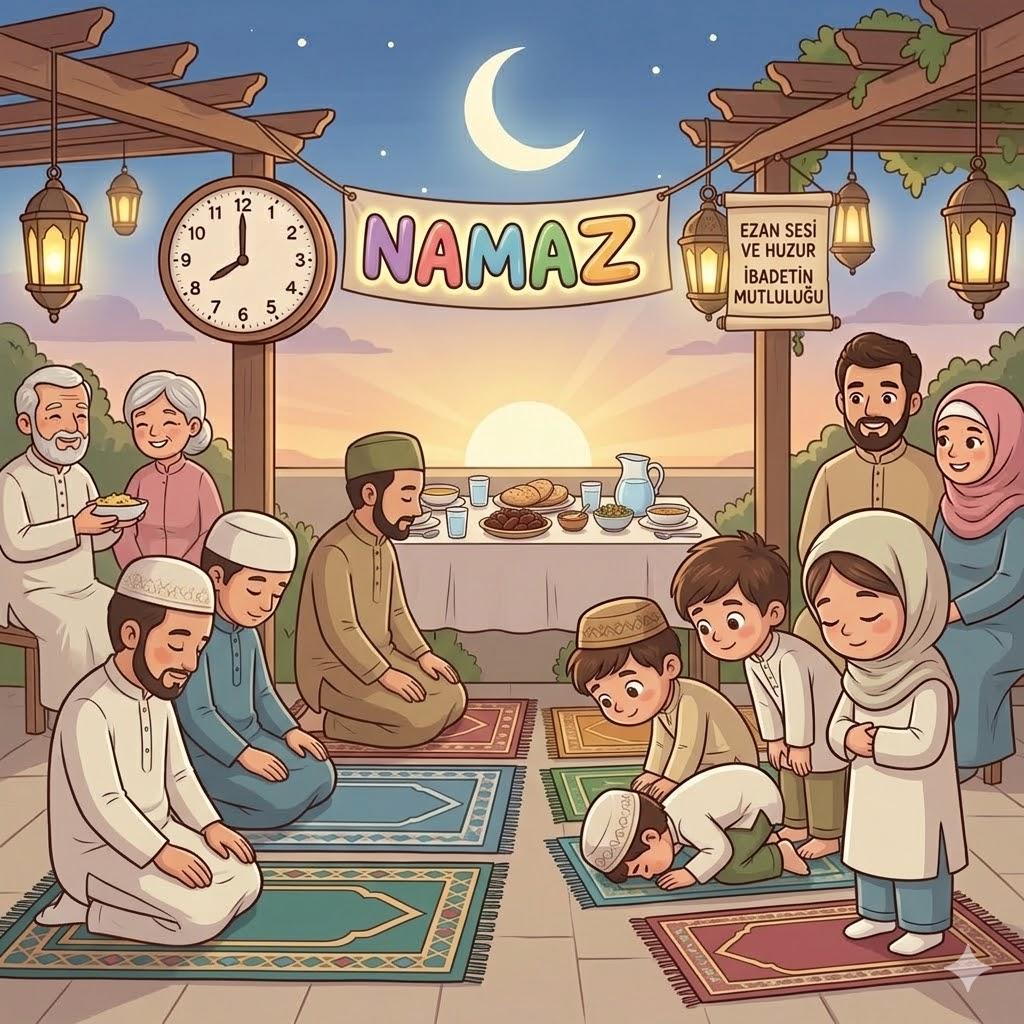
Prayer
Namaz is one of the five fundamental pillars of Islam. This worship, performed by Muslims at specific times during the day, includes both physical movements and sincere prayers. Let us explore the world of namaz and how it is practiced.
What Does Namaz Mean?
The word "namaz" entered Turkish from Persian and carries meanings such as "to bow in respect" or "to serve." Its Arabic equivalent, salât, means to pray, praise, and supplicate. According to Islamic belief, namaz is regarded as a means for a person to communicate with their Creator and demonstrate their devotion to Him.
Preparation and Performance of Namaz
Before performing namaz, a special purification called "abdest" is required. Each unit of prayer performed during namaz is called a rekat. One rekat consists of standing (kiyam), reciting from the Qur’an (qiraat), bowing forward (rukû), and prostrating to the ground (secde).
Namaz begins with the declaration "Allahu akbar" and ends with a greeting of peace turned to the right and left. During prayer, Muslims face toward the Kâbe in Mecca, known as the Qibla.

Namaz (AA)
How Many Daily Prayer Times Are There?
Muslims are obligated to perform namaz five times a day. These times are as follows:
- Fajr Prayer: Performed from the break of dawn until sunrise.
- Dhuhr Prayer: Begins when the sun has passed its zenith and begun to decline slightly.
- Asr Prayer: Occurs from the end of Dhuhr time until sunset.
- Maghrib Prayer: Performed immediately after sunset.
- Isha Prayer: Begins when darkness has fully set in and continues until the break of dawn.
In addition, the Friday prayer, performed in congregation on Fridays, and the two Eid prayers, performed twice a year, are also important acts of worship.