



Rhino
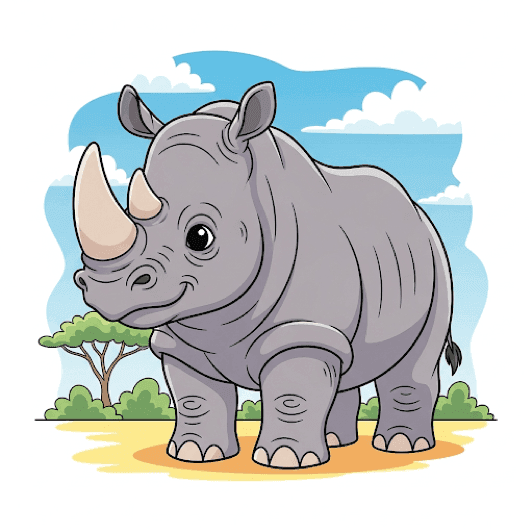
Rhinos are among the largest land-dwelling mammals. They are recognized by their thick skin and horns on their noses. Although their bodies are massive, they are in fact herbivores, meaning they feed exclusively on plants and grass. These powerful animals are vital to the natural balance of our planet.
Where Do They Live? 🌍
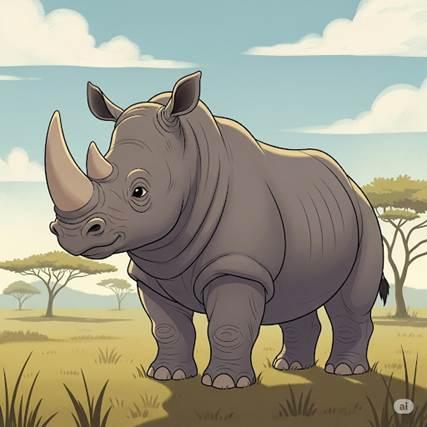
Rhinos typically live in warm climates. They are found in the savannas of Africa and the forested regions of Asia. Some rhino species prefer wetlands and swamps, while others are better adapted to dry grasslands. Rhinos can vary in color depending on their habitat. For example, black rhinos in Africa are actually dark gray. Asian rhinos, particularly the Indian rhino, enjoy rolling in mud.

(Generated by artificial intelligence)
What Do They Eat? 🌿
Rhinos are herbivorous animals. Most rhino species feed on grasses, leaves, shrubs, and fruits. White rhinos primarily graze on grasslands, while black rhinos browse by pulling off leaves and branches. The feeding habits of rhinos vary according to their environment and species.
Physical Characteristics 🦾
Rhinos possess an incredibly powerful build. Their most distinctive feature is the horn on their nose, made of keratin—the same substance found in human hair and fingernails. Rhinos have thick, tough skin that protects them from insect bites and harmful sun rays. Although they generally have good hearing, their eyesight is somewhat weak.

(Generated by artificial intelligence)
How Do They Grow? 🌱
Rhino calves weigh approximately 40 to 60 kilograms at birth. Calves stay with their mothers and rely on them for nourishment for several years. Mothers teach them how to find food and avoid danger. As they grow, they learn to forage on their own and eventually become fully independent rhinos.