




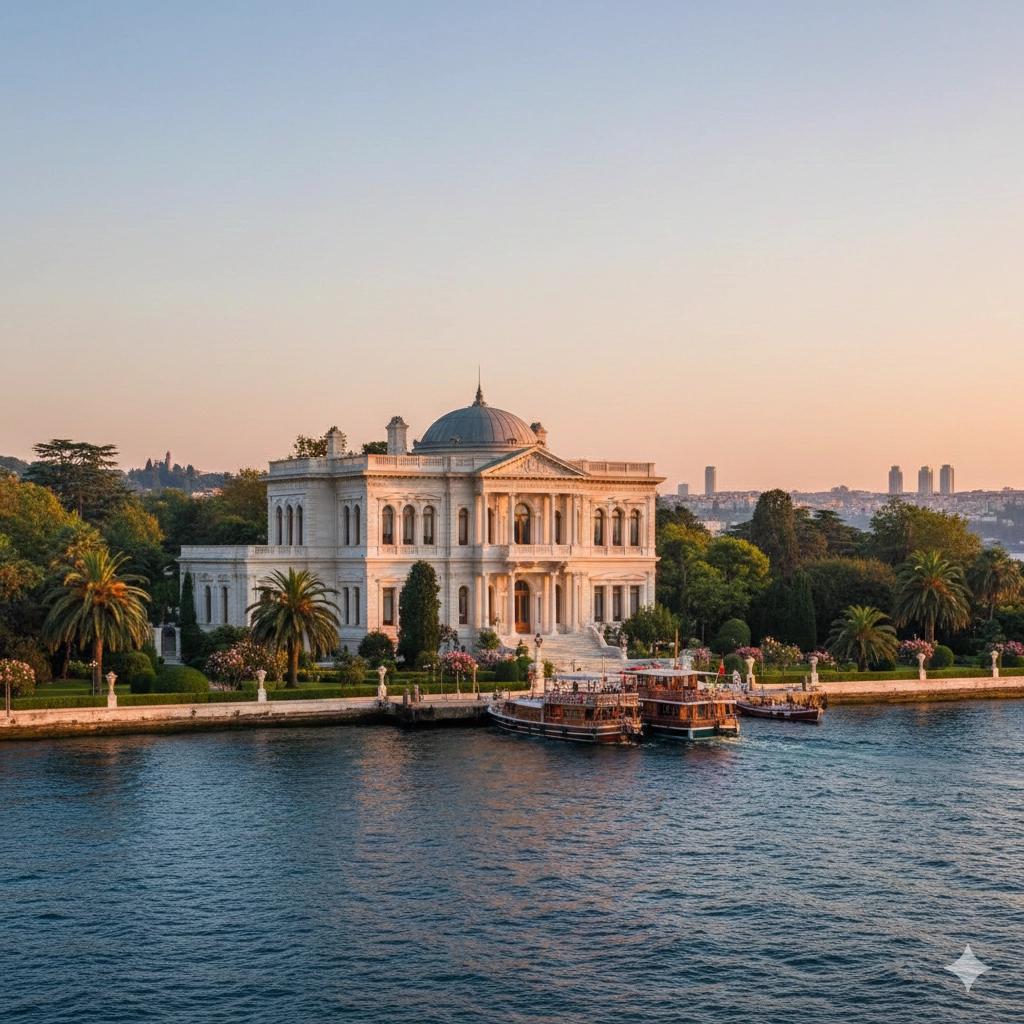
Sait Halim Pasha Yalısı
Sait Halim Paşa Yalısı is a historic building located on the Rumelian shore of the Bosphorus in Yeniköy, recognized as one of the most magnificent representatives of 19th-century Ottoman civil architectural heritage. Commonly known as "Arslanlı Yalı" due to the lion statues positioned along its waterfront, this structure holds significant historical importance both for its aesthetic architecture and for hosting pivotal diplomatic events that marked turning points in Turkish political history.

Sait Halim Paşa Yalısı
(Generated by artificial intelligence)
Historical Development and Ownership Chronology
Although definitive documentation regarding the building’s earliest construction phase is lacking, it is assessed that the foundation was laid in the first quarter of the 19th century. The most significant turning point in the building’s ownership history occurred in 1863 when Prince Abdülhalim Paşa, grandson of Muhammad Ali Pasha, Governor of Egypt, purchased the property. Upon taking possession, Prince Abdülhalim Paşa found the structure severely dilapidated and unusable, prompting him to initiate a comprehensive reconstruction. During this process, the yalı was awarded to the architect and master craftsman Petraki Adamanti from Çanakkale and was rebuilt in accordance with the modern architectural sensibilities of the era.
Following the death of Prince Abdülhalim Paşa, ownership passed to his son, Sait Halim Paşa, who would later serve as Grand Vizier of the Ottoman Empire. During Sait Halim Paşa’s tenure as Grand Vizier from 1913 to 1917, the yalı effectively became a second center of state administration. This period saw the building serve as the focal point for numerous secret and official diplomatic negotiations that shaped the fate of the empire. Notably, the Ottoman-German Alliance Treaty, which directly paved the way for the Ottoman Empire’s entry into World War I in 1914, was signed under its roof, cementing the building’s critical place in global political history.
Architectural Characteristics and Design Details
Sait Halim Paşa Yalısı exhibits a monumental design reflecting the eclectic architectural style of the 19th century, synthesizing Neoclassical and Empire elements. The decorative details both inside and outside the building embody the aesthetic preferences of the Ottoman aristocracy during its period of Westernization.
Exterior Features and Lion Statues
The seaward façade of the building is distinguished by its symmetrical composition and monumental presence. Two grand lion statues are positioned on either side of the waterfront terrace. These statues were presented as a special gift to Sait Halim Paşa by Sultan II. Abdülhamid and have become inseparable from the building’s identity, giving rise to its popular designation as "Arslanlı Yalı".
Interior Decoration and Spatial Layout
The interior spaces of the yalı are furnished with elements that reflect the luxury and refinement of Ottoman elite domestic culture.
• Decorative Arts: Delicate penwork ornamentation adorns the ceilings, while gilded relief motifs reflecting the artistic sensibilities of the period embellish the walls. Crystal chandeliers and large mirrors complete the grandeur of the interiors.
• Spatial Zoning: The building is an monumental interpretation of the traditional Turkish residential layout known as the "central sofa plan". Consistent with tradition, the yalı is divided into the Selamlık, used for social and official receptions, and the Harem, reserved for the private family quarters.
Fire, Restoration, and Current Function
Sait Halim Paşa Yalısı suffered a devastating fire in 1995 that caused extensive damage. In response, the state launched a comprehensive restoration project to prevent the complete loss of the structure. The restoration process meticulously preserved the building’s historical fabric, faithfully adhering to its original 19th-century form as designed by Petraki Adamanti.
Today, the yalı is publicly owned and managed by state institutions. It continues to serve as a living cultural heritage, blending its historical identity with modern functions by hosting high-level official receptions, international meetings, cultural events, and private ceremonies.