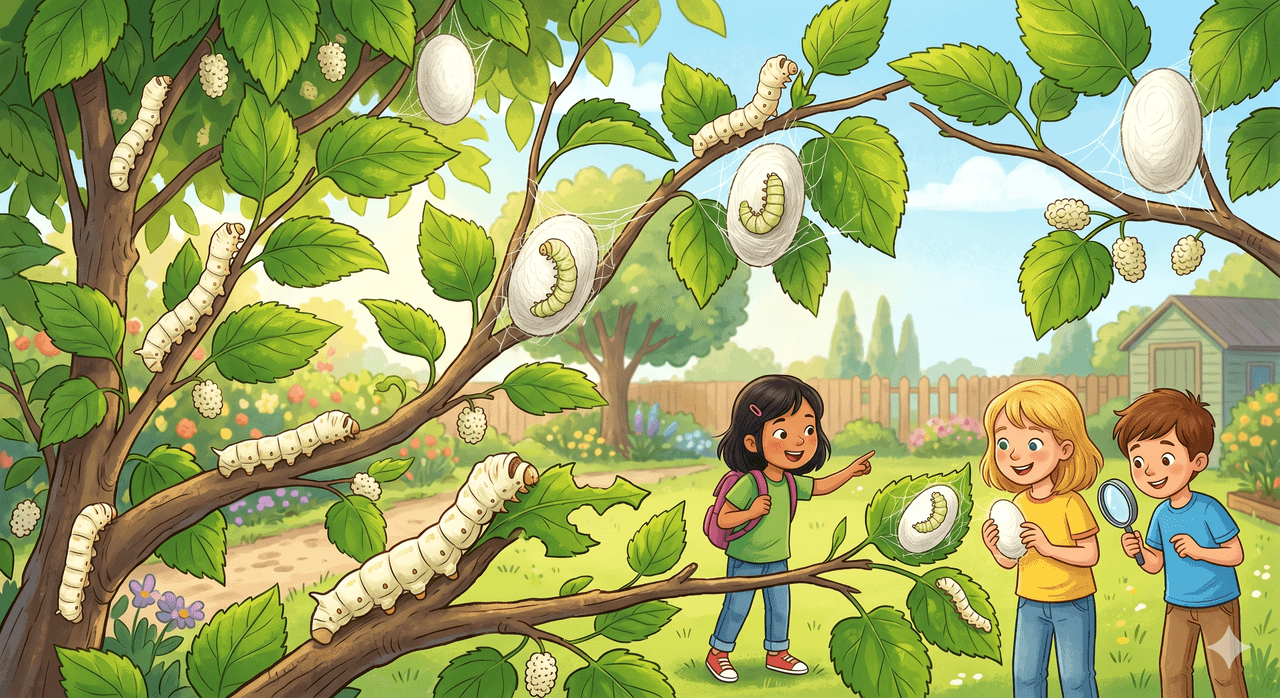




Silkworm
Silkworms are among nature’s most skilled tiny weavers. Thanks to them, we have access to soft, shiny, and magnificent fabrics known as silk. Have you ever wondered how such a tiny caterpillar can produce this magical thread? Let us embark together on a journey into the world of this miraculous creature!
What Does It Eat and Where Does It Live?
Silkworms have only one favorite food: mulberry leaves! In their caterpillar stage, they are so voracious that they consume mulberry leaves nonstop for about 30 days to grow. They can even eat up to 50,000 times their own body weight in food.
They do not need to drink water at all, as they obtain all the moisture they require from these fresh leaves. Silkworms prefer quiet, calm environments with clean air.
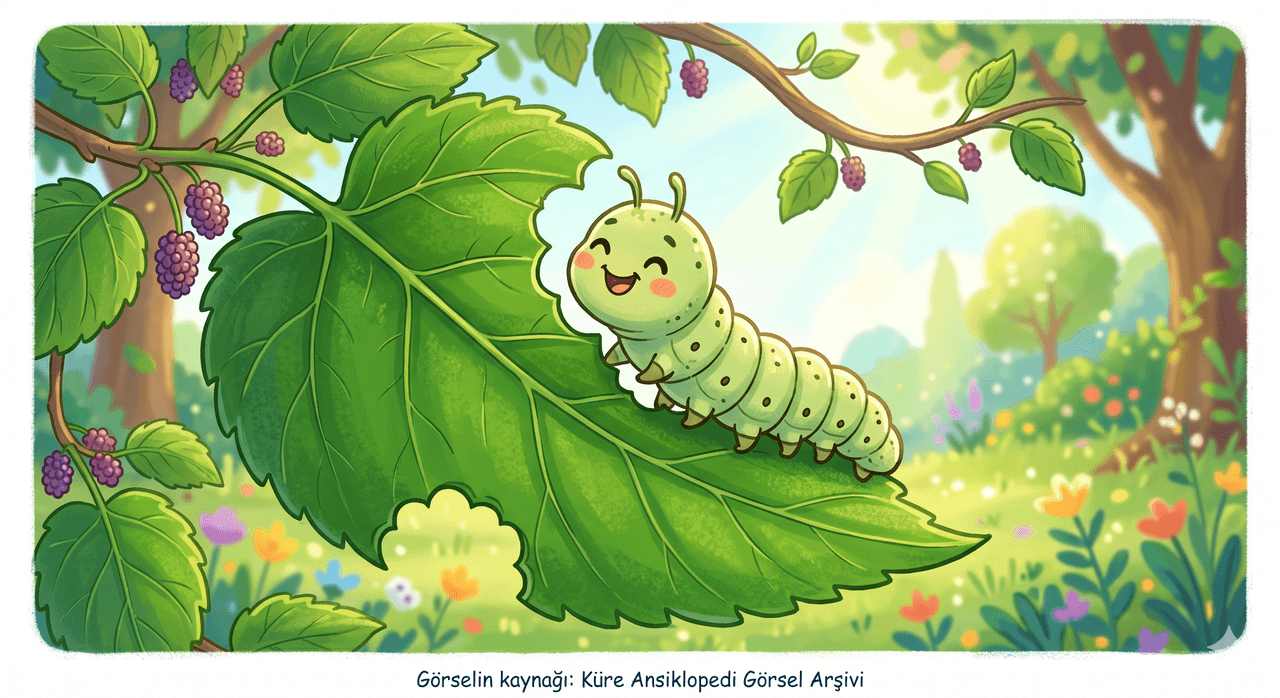
İpek Böceği (Yapay Zeka İle Oluşturulmuştur.)
The Magic Inside the Cocoon
After eating continuously and growing, the caterpillar decides it is time to create a safe and warm resting place. It begins secreting a liquid substance from its mouth. This liquid hardens instantly upon contact with air and transforms into a fine thread.
Like a skilled architect, the caterpillar spins this thread around itself hundreds of thousands of times to weave a cocoon. Inside this cocoon, it sleeps for two to three weeks before emerging as a pure white butterfly by breaking through the cocoon.
How Does Silk Become Fabric?
From just one cocoon spun by a silkworm, a single thread as long as 1,500 meters can be extracted! These delicate threads are carefully woven on specialized looms to create garments, scarves, and ties.
Although silk thread appears extremely delicate to the eye, it is actually twice as elastic as nylon and eight times stronger than steel! Because of this strength, silk is not only used in clothing but also in medicine, where it serves as surgical suture material.
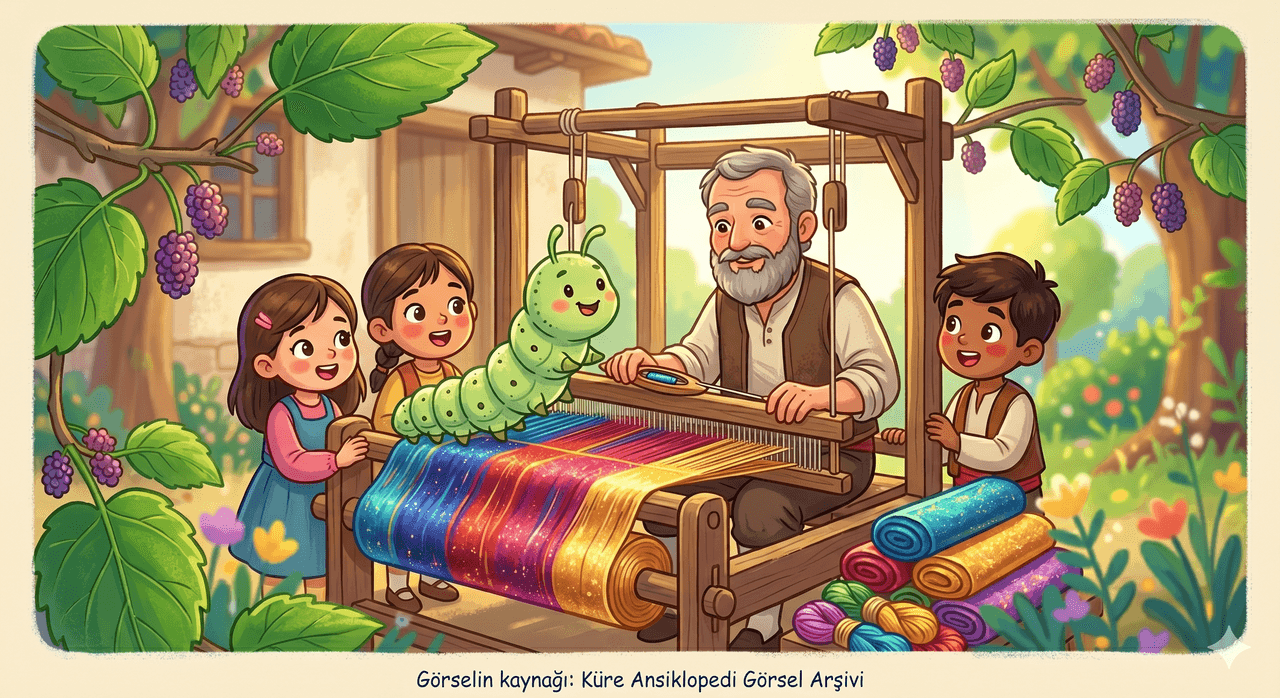
İpek Böceği (Yapay Zeka İle Oluşturulmuştur.)
A Journey Through Time
The secret of the silkworm was discovered in China approximately 4,000 years ago. According to legend, the wife of the Chinese emperor was drinking tea under a mulberry tree when a cocoon fell into her cup. She noticed that a thread could be drawn from the cocoon after it softened in hot water, thus discovering silk. Although this secret was closely guarded in China for many centuries, it eventually spread across Anatolia and the rest of the world via the famous Silk Road.