




Siverek (District)
Siverek is a district of Şanlıurfa Province located in the southeast of Türkiye. Due to its geographical position, it lies in a transitional zone between different regions, a factor that has influenced both its natural characteristics and its history. Siverek is one of the largest districts in Türkiye by area.

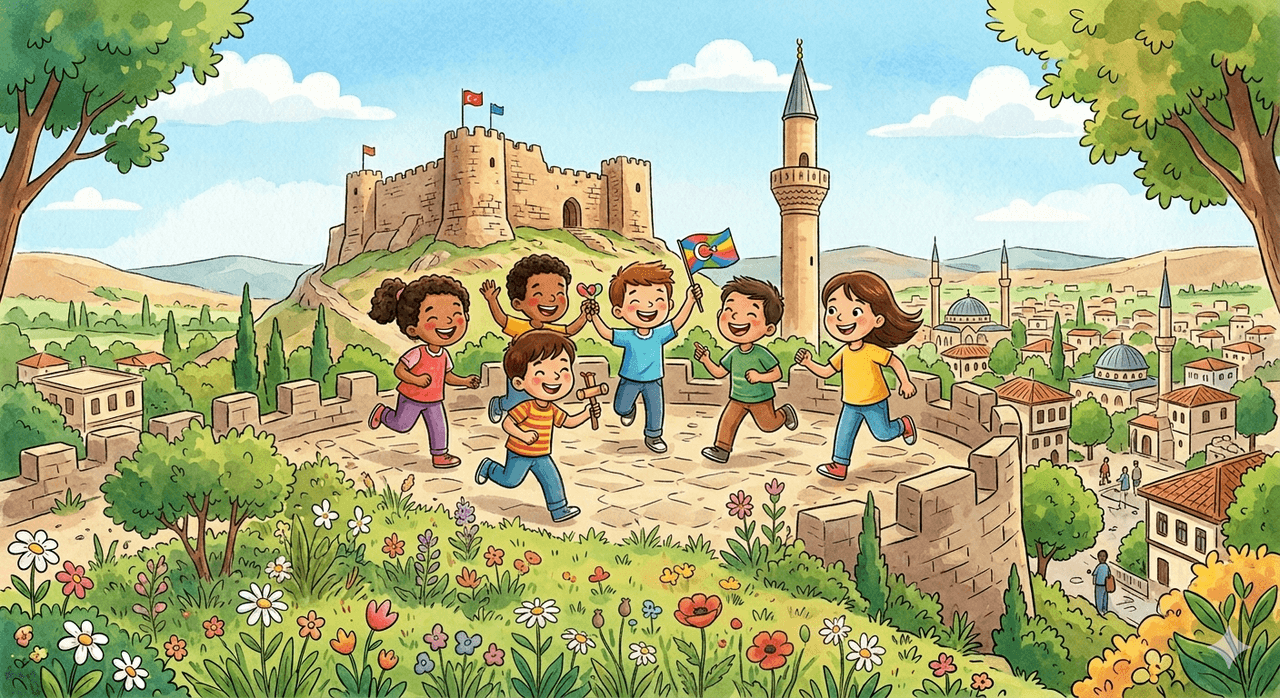
Siverek Castle (generated by artificial intelligence)
Geographical Features
Siverek is situated on the western foothills of Karacadağ. Karacadağ is a mountain formed by a volcano that was active in ancient times. As a result, the soils in the region are generally of volcanic origin and suitable for agriculture.
To the east of the district lie areas near Diyarbakır, while to the west are regions close to the Euphrates River. The majority of the terrain consists of plains and gently undulating areas. Thanks to the soil composition, crops such as wheat, barley and lentils are cultivated.
Siverek has a continental climate. Summers are hot and dry, while winters are cold and occasionally rainy. These characteristics directly affect the livelihoods and daily lives of the local population.

Karacadağ Ski Center (generated by artificial intelligence)
History
The history of Siverek is very ancient and extends back to prehistoric times. The region has been under the rule of many different civilizations throughout history.
- In antiquity, the area was influenced by civilizations such as the Sumerians, Assyrians and Hittites.
- Later, the region came under the control of the Persians.
- During the Roman Empire, it became an important settlement.
- After the Romans, the region came under the rule of the Byzantine Empire.
- In the 7th century, the region was conquered by Islamic armies and became part of Islamic states.
- During the Middle Ages, the Seljuks and various beyliks established dominance in the region.
- In 1517, it came under the administration of the Ottoman State.
During the Ottoman period, Siverek remained an important settlement for a long time. After the proclamation of the Republic, it was briefly a province and then, in 1926, was reclassified as a district.

Siverek (generated by artificial intelligence)
Settlement and Urban Development
It is known that the earliest settlements in Siverek began around a castle, which was built for defensive purposes. Over time, houses, markets and other structures developed around it.
The town gradually expanded and today consists of various neighborhoods. In the older settlement areas, stone buildings and narrow streets are particularly noticeable.
Origin of the Name
There are differing views on the origin of the name Siverek. According to some sources, the name derives from words in ancient languages meaning “black” or “ruin”. Throughout history, the town’s name has been pronounced in various forms and gradually evolved into its current form.

Siverek Pasha House (generated by artificial intelligence)
Economic Activities
A significant portion of Siverek’s economic activities are based on agriculture and animal husbandry.
- Wheat, barley and lentils are the most widely cultivated crops.
- Small livestock farming (sheep and goat breeding) is common.
- In recent years, trade and small-scale industry have also begun to develop.
Agriculture and animal husbandry play a vital role in the livelihood of the local population.
Cultural Features
Siverek has hosted many different civilizations throughout history and therefore possesses a rich cultural heritage. Traditional ways of life still persist in some areas. Local cuisine, folk dances and handicrafts are distinctive. Historic buildings and archaeological remains provide insight into past eras.

Siverek Ulu Camii (generated by artificial intelligence)
Important Structures and Sites
Some notable sites in Siverek include:
Siverek Castle: One of the town’s oldest structures.
Karacadağ: Notable for its natural features.
Old settlement areas: Composed of stone houses and narrow streets.
These sites help in understanding Siverek’s history and natural characteristics.