




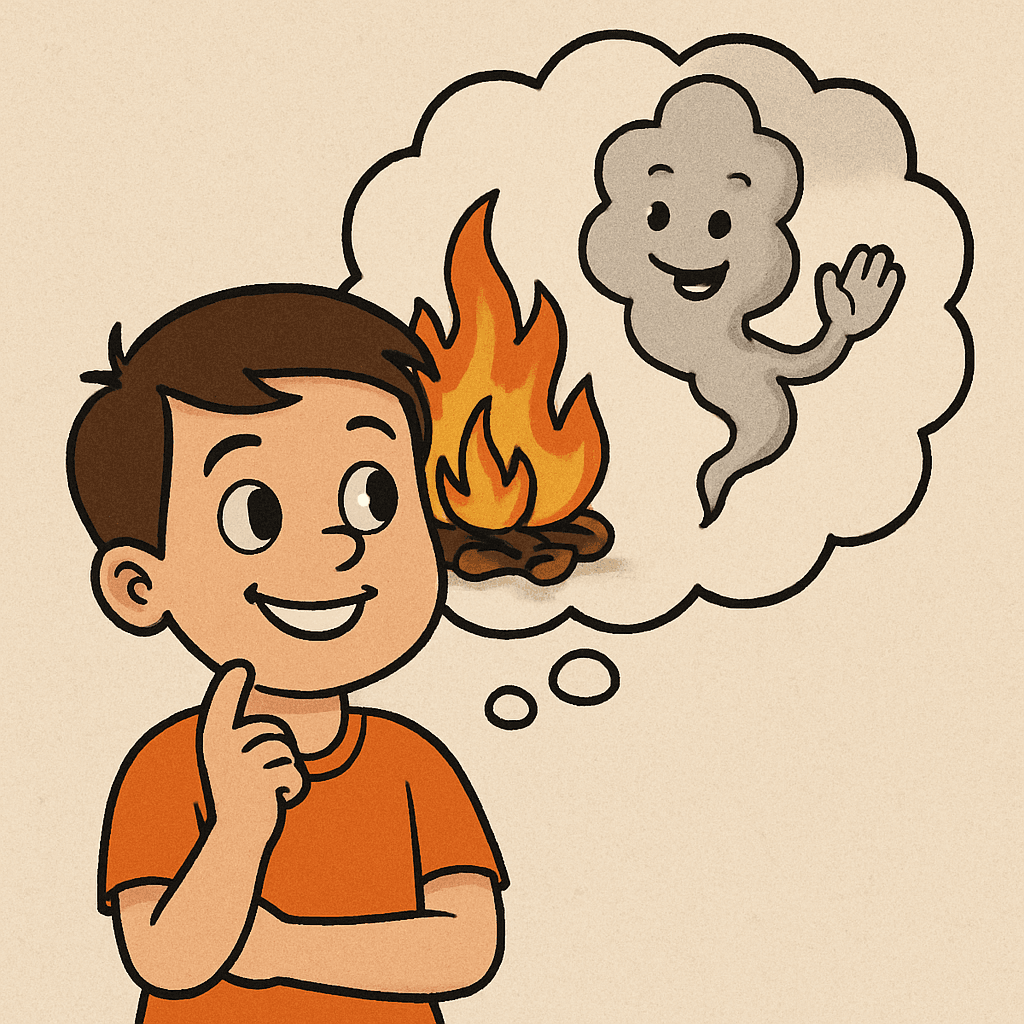
Smoke does not come from a place without fire
When we commonly see smoke rising around us, what is the first thing that comes to mind? Yes, we immediately think that there is a fire burning directly beneath or near the smoke. How then does this ordinary phenomenon in daily life convey a message to us as a proverb? Let us examine it.
What Does This Proverb Mean?
The proverb “Smoke does not rise where there is no fire” is a concise expression indicating that certain signs or indications we encounter often point to significant events.

(Image generated by artificial intelligence.)
This proverb is commonly used in everyday conversations among people—while chatting, eating, or working—when trying to guess the underlying causes of events that are observed, heard, or reported. It illustrates that seemingly minor occurrences may actually be the causes of major outcomes.
Where Does This Proverb Come From?

(Image generated by artificial intelligence.)
We refer to meaningful, short, and pithy expressions passed down from our ancestors as proverbs. The majority of proverbs emerged from ordinary events observed by the public and later used metaphorically in oral tradition.
The proverb “Smoke does not rise where there is no fire” expresses the idea that causes are linked to their effects, and that small signs may conceal significant underlying reasons. This concept is conveyed in the simplest and most direct way through the observation that smoke appears only when fire is burning. This proverb has been in use for centuries and is not unique to Turks—it is also used by many other cultures.
How Is It Used in Daily Life?
This proverb is employed when we encounter certain signs or symptoms that suggest a deeper cause, reminding us that small clues can reveal important events.
For example, imagine a child playing in a garden. While playing, the child hears a clicking sound and becomes frightened. The child looks around but sees nothing that could be causing the noise. The child calls for help from their father. When the father arrives, the child explains the situation. Together, they listen in silence. The sound returns and grows louder. At this moment, the father says, “Smoke does not rise where there is no fire,” and begins searching for the source of the noise. Eventually, they discover a cat in a small shed in the garden, with tin cans tied to its tail. They free the cat from the cans and release it back into nature. In this way, they recognize that the small sound had a significant cause and help the innocent cat.

(Image generated by artificial intelligence.)