



Stone Hills
Taş Tepeler
Thousands of years before the pyramids of Egypt or Stonehenge were built, humans erected massive stone monuments. One of these places is Taş Tepeler, located in the city of Şanlıurfa in Türkiye. This area is a vast region composed of twelve distinct archaeological sites, including Göbeklitepe, Karahantepe, Sayburç and Sefertepe, and it holds some of the oldest secrets of human history. Like a giant puzzle, Taş Tepeler tells us how the first villages were established and how people lived thousands of years ago.
Taş Tepeler is not just about ancient stones. It contains the earliest evidence of hunter-gatherer communities coming together for the first time to adopt a settled lifestyle—building homes and living permanently in one place. This makes it an extremely exciting site for archaeologists. Let us take a closer look at the story these mysterious stones tell!
What Are the Secrets of Taş Tepeler?
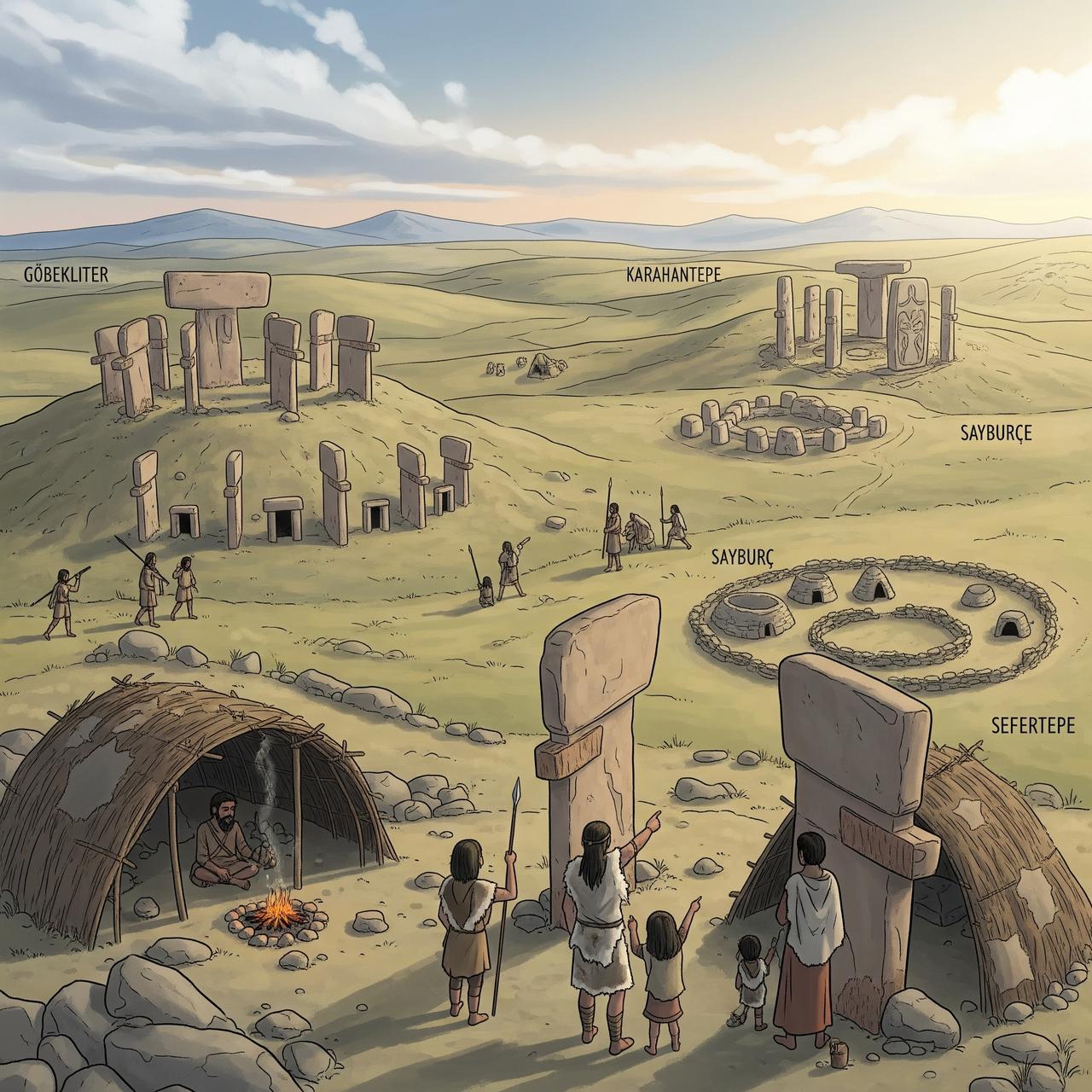
One of the most distinctive features of Taş Tepeler is its massive “T”-shaped standing stones. These stone pillars, reaching up to six meters in height, resemble statues representing humans. Archaeologists believe that the carved arms and hands on these stones indicate they are stylized, simplified representations of people from that era, carved into stone.
These standing stones were placed at the center of circular structures. Unlike everyday dwellings, these buildings were sacred spaces where people gathered for special occasions, rituals, and communal events. Smaller standing stones were also embedded into the walls of these structures. These monumental constructions reveal that the people of that time had a strong belief system and the ability to collaborate on large-scale projects.

(Generated by artificial intelligence.)
Who Lived at Taş Tepeler?
The people who built Taş Tepeler were hunter-gatherers, meaning they did not yet cultivate their own food but instead relied on hunting animals such as gazelle and wild boar and gathering plants from nature. Animal bones found during excavations show that they were skilled hunters. They were also highly adept at shaping stones like flint into sharp tools.
These people did not only build monumental structures—they also lived deeply immersed in art. They carved reliefs of many animals onto the stones, including foxes, snakes, cranes, and wild boars. Discoveries such as the 2.3-meter-tall human statue found at Karahantepe and the statue depicting a human carrying a leopard, unearthed at Sayburç, demonstrate their advanced artistic sensibility. These statues and carvings provide clues about their beliefs and stories.
Time Travel
To better understand just how ancient Taş Tepeler is, let us take a brief journey through time:
- 12,000 Years Ago: The first monumental structures at Taş Tepeler were begun. This was a time just after the end of the last Ice Age.
- 5,000 Years Ago: The famous Stonehenge monument in England was constructed. Taş Tepeler is approximately 7,000 years older than Stonehenge!
- 4,500 Years Ago: The great pyramids of Giza in Egypt were built. Taş Tepeler existed thousands of years before these colossal pyramids.
This comparison helps us understand just how early in human history Taş Tepeler emerged and why it is often called the “zero point of history.”