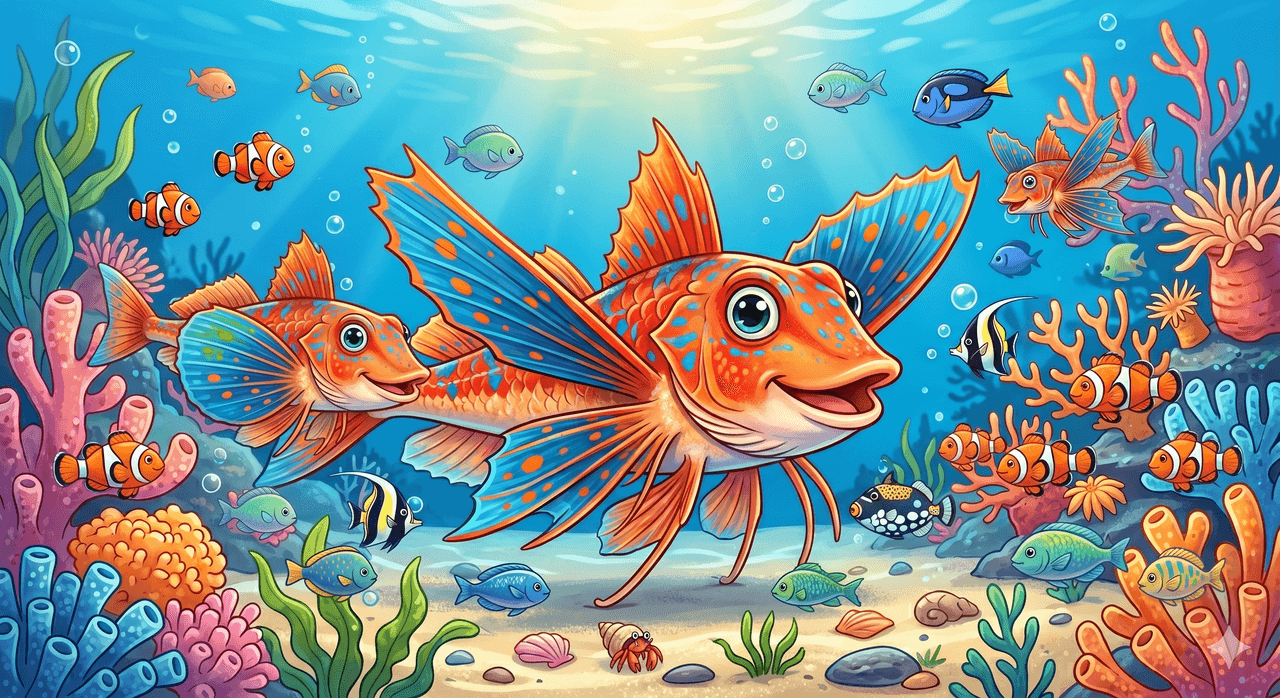




Swallowfish
When you hear the word "swallow," you might think of the charming birds gliding through the sky. But have you ever imagined a fish that walks along the seafloor and, in moments of danger, spreads its wings to swim swiftly? Meet the flying swallowfish, a fascinating creature with a bird-like appearance.
What Is the Swallowfish?
Known in the scientific community as Chelidonichthys lucerna, the swallowfish is a member of the Scorpionfish family (Triglidae). They typically grow to a length of 40 to 50 centimeters. In nature, they possess the remarkable ability to change color to adapt to their surroundings. This skill allows them to hide from predators and easily ambush their prey.【1】
Young swallowfish are dark brown in color, but as they mature, their hue lightens to a paler brown. Adults display light blue and dark brown spots on their backs. What makes them most distinctive are their pectoral fins, which resemble bird wings. At the tips of these large fins lies a hidden blue stripe, visible only when the fins are fully spread.
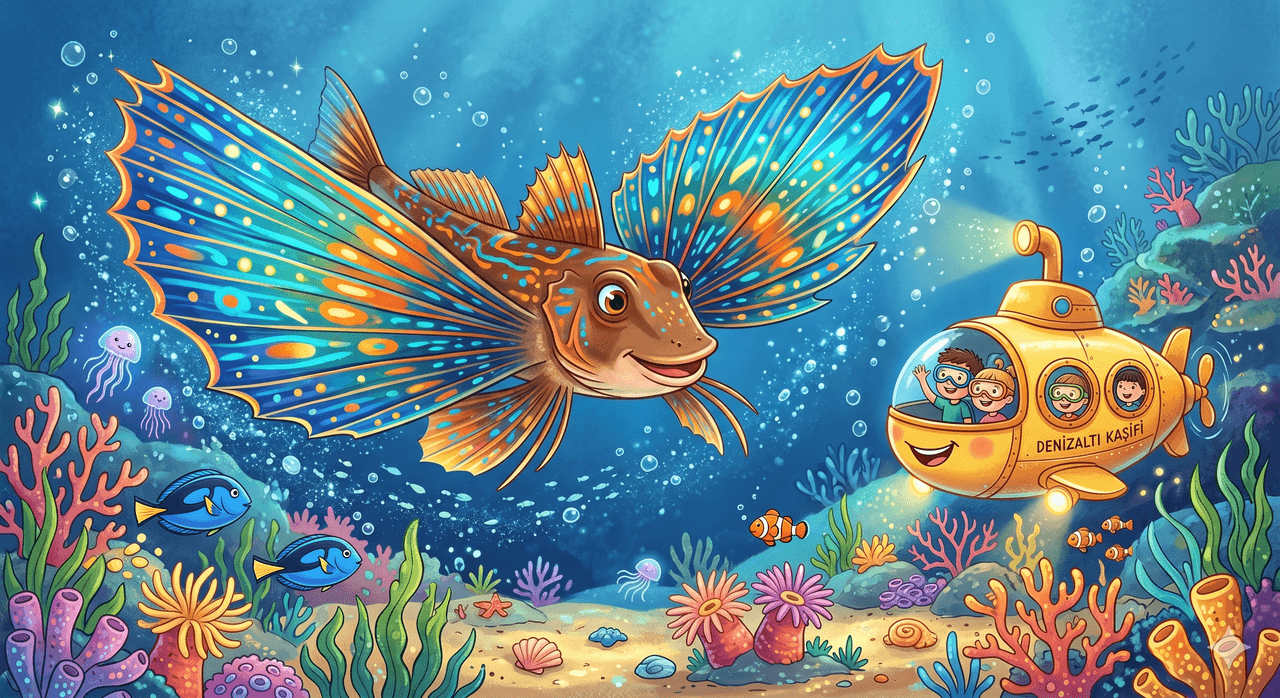
Swallowfish (Generated by Artificial Intelligence)
Where Do They Live?
Flying swallowfish prefer warm and temperate saltwater seas around the world. They thrive in waters with temperatures between 8 and 24 °C. In Türkiye, they are found in the Aegean, Mediterranean, and Marmara Seas, but are rarely encountered in the Black Sea.【2】
These fish are demersal, meaning they live near the seabed. They spend most of their lives on sandy, muddy, or rocky ocean floors. Although they typically swim between 10 and 30 meters below the surface, they are adventurous enough to descend as deep as 300 meters.【1】
How Do They Move and What Do They Eat?
Swallowfish usually swim slowly. However, when they sense danger, they suddenly spread their large wing-like fins and dart away at high speed. One of their most intriguing features is a specialized organ located just beside their pelvic fins. This organ helps them maintain balance on the seafloor and enables them to move as if they are walking along the bottom!
When hungry, they feast on the seafloor. Their preferred prey includes small crabs, shrimp, starfish, worms, snails, and small fish.
How Do Scientists Study Them?
Swallowfish are highly valued by fishermen, who catch them using trawls and gillnets. Scientists at research institutes such as SUMAE conduct studies to ensure these beautiful creatures do not disappear from the seas and to support their population numbers.
In laboratory tanks, small electronic tags, no larger than a grain of rice, are attached to the fish’s backs. Scientists use these tags to regularly monitor the fish’s length and weight. Although swallowfish initially experience stress and may attempt to leap out of their new tanks, they adapt within three days and begin eating fresh food.
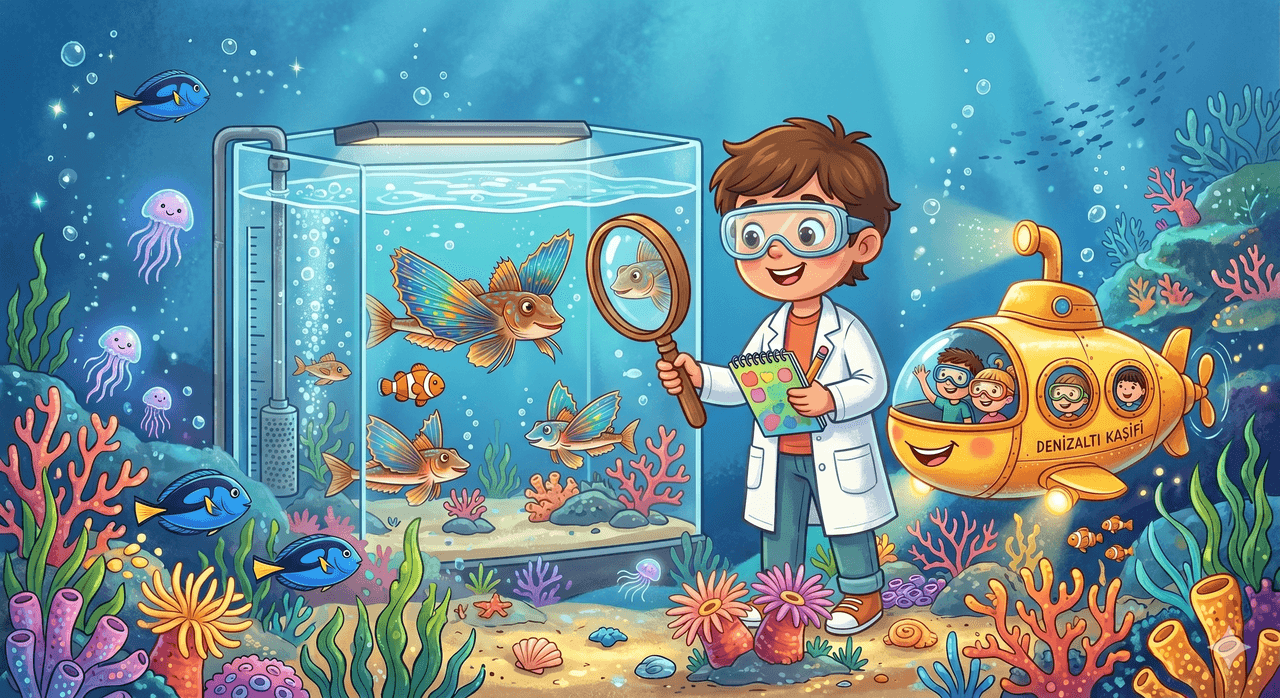
Underwater Research (Generated by Artificial Intelligence)
Time Travel
Scientists affiliated with Türkiye’s Ministry of Agriculture and Forestry began major research efforts in 2010 and 2014 to protect and breed swallowfish. During these years, the first larvae (baby fish) were successfully hatched from eggs, and their growth was closely monitored with great excitement.【3】
Citations
【1】
abAyşenur Okatan, “Türkiye’nin Uçan Kırlangıç Balığı,” TÜBİTAK Bilim Genç, 7 Haziran 2019, erişim 1 Mayıs 2026, https://bilimgenc.tubitak.gov.tr/yeryuzu-turkiyenin-ucan-kirlangic-baligi-0.
【2】
Eyüp Çakmak, Hamza Polat, Zafer Akpınar, Nilgün Aksungur ve Orhan Ak, “Kırlangıç Balığının (Chelidonichthys lucerna L., 1758)’nın Kültür Ortamına Uyumu,” erişim 1 Mayıs 2026, https://dergipark.org.tr/en/download/article-file/204224.
【3】
T.C. Tarım ve Orman Bakanlığı, Su Ürünleri Merkez Araştırma Enstitüsü (SUMAE), “Kırlangıç Balığı Araştırılıyor,” erişim 1 Mayıs 2026, https://arastirma.tarimorman.gov.tr/sumae/Haber/222/Kirlangic-Baligi-Arastiriliyor.