



Taşköprü
Taşköprü tells the story of both a district and the past through its namesake bridge. This bridge is not merely a structure built of stone; it is a historical treasure that has witnessed generations of people crossing it, lived in harmony with the river, and endured the passage of time.

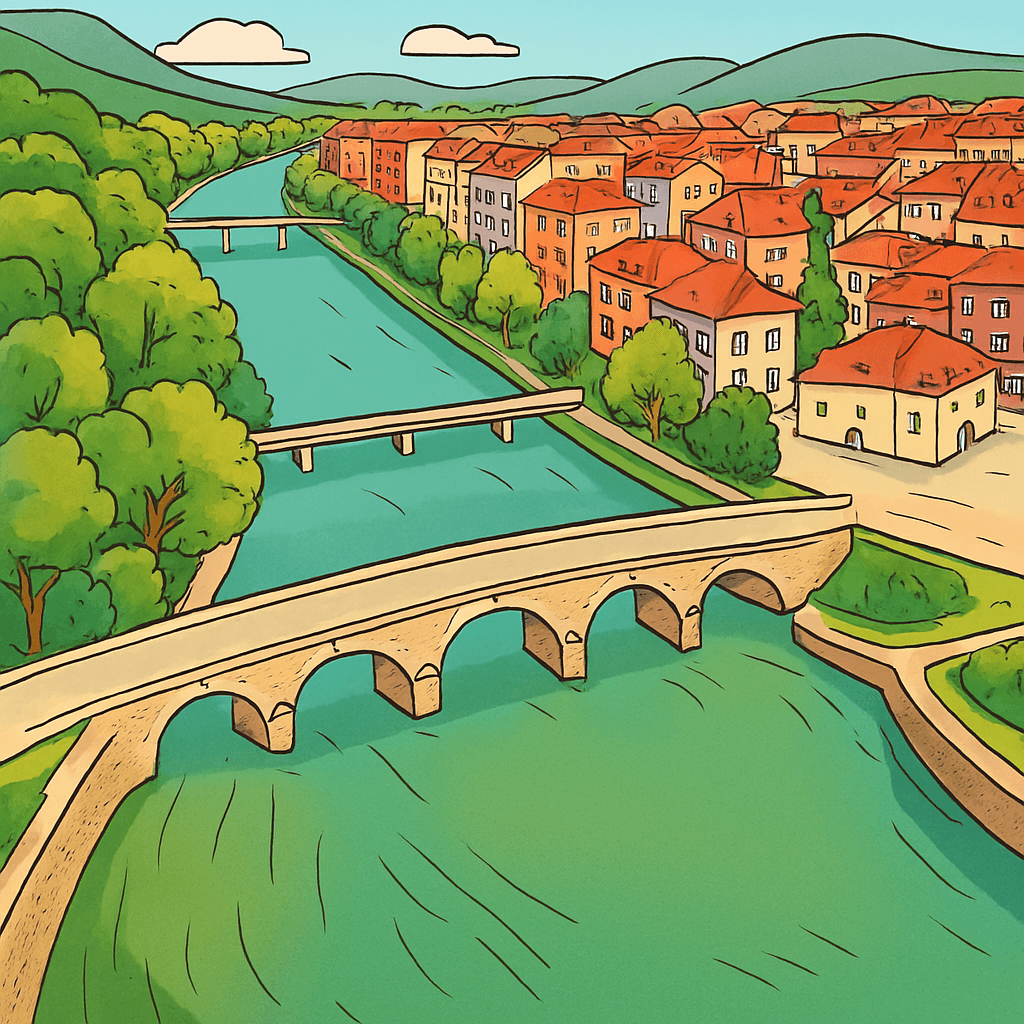
Taşköprü (Generated by Artificial Intelligence)
Construction of the Bridge
Taşköprü is situated over the Gökırmak River at the entrance to Kastamonu. It was built in the year 1366 by Ali Bey, the son of Yağmur Bey. The bridge was constructed in the name of Celalettin Bayezıt, son of Kastamonu Emir Adil Bey. Thus, it carries both a symbol of familial affection and a tribute to a leader.
The bridge is 68.5 meters long and has seven arches. The term “göz” refers to the arched openings beneath the bridge. Thanks to these openings, the river flows freely while the bridge remains sturdy. Today, six of these arches remain open. The bridge is both aesthetically pleasing and durable due to its special stone structure designed to break the force of water currents. For this reason, it is called a “masterpiece of art.”

Taşköprü (Generated by Artificial Intelligence)
Why Is It So Important?
Taşköprü is more than just a passage; it is a structure that carries the traces of the past. It reflects both the grandeur and the simple beauty of Turkish culture. For hundreds of years, people crossed this bridge—sometimes to reach the market, sometimes to visit neighboring villages. Perhaps a child, for the first time, crossed this bridge and saw a new world.
More Than a Bridge
Taşköprü’s stone bridge is made not only of stone but also of stories. Each stone is like a voice from the past. Perhaps a child walking beneath the rain, a wedding procession, or a traveler left their imprint upon this bridge.
Today, the bridge still stands. As you gaze at the waters of the Gökırmak, it seems as if the past is whispering silently. If you ever visit Taşköprü, touch its stones and imagine how time has flowed through them.