




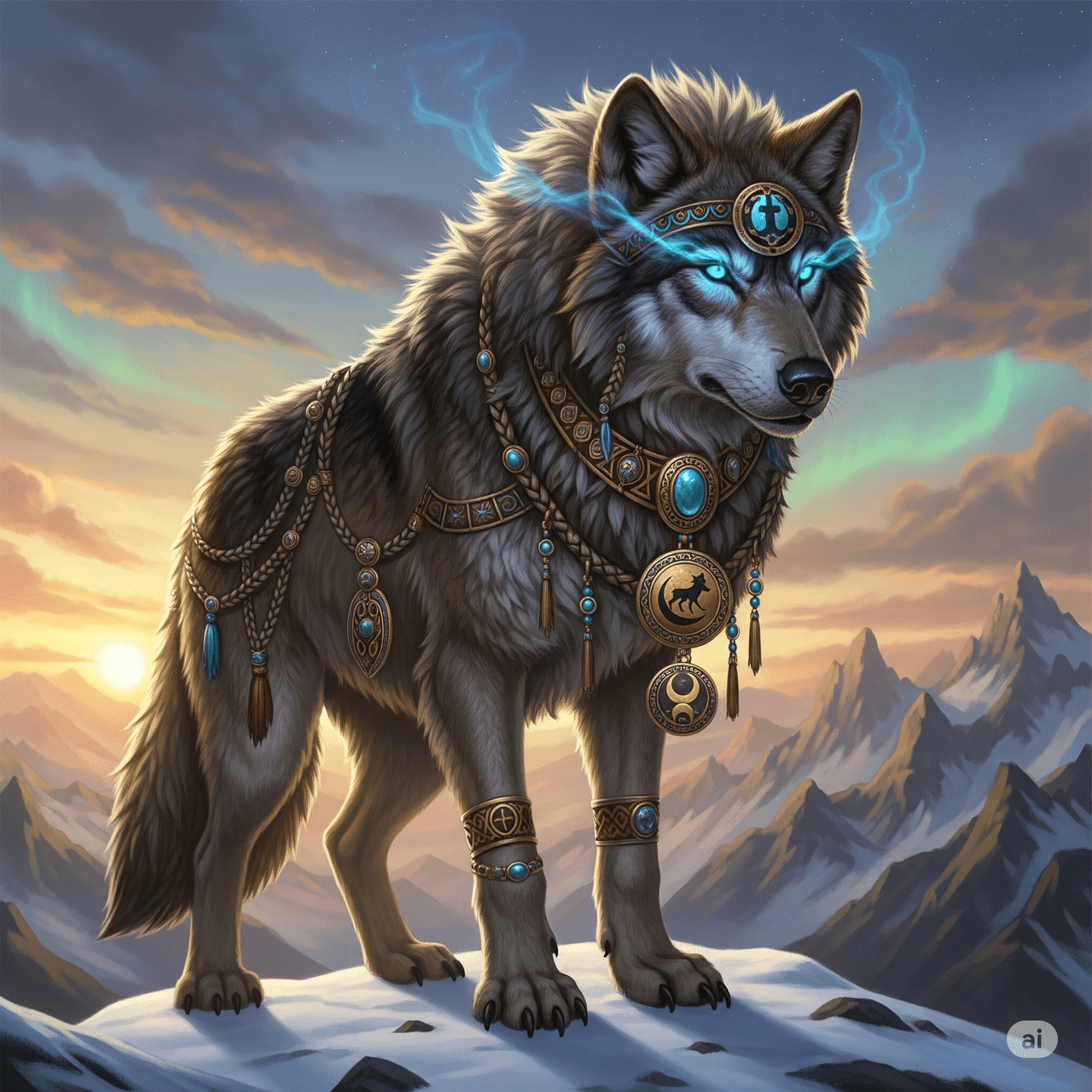
Ulukurt
The dire wolf was a giant species of wolf that lived in prehistoric times. It was larger and more powerful than the modern gray wolf. It survived by hunting across North and South America. Today it is known as an extinct species and continues to attract scientific interest.

(Generated by artificial intelligence)
History and Fossil Records
Dire wolves lived in very ancient times during the Pleistocene epoch, which ended approximately 10,000 years ago. Their fossils have been found especially in places such as the Rancho La Brea Tar Pits. Thanks to these fossils, scientists have learned how large dire wolves were, how they fed, and where they lived.
Habitat and Geography
Dire wolves lived in various regions of North and South America long ago. They hunted in forests, grasslands, and open expanses. These powerful wolves adapted very well to their environments and the animals they preyed upon.
Physical Characteristics
Dire wolves had larger jaws and stronger teeth than modern wolves. These features enabled them to hunt large animals. Their size and muscular build made them powerful and resilient predators.

(Generated by artificial intelligence)
Diet and Hunting
Dire wolves fed on mammoths, bison, and other large animals. They did not hunt alone but in packs. By moving together, they were able to capture large prey. This behavior helped dire wolves survive.
Extinction
The extinction of dire wolves was caused by climate change and the disappearance of the large animals they hunted. Human activity may also have contributed in some regions. The disappearance of dire wolves altered ecological balances and affected ecosystems.
Evolution and Genetic Research
Through genetic studies, scientists have discovered that dire wolves are related to gray wolves. Some of their genes, particularly those related to black coat color and hunting abilities, help us understand how modern wolves evolved.
The Scientific Importance of the Dire Wolf
Dire wolves help us understand prehistoric life and the ecosystems in which large animals lived. The fossils and genetic information left by dire wolves provide crucial insights into evolution, climate change, and extinct species.