



What Is a Fable?
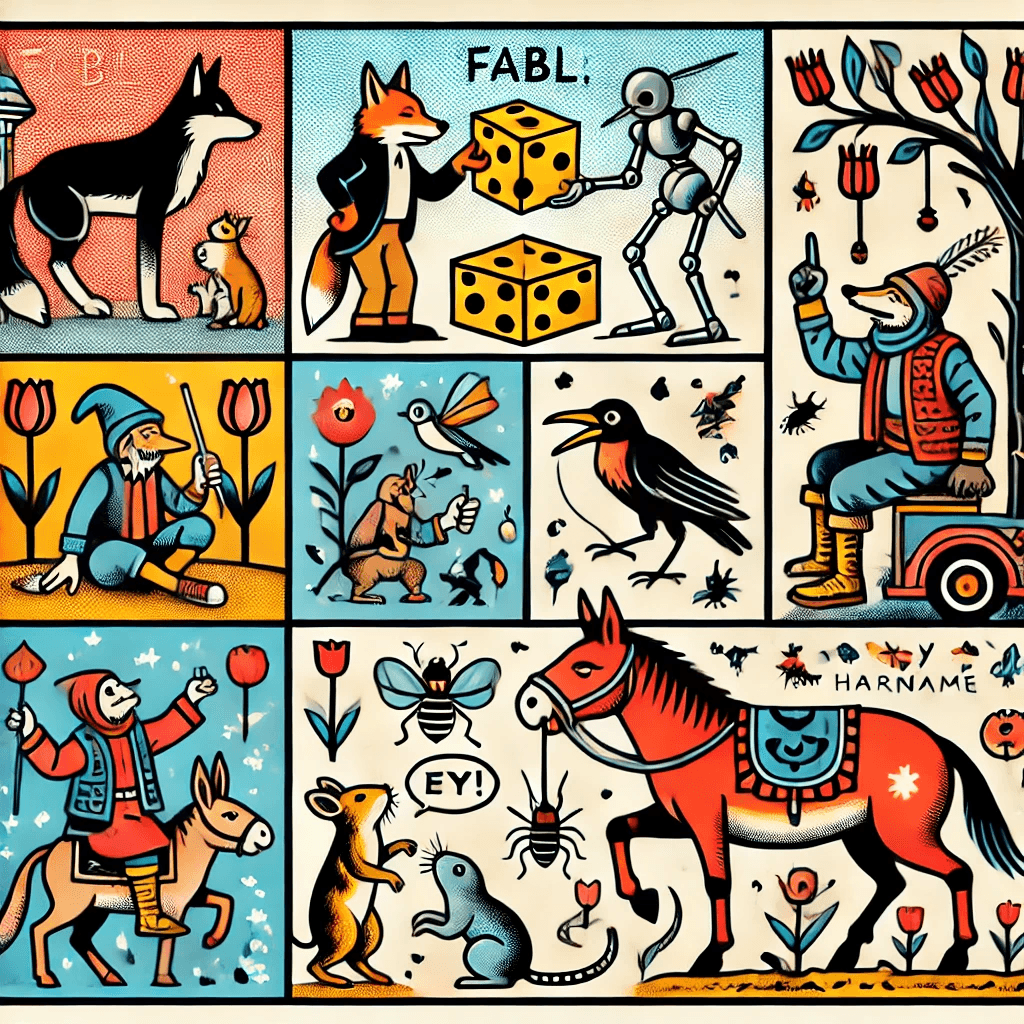
A fable is a short and instructive narrative in which animals, plants, or inanimate objects are given human traits. These texts typically end with a moral lesson. The protagonists are usually animals, and through their experiences, universal messages about life are conveyed to humans.

class=\
The History of the Fable
The fable is one of the oldest narrative forms in the world. The earliest known fables are attributed to Aesop, an ancient Greek storyteller who lived in the 6th century BCE. Aesop’s stories were passed down orally through generations and later rewritten by authors such as Phaedrus in Latin literature, La Fontaine in French literature, Gotthold Ephraim Lessing in German literature, and Krilov in Russian literature. In Turkish literature, Şeyhi’s “Harname” is one of the earliest significant examples of the fable genre.
Characteristics of the Fable
- The protagonists are usually animals. These animals think, speak, and act like humans.
- They are short and concise. They contain a limited number of characters and events.
- They are educational. A lesson or message is typically given at the end of the story.
- They consist of two parts: The plot (narrative section) and the moral (the intended message).
- They may employ a satirical style or critical perspective.
- They are rooted in oral tradition and include anonymous examples.
Structure of the Fable
- Introduction: The characters and setting are introduced.
- Development: A conflict or situation arises among the characters.
- Resolution: The situation is resolved.
- Moral: The lesson drawn from the resolution is explicitly stated or implied within the text.

class=\
The Contribution of Fables to Children
The fable genre is a powerful tool for teaching values to children.
- Animal characters capture children’s interest and make the conveyed messages more effective.
- They develop skills in empathy, understanding cause and effect, and critical thinking.
- Values such as honesty, truthfulness, diligence, and helpfulness are conveyed in an entertaining manner.
- The brevity of the texts aligns well with children’s attention spans.
Are Fables Universal?
The fable genre has emerged in different cultures with similar structures and messages. The same moral lesson can be conveyed through similar animals in different countries. In this sense, the fable is a universal form reflecting humanity’s shared values.
📚 Examples of Fables from Around the World and from Türkiye
🌍 World-Famous Fables
- The Crow and the Fox (Aesop)
The cunning fox flatters the crow into opening its beak to sing, causing the cheese it holds to fall.
💡 Moral: Do not easily believe flattery.
- The Grasshopper and the Ant (La Fontaine)
While the grasshopper sings all summer, the ant works to prepare for winter.
💡 Moral: Hard work and preparedness are essential.
- The Lion and the Mouse (Aesop)
A mouse one day saves a lion, demonstrating that even the small can be useful.
💡 Moral: No one should be underestimated.

class=\
Examples of Fables from Turkish Literature
- Şeyhi – Harname
It tells the story of a thin donkey being unjustly punished.
💡 Moral: Do not judge by appearances.
- Modern Fable Experiments
Original fable writings have increased in children’s literature. Modern authors’ fables address new themes such as nature, the environment, and technology.
References:
- Karaca, R. (2006). “A Comparison of the Social Roles of Animal Protagonists in Aesop and La Fontaine’s Fables”, Dumlupınar University Journal of Social Sciences, 15, 109–118. https://dergipark.org.tr/tr/download/article-file/55355
- Kılıç, A. (2009). “Value Education in Literature Classes: A Study on the Fable Genre”, Dumlupınar University Journal of Social Sciences, 25, 211–218. https://dergipark.org.tr/tr/pub/dpusbe/issue/4756/65333
- “What Is a Fable? Most Well-Known Fable Examples”, TRT Children Parent Academy, Accessed: 10 July 2025. https://ebeveynakademisi.trtcocuk.net.tr/makale/fabl-nedir-en-cok-bilinen-fabl-ornekleri-24924018
- “What Is a Fable?”, Turkish Literature, Accessed: 10 July 2025. https://www.turkedebiyati.org/fabl/
- “Fable Teaching Wiki”, Twinkl Türkiye, Accessed: 10 July 2025. https://www.twinkl.com.tr/teaching-wiki/fable