



What is a family?
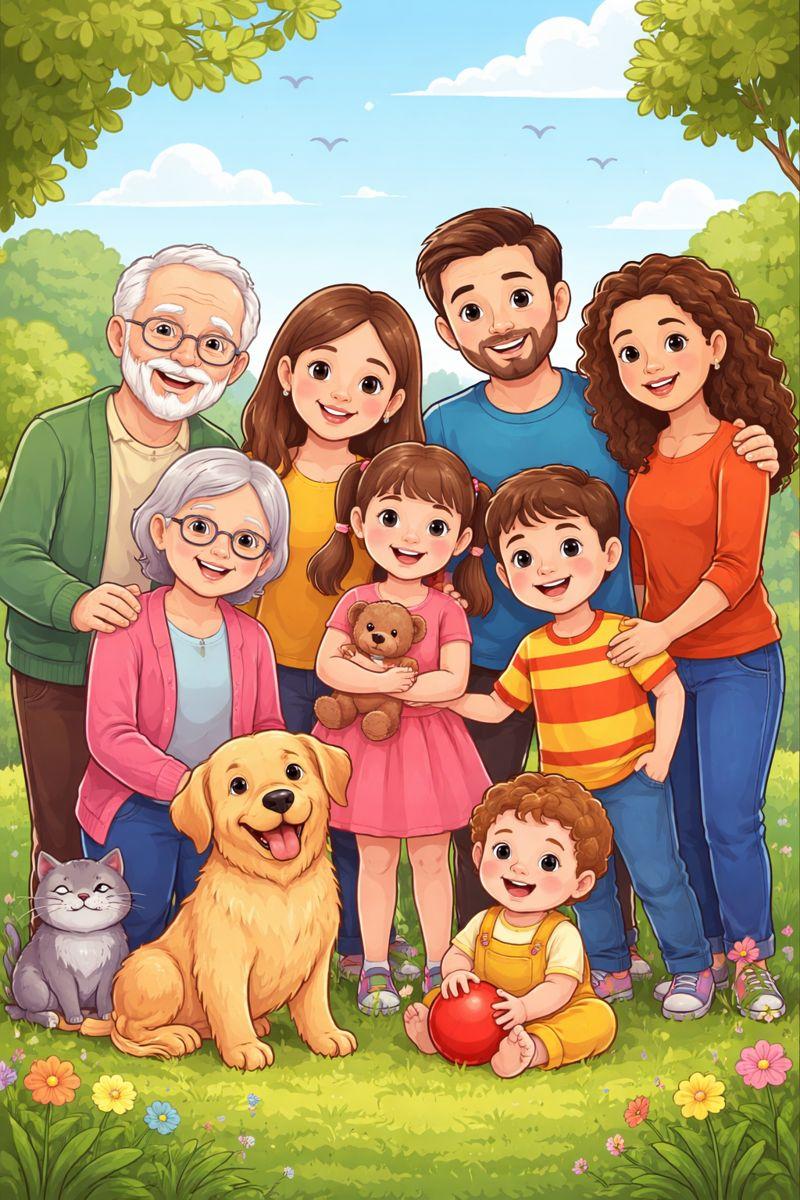
Family, is the most intimate group formed by interconnected individuals. It typically consists of a mother, father and children, but in extended families, grandparents, uncles, aunts and cousins may also be present. The family is the first place where people grow up and learn love, trust and solidarity.
Family Members and Their Roles
Each person in the family plays a different role:
Mother: Raises children, cares for them and provides guidance.
Father: Helps meet the family’s needs and gives children a sense of security.
Children: Play, learn and develop responsibility within the family.
Other relatives: Grandparents, uncles, aunts and cousins pass on love and experience to children.
Every family is different, but in all of them people form bonds and support one another.
Types of Families
Families around the world can take different forms. Here are some examples:
Nuclear Family: Consists of a mother, father and children.
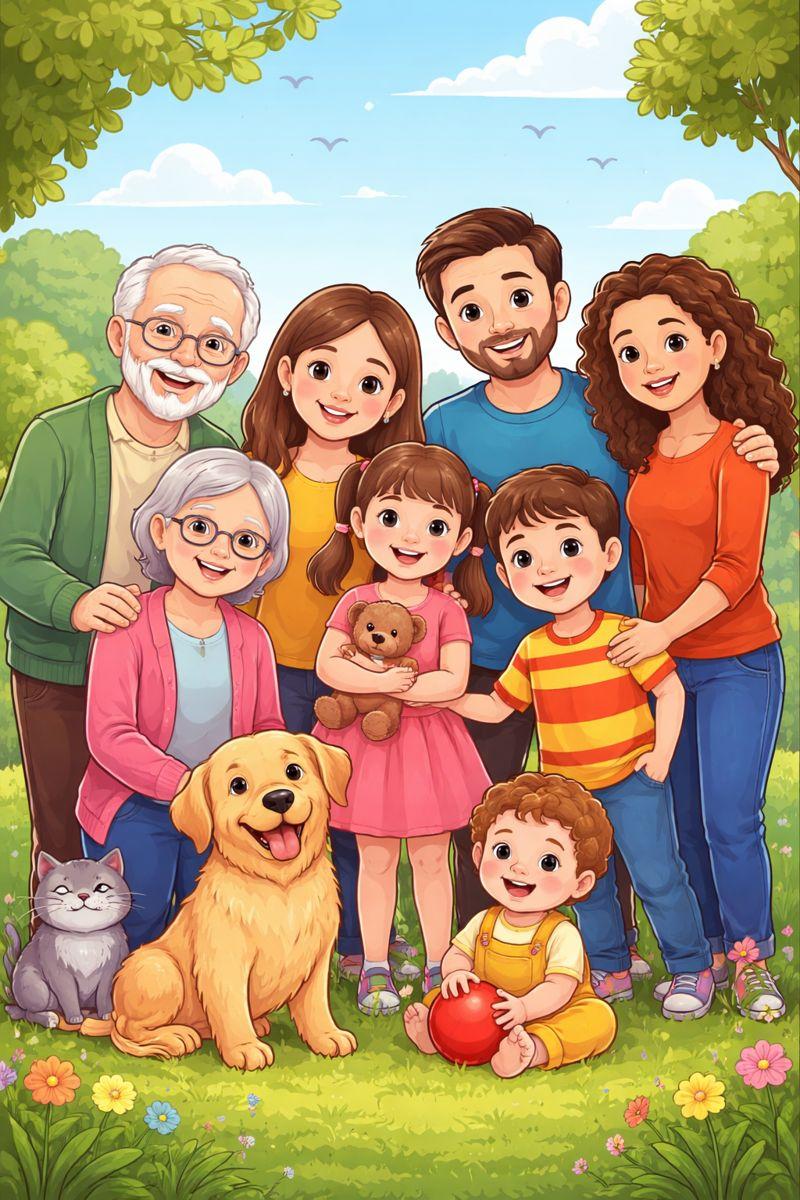
Extended Family: In extended families, parents, children and other relatives live together.
Family types vary according to where we live, our culture and societal norms. In some societies families may be very large, while in others they consist only of a mother, father and children.
class=\
Functions and Responsibilities of the Family
The responsibilities of the family ensure that individuals grow up happy and healthy. Some of these responsibilities include:
Care and Protection: Meeting children’s needs for food, shelter and safety.
Love and Support: Family members help and reassure one another.
Teaching and Guidance: Children learn how to behave within the family.
Social and Cultural Education: Traditions, values and social norms are taught through the family.
Economic Support: The family ensures that needs are met and resources are shared.
The Family Is Like a Team
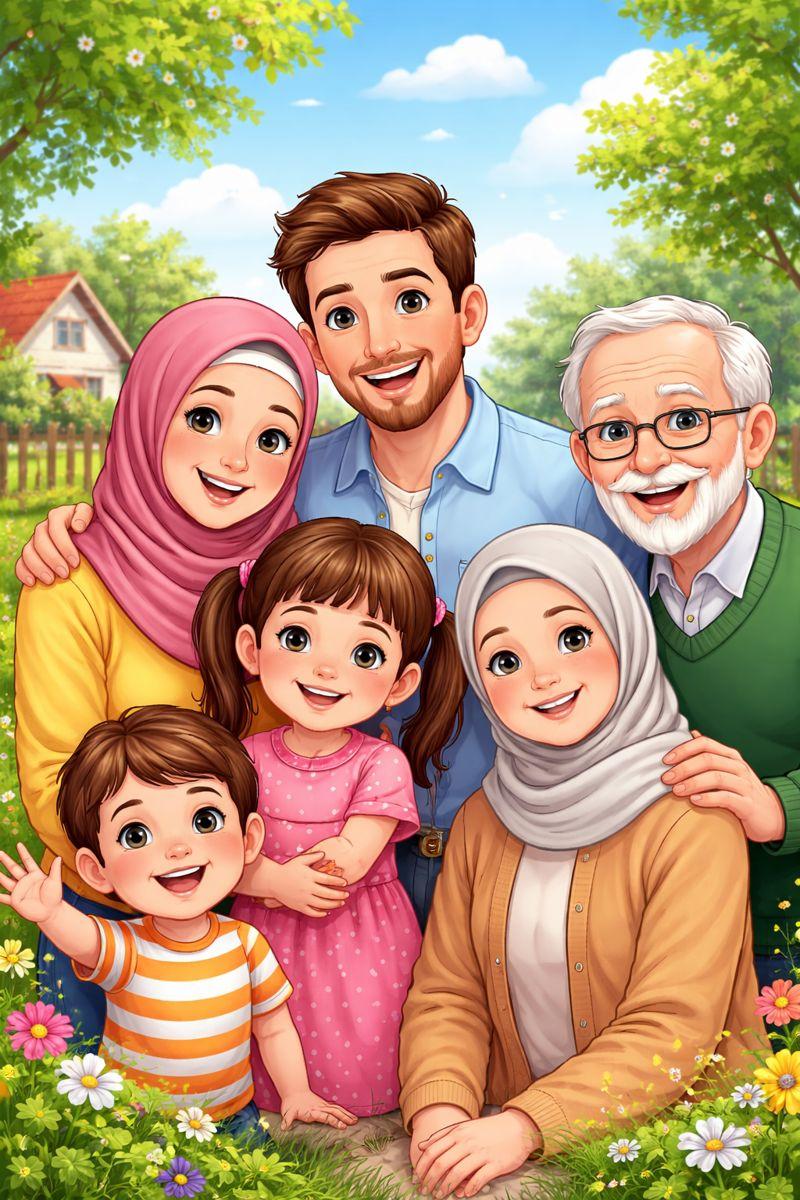
The family, like a team, is made up of individuals who work together. Every family member is connected; mothers, fathers, children and other relatives keep the family strong and happy. Each person has a different role within the family: mothers usually care for children and guide them, fathers protect the family and help meet its needs, and children play, learn and develop responsibility. Grandparents and other relatives also support the family by sharing their experience. Problems within the family are solved together; everyone contributes their ideas and efforts. In this way, family members learn both to trust one another and to work together, making the family stronger.
class=\
Love and Solidarity in the Family
The family provides individuals with security and love. Children learn sharing, mutual aid and responsibility within the family. Family members share happiness and support each other during difficult times. For this reason, the family is the most special and secure place in people’s lives.
The Family’s Place in Society
The family, is an essential institution where people learn to live together and sustain society. Individuals first learn social values, behavioral norms and traditions within the family. Children understand what is right and wrong through their family environment and learn how to behave in society. The family plays a fundamental role in shaping an individual’s relationship with society and has a structure that is passed from generation to generation. Knowledge, behaviors and values learned within the family are transmitted to future generations. This is vital for the continuity of societies. The family has a significant impact not only within the home but also in society at large; it transmits our culture, values and traditions to children. The family is like a small mirror of society, showing how people can live together harmoniously.