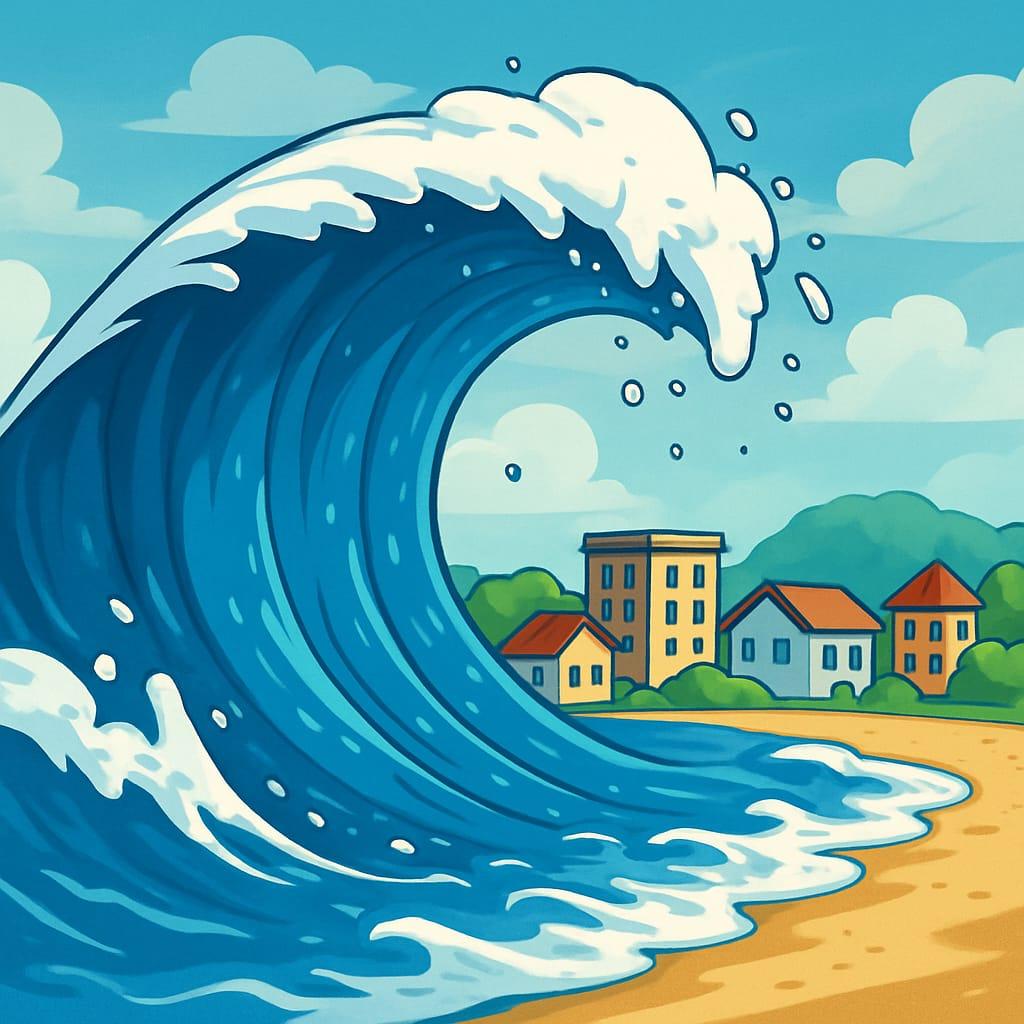




What is a Tsunami?
Tsunamis are large, rapid waves caused by sudden movements on the seabed or ocean floor. When these waves reach the coast, they can cause serious damage.

(Generated by Artificial Intelligence.)
How Do Tsunamis Form?
Tsunamis most commonly occur due to underwater earthquakes. Volcanic eruptions and underwater landslides can also trigger tsunamis. These events displace large volumes of water, generating massive waves.
Wave Characteristics
In the open ocean, tsunami waves are low and difficult to detect. However, their speed of up to 800 kilometers per hour causes them to rise suddenly and become destructive as they approach the coast. Some waves can exceed 30 meters in height.
Detecting the Threat
As a tsunami approaches, seawater may rapidly recede from the shore. In such a situation, people must immediately move to higher and safer ground. It is also critically important to heed official warnings issued after an earthquake.
Protection Methods
Early warning systems detect movements on the ocean floor and alert populations to potential danger. The public is informed through sirens, messages, or announcements. Evacuation plans and regular drills help people develop safe behaviors during a tsunami.

(Generated by Artificial Intelligence.)
Effects of Tsunamis
Tsunamis can destroy homes, roads, and port structures. Agricultural land is damaged and drinking water sources may become contaminated. People can be left homeless, which is why preparedness and education are essential.
Historical Examples
The 2004 Indian Ocean tsunami caused massive loss of life worldwide. The 2011 tsunami in Japan resulted in widespread destruction and triggered a nuclear disaster.
Scientific Research
Scientists monitor tsunami formation using instruments deployed in deep ocean areas. Computer models are used to predict when and where waves will reach land, enabling the development of early warning systems.