


What Is Adaptation?
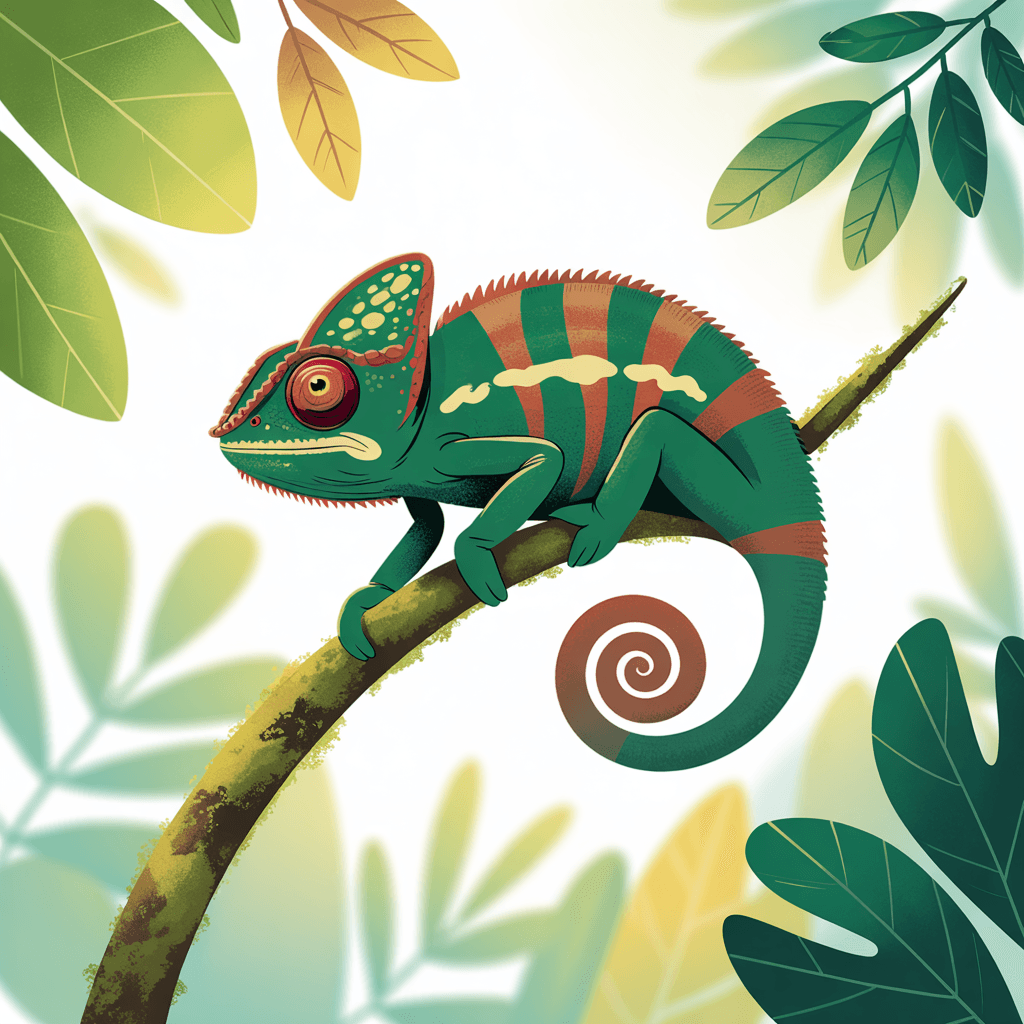
The word “adaptation” means achieving compatibility. Organisms develop certain traits to cope with the challenges of their environment. For example, chameleons change color to protect themselves from predators, while the broad leaves of water lilies help expel excess water. Succulent plants adapt to drought by storing water in their leaves and stems.

Adaptation and Chameleon (Generated by artificial intelligence.)
Types of Adaptation
Structural Adaptation: Changes observed in an organism’s physical structure.
Example: The camel’s hump stores fat to adapt to desert conditions.
Behavioral Adaptation: Adjustments in an organism’s behavior to suit its environment.
Example: Birds migrating to warmer regions during winter.
Mimicry and Camouflage: Some organisms resemble their predators or acquire colors that help them hide.
Example: Harmless butterflies mimicking poisonous ones.

Structural Adaptation (Generated by artificial intelligence.)
Relationship with Evolution and Natural Selection
Organisms achieve adaptation through natural selection. In his work “On the Origin of Species,” Charles Darwin explained that individuals best suited to their environment survive and reproduce. Over time, these advantageous traits are passed on to subsequent generations.
Some organisms can even adapt to extremely harsh conditions. For instance, microorganisms known as extremophiles can live in boiling water, glaciers, and even salt lakes.
Historical Perspectives on Adaptation
In the past, philosophers and scientists interpreted adaptation in different ways.
Lamarck proposed that organisms change in response to their environment and pass these acquired traits to their offspring.
Darwin and Wallace emphasized that natural selection is the foundation of adaptation, a view that forms the basis of modern scientific understanding.

Representation of Darwin and Wallace (Generated by artificial intelligence.)