




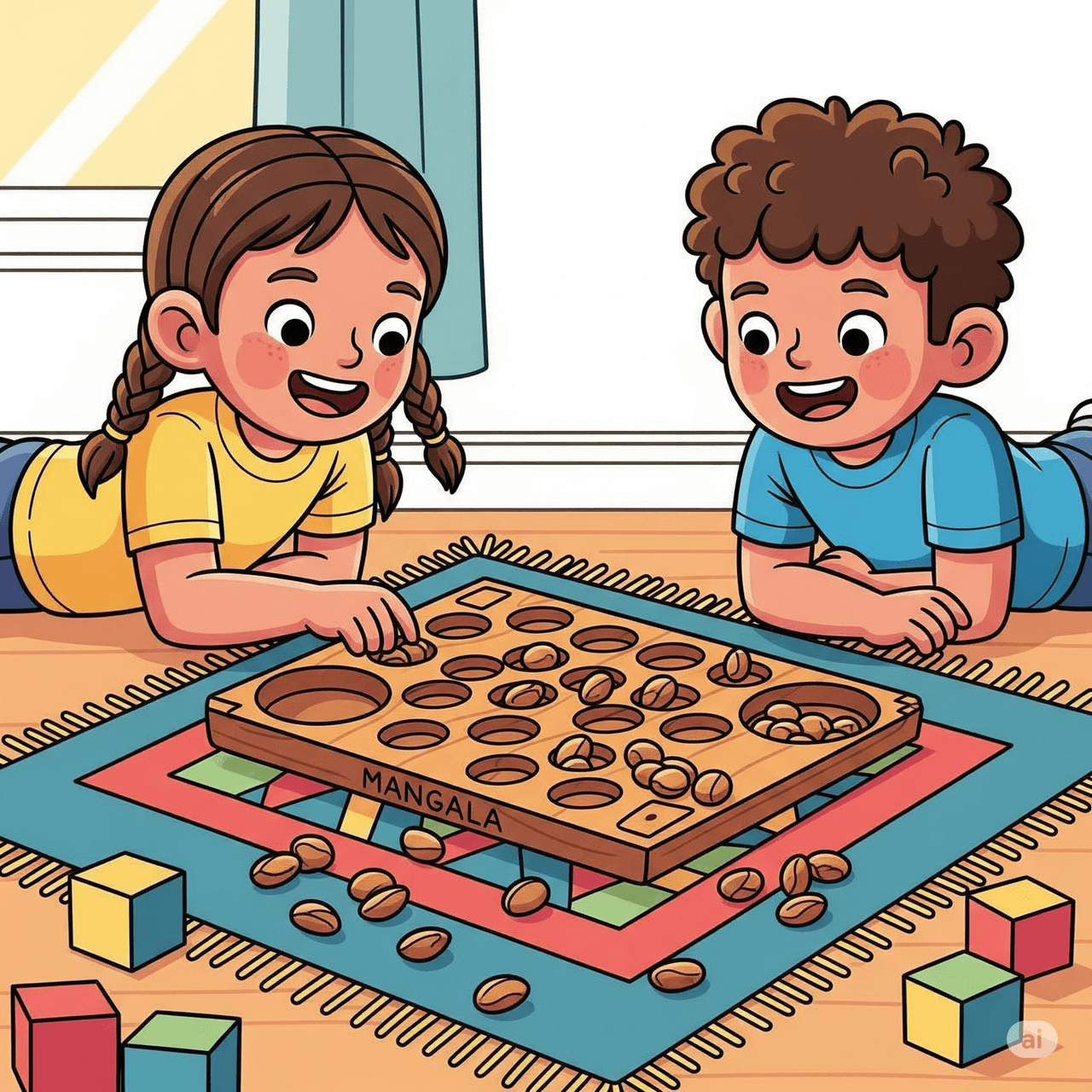
What is Mangala?
Chess, strategy, and tradition combined in one game!

(Image generated with AI assistance.)
What Is Mangala?
Mangala is a traditional Turkish game of intelligence and strategy played since ancient times. Its origins trace back to Central Asia. Mangala is not only entertaining but also teaches thinking, planning, and patience. In the past, this game was played in villages, cities, homes, and even deserts!
How Is It Played?
Mangala is played on a special board with 12 small pits (holes) and one large store (house) for each player. Each small pit starts with four stones. Players take turns picking up all the stones from one pit and distributing them one by one in a clockwise direction.
The goal is to collect the most stones in your own store while strategically blocking your opponent’s moves.

(Image generated with AI assistance.)
Why Is It Important?
Mangala is not just a fun game for children; it is also an educational tool. This game enhances children’s concentration, develops their visual perception, and strengthens their ability to make quick and accurate decisions. In these ways, Mangala is an important traditional intelligence game that contributes significantly to children’s mental development.
Mangala in the Digital World
Today, Mangala is not only played on physical boards but also on computers, tablets, and smartphones. This allows children to enjoy themselves while learning a traditional game in a digital environment. However, it is also important to be mindful of screen time and avoid excessive play.

(Image generated with AI assistance.)
Does It Develop Intelligence?
Yes! Scientific studies show that games like Mangala positively contribute to attention development and visual perception, especially in children of middle school age. Additionally, children who play such games tend to be more successful in problem solving.