




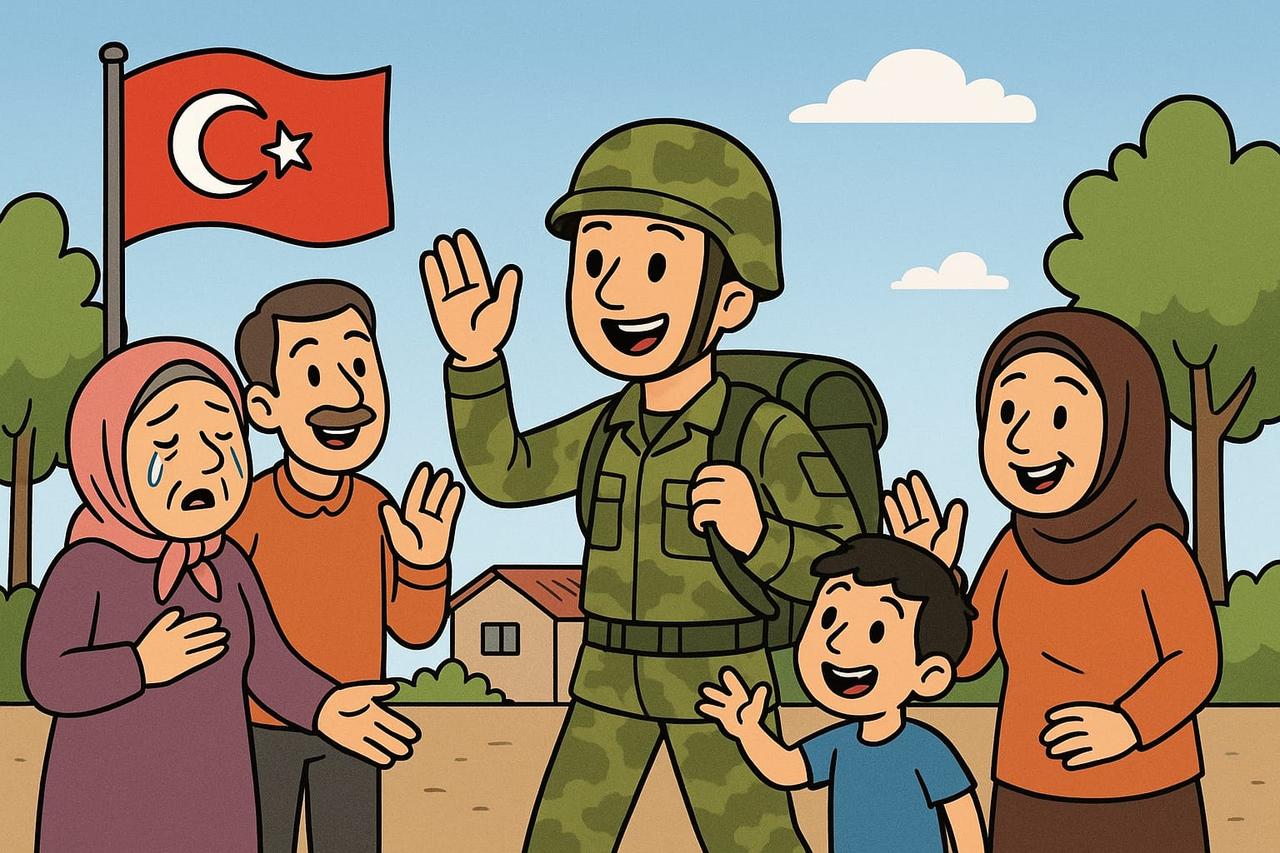
What Is the Military Farewell Tradition?
Military send-off refers to special ceremonies and events held before young men depart for military service. These traditions allow the conscript’s family, relatives, and village community to bid him farewell. They also aim to boost morale, strengthen solidarity, and preserve cultural values.

(Generated by artificial intelligence.)
Visits Before the Military Send-Off
Before reporting for duty, young men visit their relatives and close family members. During these visits, meals are served, gifts are given, and good wishes are expressed. In some regions, special scarves are tied around the conscript’s neck during these visits.
Military Sack and Preparations
In the past, special sacks filled with dried foods were prepared for young men heading to military service. Today, these are replaced by ready-made meals and pastries.
The Send-Off Night
The send-off night is celebrated with musical entertainment accompanied by drums and zurnas. Young people and villagers engage in games and dances. This night is organized to uplift morale and show support for the conscript.
The Henna Ceremony
Henna is applied to the hand or head of the young man going to serve. This tradition symbolizes his loyalty to the homeland. Henna represents the willingness to make sacrifices for the nation and serves as a ritual to inspire courage and strength in the conscript.
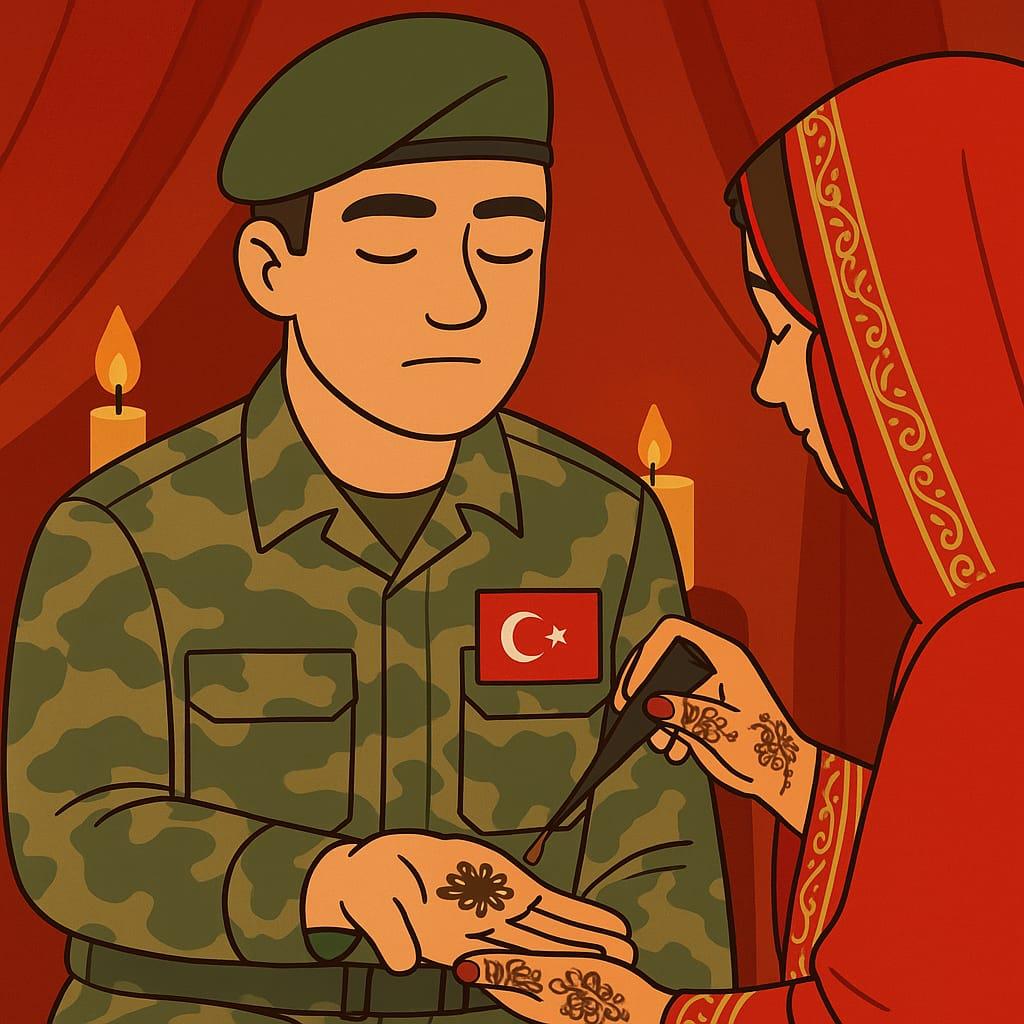
(Generated by artificial intelligence.)
Farewell Moments
Before leaving home, the conscript says goodbye to his family, relatives, and village community. In some regions, salt and flour are sprinkled above the soldier’s head as a protective rite, expressing the wish that he be shielded from misfortune.
The Tradition of Pouring Water
Water is poured behind the conscript as he departs. This symbolizes the hope that his military service will pass as smoothly and easily as water.

(Generated by artificial intelligence.)
Mirror Holding and Reconciliation
As the conscript leaves home, a mirror is held behind him, and he reconciles with his loved ones. This ritual adds deeper meaning to the send-off moment.
Letters and Communication During Military Service
In the past, there were no telephones, internet, or messaging apps during military service. Soldiers communicated with their families by writing letters. These letters served as a way for soldiers to cope with missing their loved ones. Families carefully preserved the letters they received and read them repeatedly. Receiving a letter brought great joy and moral support to the soldier’s family.
Prayers and Vows During Military Service
During the send-off ceremony, passages from the Qur’an are recited and prayers are offered. After the completion of military service, a mevlit is recited and sacrificial animals are slaughtered as offerings.
Visits After Military Service
After completing military service, members of the village community and relatives visit the soldier’s family to offer blessings, saying “May your eyes be bright.”