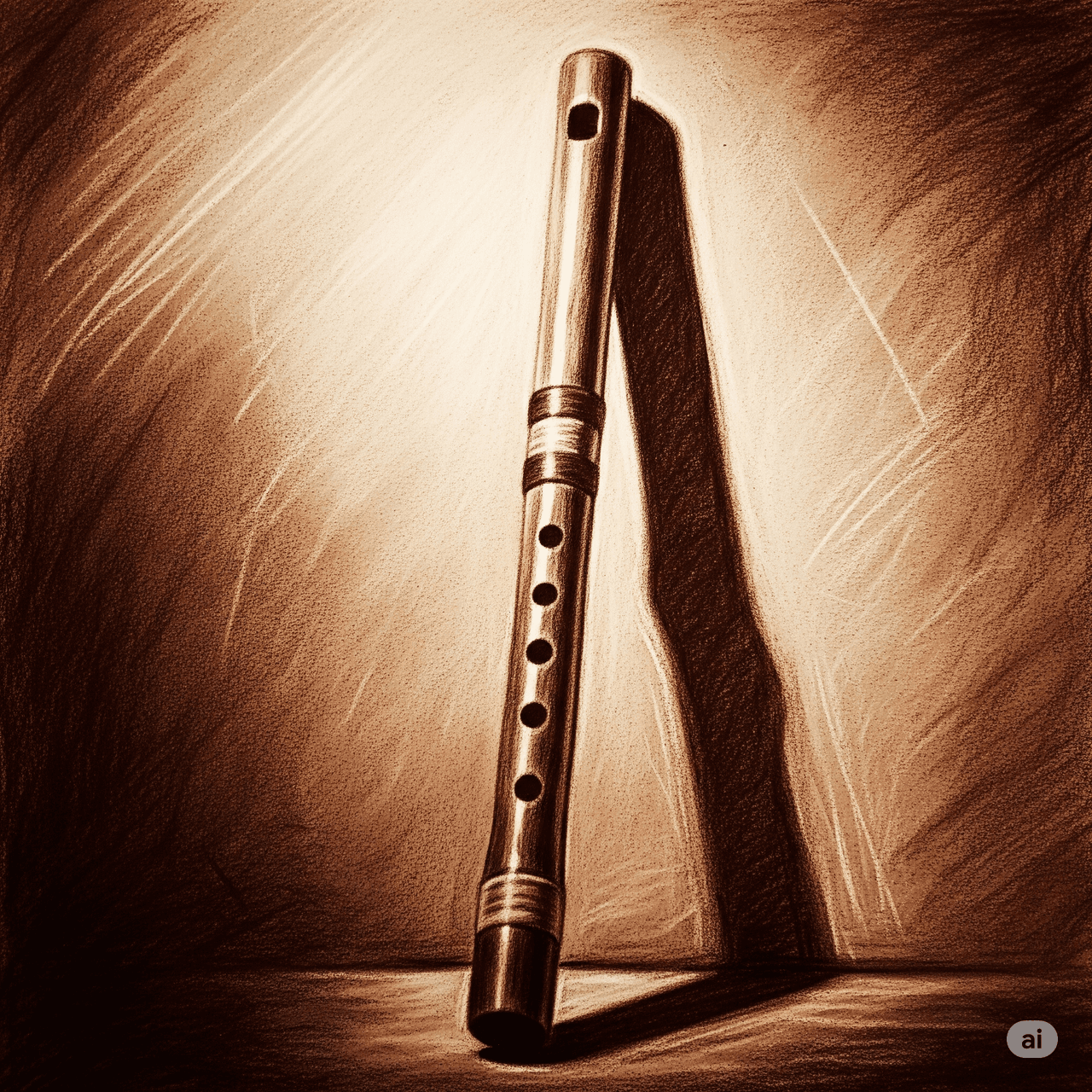




What is the Ney?
The ney is a wind instrument. It is typically made from reed and played by blowing into one end. It has seven holes: six on the front and one on the back. The sound produced by the ney is soft melancholic and deep. This sound can have a calming effect on people.
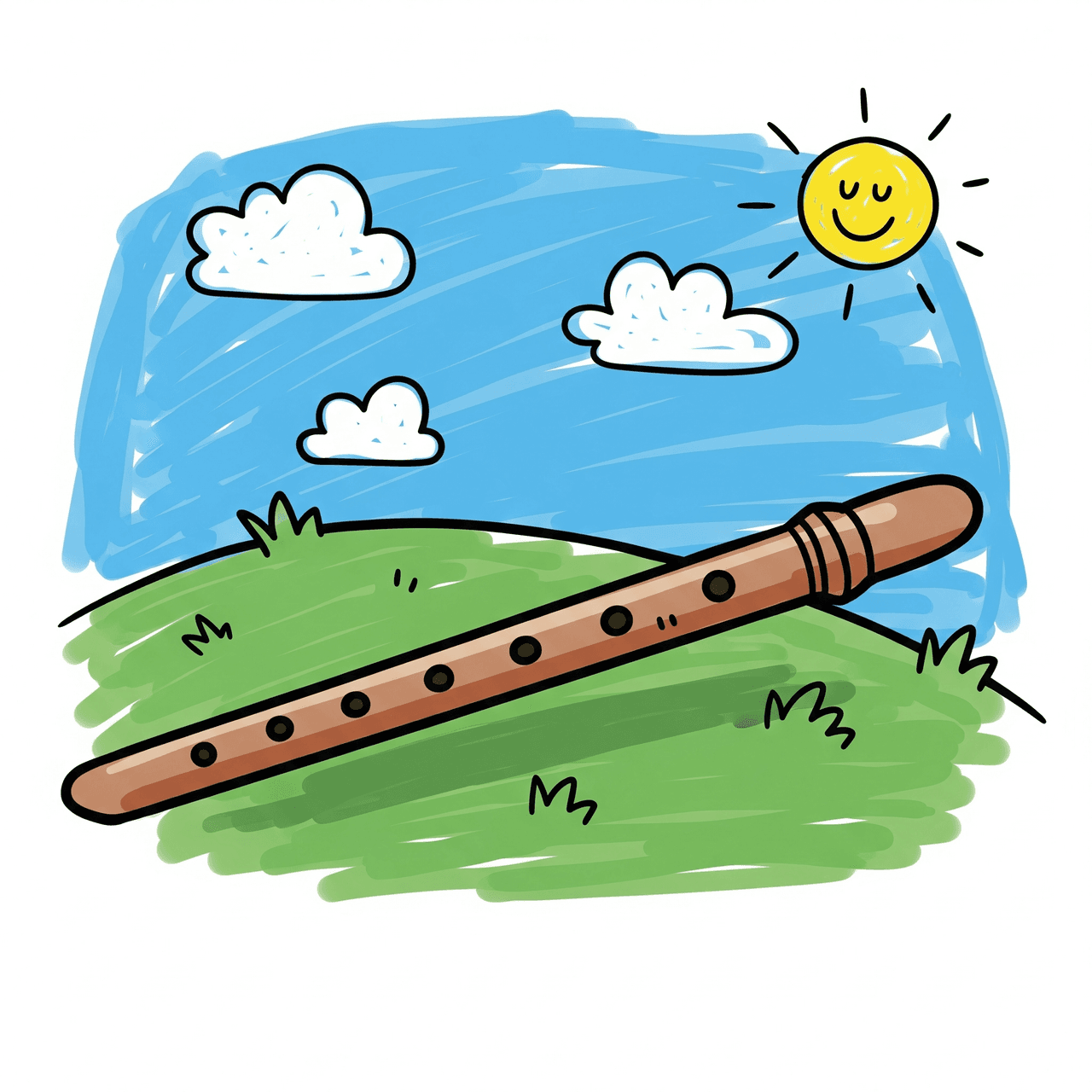
Ney Image (Generated by Artificial Intelligence.)
🌾 Origin
The word “ney” comes from Persian where it also means reed. It entered Turkish in this same form. The ney is an instrument that has been used since ancient times. Instruments resembling the ney have been found in Mesopotamia Egypt and Central Asia.
📜 History
The ney is an important instrument especially in the ceremonies of the Mevlevi dervishes. In these ceremonies the ney symbolizes deep contemplation and spiritual journey. During the Ottoman period it was frequently used in court music and religious music. Over time it also became established in folk music and art music.
🛠️ How Is It Made?
The ney is usually made from a special type of reed. The reed is dried properly cut and holes are drilled into it. A piece called “başpare” is attached to the top end. This piece is typically made from buffalo horn amber or plastic. A protective ring called “parazvane” may be added to the end of the ney.
🎶 How Is It Played?
To play the ney the lips are positioned in a specific way and breath is carefully controlled. Each hole produces a different note. Therefore playing the ney requires patience and focus. A master neyzen (a person who plays the ney) can express emotions very beautifully through the instrument.
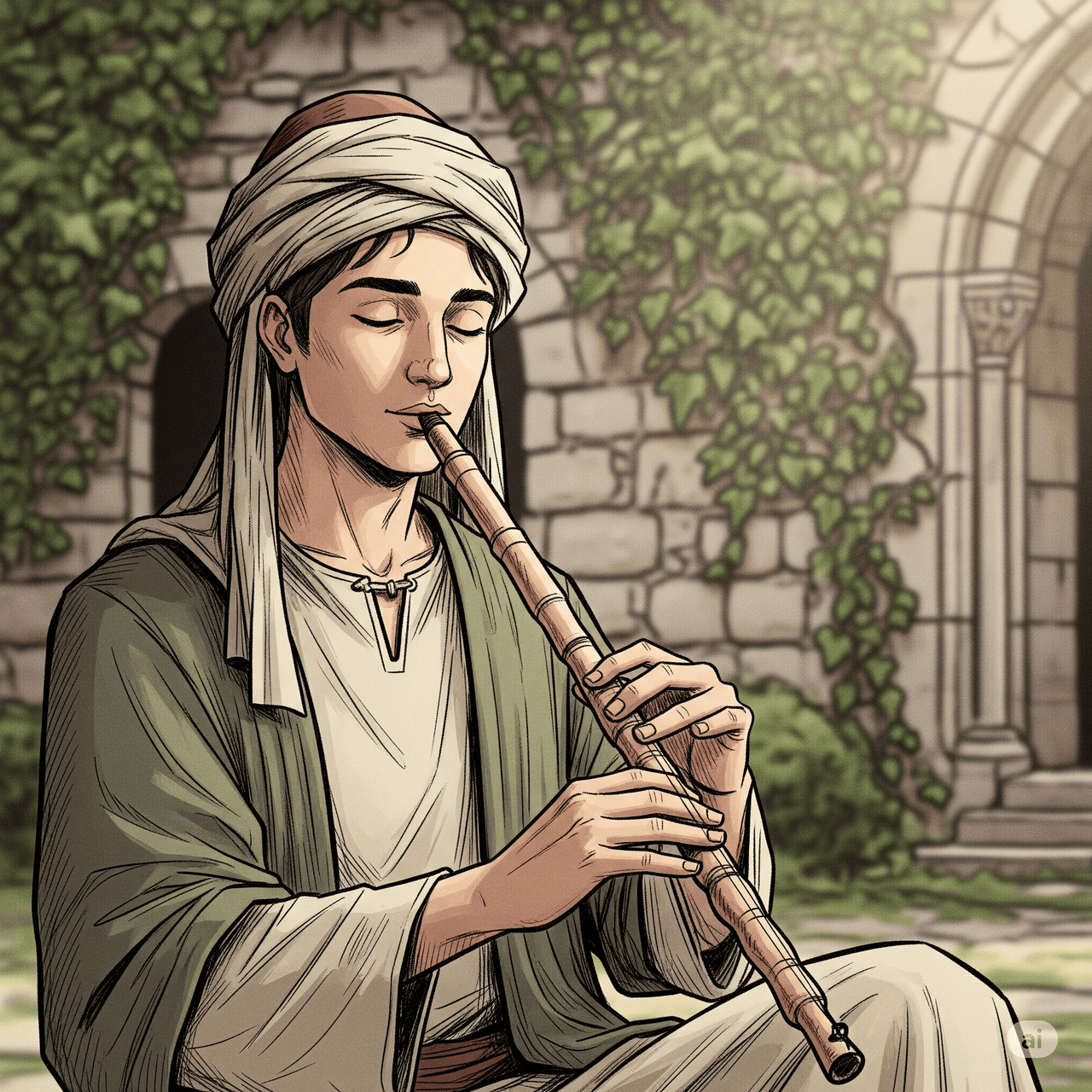
A Young Person Playing the Ney (Generated by Artificial Intelligence.)
🪈 Types of Ney
Ney instruments are named differently according to their length because the longer the ney the deeper its sound. Shorter neys produce higher pitches. Each type of ney produces a distinct tone.
Here are some types of ney:
🎵 Mansur Ney: The most well known and commonly used type of ney. Beginners usually start learning with this type.
🎵 Kız Ney: Slightly shorter than the Mansur ney with a higher pitch.
🎵 Şah Ney: One of the longest neys with a very deep tone.
🎵 Süpürde Ney: The shortest type of ney with a very high pitch.
Ney and Its Meaning
The ney is not merely a musical instrument but also a symbol. Especially in Mevlevi thought it represents the human journey toward union with God. Therefore the sound of the ney carries both musical and spiritual significance.