



What Is the Violin?
The violin is a four-stringed musical instrument belonging to the family of bowed instruments, typically made of wood. It is played with a bow, producing sound through the vibration of its strings. As the highest-pitched instrument in the bowed family, the violin is widely used in many musical genres both as a solo instrument and in orchestras.

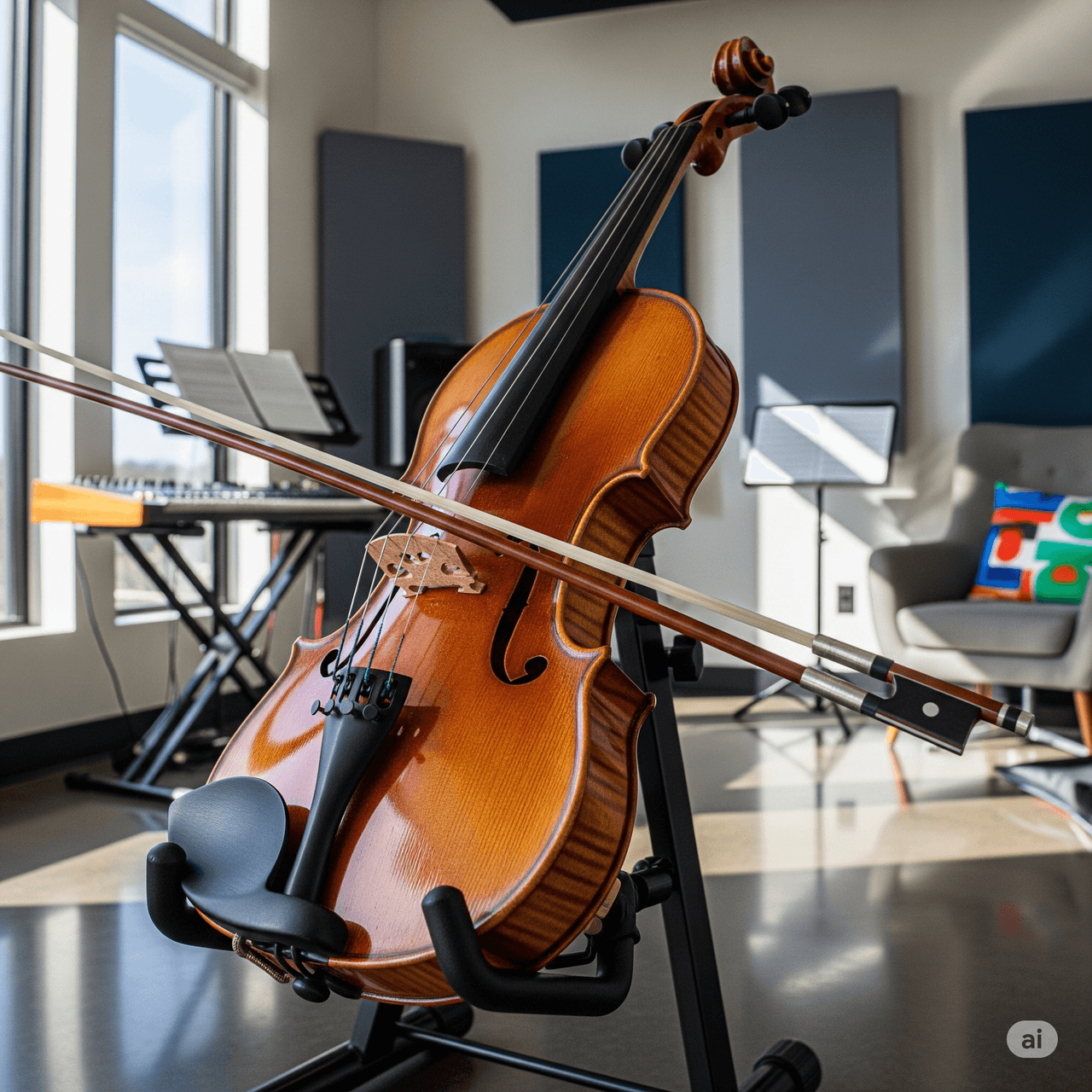
Generated by artificial intelligence.
History of the Violin
The origins of the violin date back to 16th-century Italy, evolving from earlier instruments such as the viols. Over time, Italian craftsmen including masters like Andrea Amati, Antonio Stradivari, and Giuseppe Guarneri refined the design of the violin. As it spread across Europe, the violin became central to classical music, frequently featured in compositions by composers such as Mozart and Beethoven. Today, the violin is used in a wide range of musical styles, from classical and folk to jazz and pop.
Features of the Violin
The violin consists of parts such as the body, neck, pegbox, fingerboard, four strings, and bow. The body is typically made from spruce and maple. The strings produce the notes G, D, A, and E. The bow is crafted from specially selected horsehair. The violin has a wide range of tonal qualities, capable of producing melancholic, joyful, or emotionally expressive sounds. This versatility makes the violin a powerful tool for conveying emotion in music.

Generated by artificial intelligence.
Violin Education
Children beginning to learn the violin first acquire fundamental skills such as proper posture, holding the instrument, and bow technique. Their knowledge of musical notation gradually develops, their fingers gain strength, and their ears become attuned to pitch. Through regular practice, children not only improve their playing abilities but also cultivate attention, patience, and musical expression.

Generated by artificial intelligence.
Where Is the Violin Used?
The violin holds a vital role in symphony orchestras. It is also employed in chamber music ensembles, solo concerts, folk music groups, and modern music bands. Different tonal qualities of the violin can be heard in jazz and film music. Thanks to this versatility, the violin has become one of the most beloved instruments worldwide.

Generated by artificial intelligence.
How Is the Violin Made?
Violin making is a craft requiring great skill and precision. The body is typically constructed from special woods such as spruce and maple. Each component is carefully cut, shaped, and assembled. Sound quality depends on the type of wood used, the structure of the body, and the tension of the strings. Handmade violins can produce richer tonal qualities compared to factory-produced instruments.