





When eyes do not meet, the heart yields.
This saying expresses how the longing we feel for someone or something we cannot see gradually diminishes over time. Sometimes, a friend we love moves to another city. At first, we miss them deeply, but over time we grow accustomed to their absence. This is what is meant by “when the eyes do not see, the heart grows tolerant.”

(Generated by artificial intelligence)
Where Does It Come From?
The exact origin of this saying is unknown, but people have held this idea since ancient times. Individuals noticed that when separated from loved ones, they gradually learned to endure the pain of separation. Over time, this notion became widespread—the belief that what is out of sight begins to fade from the heart as well.
Meaning and Origin
This saying conveys that when a person or object is not physically present, the affection or attachment we feel for them gradually weakens. It expresses how things no longer before our eyes begin to slip from our thoughts and hearts. Here, the word “katlanır” means to endure and to become accustomed.
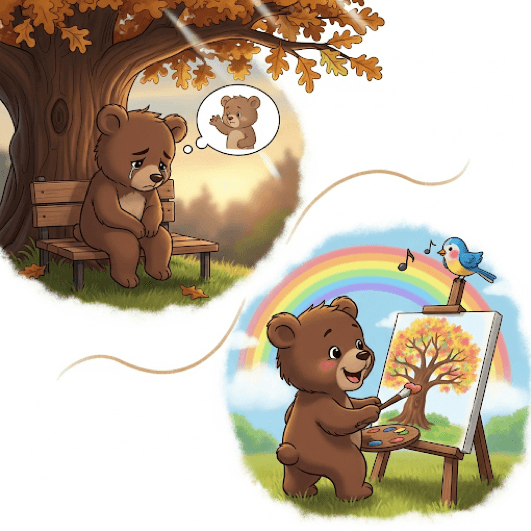
(Generated by artificial intelligence)
How Is It Used in Daily Life?
You can use this saying when you notice that your longing for a friend has lessened after not seeing them for a long time, or when you have forgotten about an old toy. For example, you might say: “My friend transferred to another school; at first I was very upset, but now that I don’t see them, my heart has grown tolerant—I am not as upset anymore.”