



Who is Al-Farabi?
Al-Farabi was a great Turkic-Islamic thinker who lived in ancient times and devoted himself to science and philosophy. His real name was Abu Nasr Muhammad ibn Muhammad al-Farabi. He was born in 870 in the city of Otrar, in present-day Kazakhstan (formerly known as Farab), which is why he became known as “al-Farabi,” meaning “the one from Farab.”
🏡 Early Life and Education
From an early age, al-Farabi showed great interest in books and learning. He received his initial education in his hometown and later traveled to major centers of learning such as Baghdad, where he studied philosophy, mathematics, music, logic, and the natural sciences. He read the works of ancient Greek philosophers and translated them into Arabic.
🔬 Contributions to Science and Philosophy
Al-Farabi made particularly significant contributions in the fields of philosophy and logic. He is known as the “Second Teacher,” because he expanded upon the ideas of Aristotle, who is regarded as the “First Teacher.” He also authored books on mathematics, music, physics, politics, and medicine. One of his most well-known ideas is the concept of the “Virtuous City,” in which people live knowledgeably, justly, and in harmony.

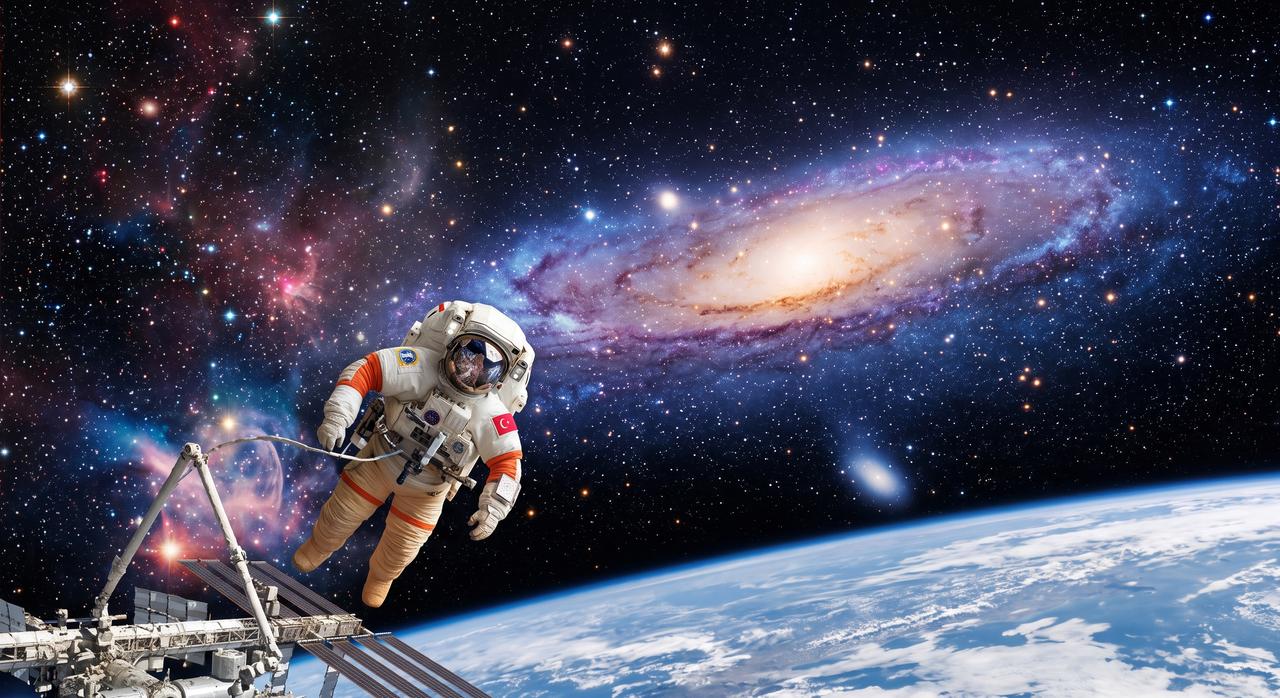
(Generated by artificial intelligence.)
🎼 His Emphasis on Music
Al-Farabi also showed great interest in music. He played various musical instruments and studied musical sounds and their effects. He wrote the major work titled “Kitab al-Musiqa al-Kabir” (The Great Book of Music), which is among the first important treatises to examine music scientifically.

(Generated by artificial intelligence.)
📚 Major Works
- Al-Madina al-Fadila (The Virtuous City)
- Ihsa al-Ulum (The Enumeration of the Sciences)
- Kitab al-Musiqa al-Kabir (The Great Book of Music)
- Commentaries on the Books of Logic (on Aristotle’s logic)
🧠 Fields of Study
- Philosophy
- Logic
- Mathematics
- Music
- Astronomy
- Physics
🌍 Influence on the World of Science
Al-Farabi’s ideas were studied for centuries in both the Islamic world and Europe. Throughout the Middle Ages, European philosophers learned extensively from his writings. Thus, al-Farabi became a vital bridge connecting the scientific traditions of the East and the West.
📚 References
- Nasr, Seyyid Hussein. *History of Islamic Science*. Istanbul: İnsan Yayınları, 2004.
- Kaya, Veli. “Farabi.” Türkiye Diyanet Vakfı Islamic Encyclopedia. https://islamansiklopedisi.org.tr/farabi
- TÜBİTAK Bilim Genç. “Who is Farabi?” https://bilimgenc.tubitak.gov.tr/makale/farabi-kimdir