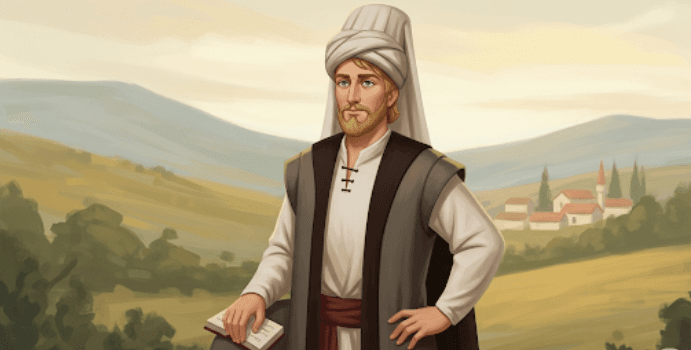




Who is Orhan Gazi?
Orhan Gazi (1281–1362), the second ruler of the Ottoman State, succeeded his father Osman Gazi as head of the principality. Born in Söğüt, Orhan Bey is described as tall, blond, and blue-eyed. He was a beloved, knowledgeable, and just leader. During his reign, the Ottoman principality, once a small territory, began to transform into a structured state.
What Kind of Leader Was He?
Orhan Gazi was not only a warrior but also recognized for his state-building qualities. He frequently mingled with the people, listened to their concerns, and placed great value on his soldiers and subjects. Justice was his highest priority. His governance approach played a crucial role in the growth of the Ottoman state.
(Generated by artificial intelligence.)
His Conquests and Achievements?
The era of Orhan Gazi was marked by conquests and significant administrative reforms. He inherited 16,000 square kilometers from his father and bequeathed 95,000 square kilometers to his son Murad I. This expansion was achieved through both military successes and shrewd diplomatic agreements.
- Conquest of Bursa: In 1326, he captured Bursa and made it the capital, one of the most important conquests in Ottoman history.
- Battle of Pelekanon: In 1329, he defeated the Byzantine Empire at the Battle of Pelekanon, breaking Byzantine power in Anatolia.
- Conquest of İznik and İzmit: He took İznik in 1331 and İzmit in 1337, bringing the entire Kocaeli Peninsula under Ottoman control.
- Expansion into Rumelia: In 1354, taking advantage of internal chaos in the Byzantine Empire, he seized Çimpe Castle. This marked the first step in the Ottoman entry into Europe.
How Was the State Organized?
Orhan Gazi did not limit himself to expanding territory; he also introduced major innovations to strengthen and organize the state.
- The First Regular Army: He replaced the previous volunteer forces with the first standing army, composed of "Yaya" and "Müsellem" units, which greatly improved military effectiveness.
- Medreses and Waqfs: He founded the first medrese (school) in İznik, where both religious and scientific knowledge were taught. He also established the waqf system to fund the construction of mosques, bridges, and roads.
- Coinage: He minted the first silver coin (akçe) bearing his name, a significant step affirming the Ottoman state’s independence.
(Generated by artificial intelligence.)