



Why Do We Feel Hungry and Why Does Our Stomach Growl?
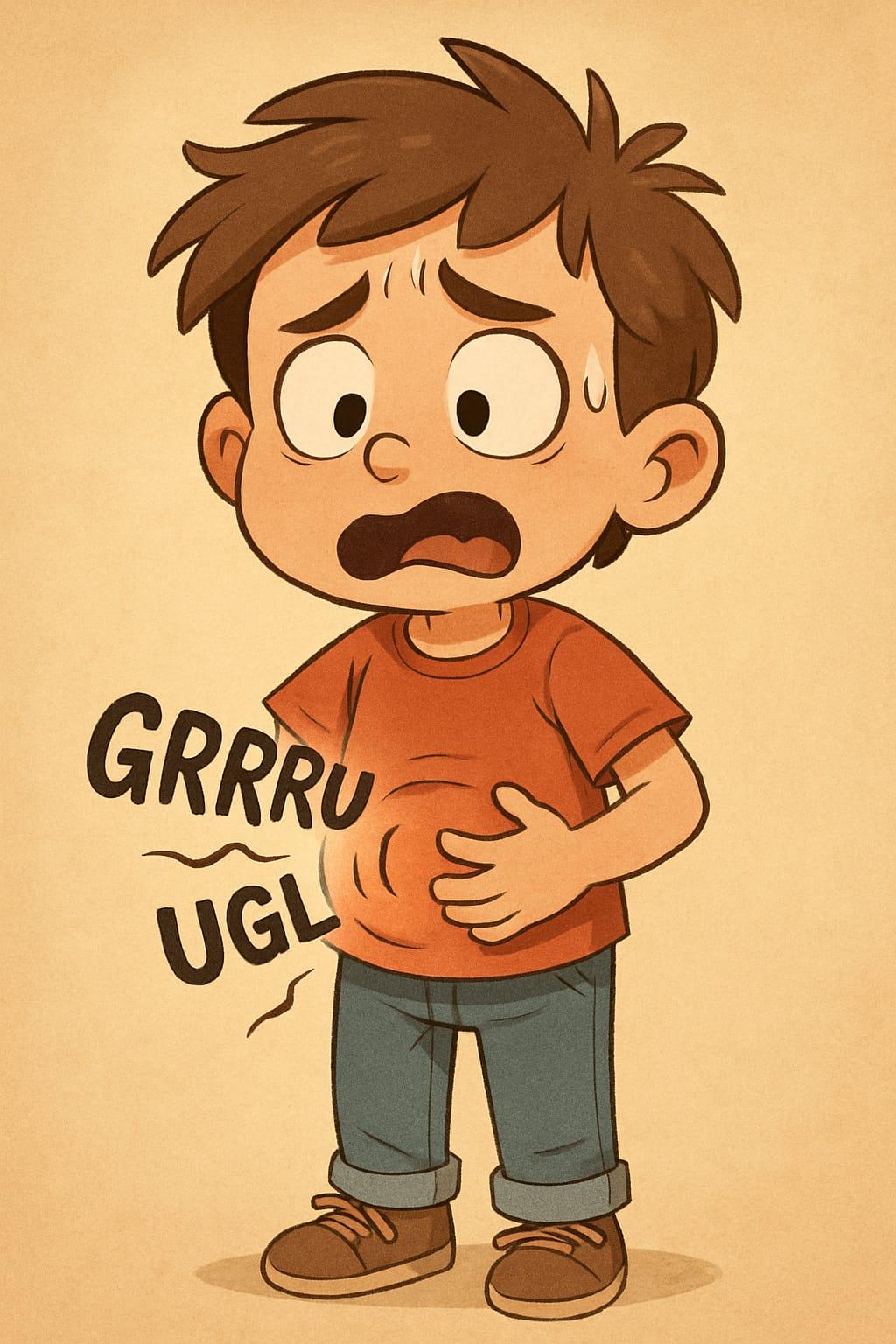
Our body signals hunger and growling to indicate that we need energy and food. The stomach is an organ that stores and digests food. When we do not eat or remain fasting for a long time, the stomach empties. This triggers the release of the hunger hormone ghrelin (the hormone that sends hunger signals to the brain). The empty stomach muscles work more actively and produce sounds. These sounds are known as growling. Growling is not only a sign of hunger but also an indication that the digestive system is functioning properly.

(Generated by Artificial Intelligence.)
What Happens When the Stomach Is Empty?
When the stomach empties, ghrelin (the hunger hormone) is released. This hormone signals to our brain that we need to eat, causing us to feel hungry and desire food.
Why Does Growling Occur?
The smooth muscles in the stomach and intestines (the muscles that move food forward) contract continuously. These contractions are called peristalsis (the wave-like movements that propel food through the digestive tract). When the stomach and intestines are empty, they become more active and produce sounds from air and liquid movement.
Factors That Accelerate Hunger
Inadequate protein intake (a nutrient that helps the body feel full) increases hunger. Sleep deprivation raises hunger hormones and causes us to feel hungry more frequently. Sugary foods rapidly alter blood sugar levels, leading the stomach to become hungry again quickly.
Activity and Hunger
Physical activities, especially energy-intensive sports like swimming, accelerate hunger. Cold water requires the body to maintain its temperature, which leads to greater energy expenditure. This is why our stomachs growl and we feel hungry soon after exercise.

(Generated by Artificial Intelligence.)
The Ghrelin Hormone
Ghrelin (the hormone secreted by the stomach that sends hunger signals to the brain) tells our brain that it is time to eat. Ghrelin levels rise when the stomach is empty and increase the desire to eat.
Protein and Satiety
Eating protein (a nutrient essential for muscle and body tissue) helps us stay full. If we do not consume enough protein, the stomach empties quickly and we become hungry.
Sleep and Hunger
Not getting enough sleep increases hunger hormones. This causes our stomach to growl more frequently and makes us feel hungry sooner.

(Generated by Artificial Intelligence.)
Sugary Foods and the Stomach
Sugary foods rapidly raise and then lower blood sugar levels. This rapid fluctuation causes our stomach to become hungry again and begin growling.