




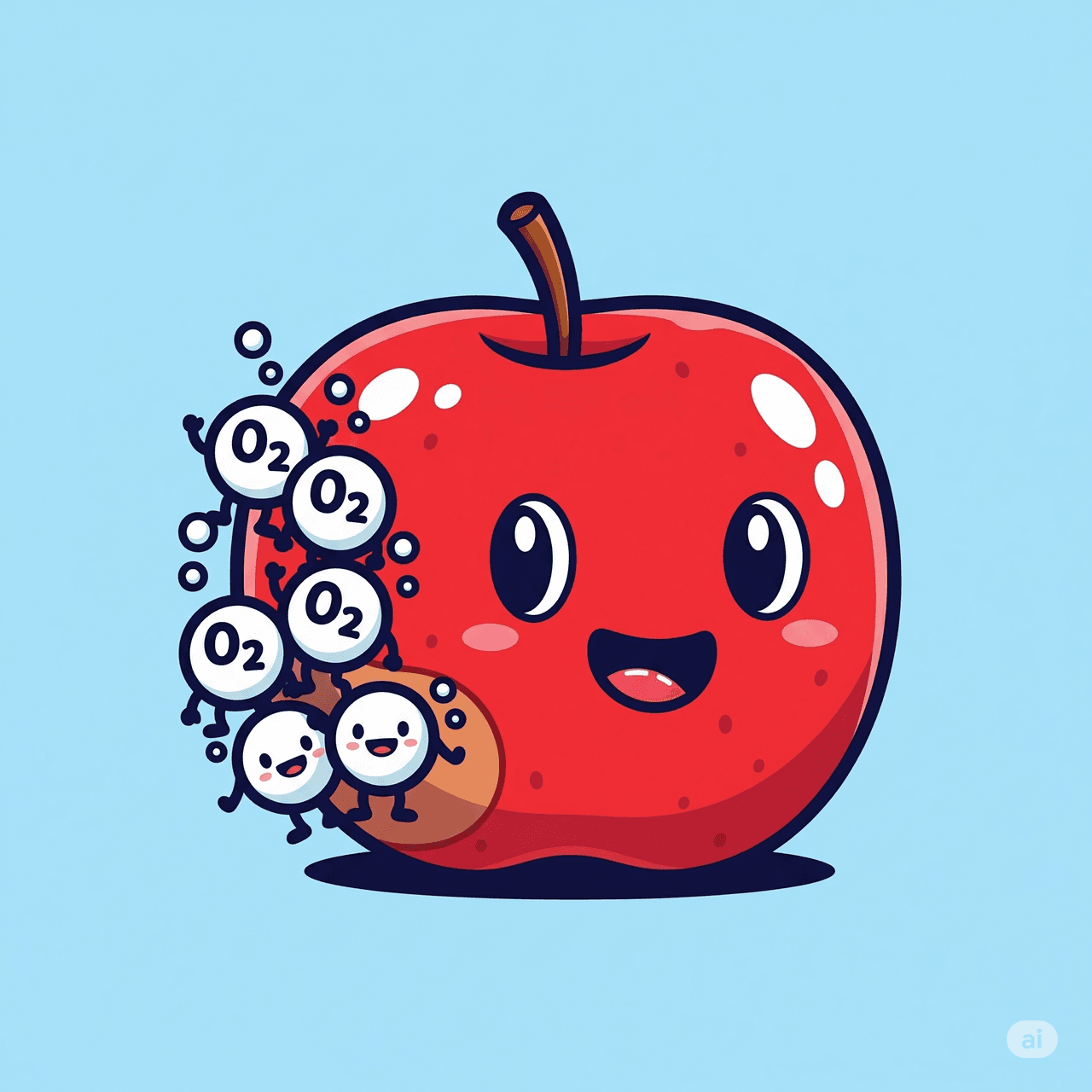
Why Does an Apple Decay?
Apple, after being cut or peeled, begins to develop a brownish discoloration on its surface. This process occurs due to the interaction between the apple’s natural components and oxygen in the air. The browning typically does not affect the apple’s flavor or nutritional value, but it does create a visual change.
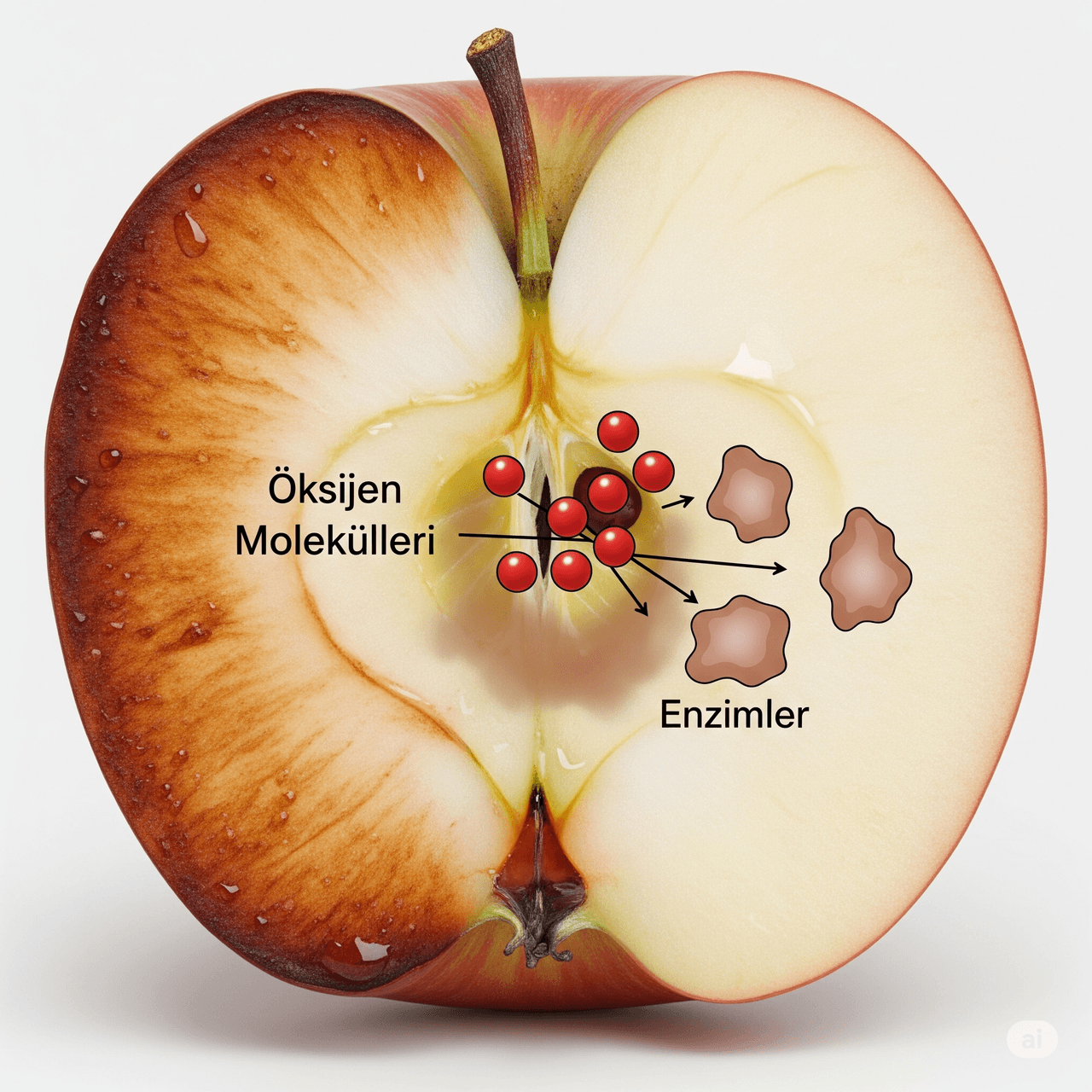
(Generated by artificial intelligence.)
Scientific Mechanism
The polyphenol oxidase (PPO) enzyme inside the apple comes into contact with oxygen in the air when the fruit is cut. As a result, the polyphenols in the apple oxidize and form a brown compound called o-quinone. This chemical reaction causes the apple’s color to turn brown and is a natural process.
Why Is It Important?
Apple browning is merely an aesthetic change; however, this process offers children an opportunity to learn about chemical reactions in food. It also helps them understand methods for preserving food freshness. This knowledge is important for healthy eating and food awareness.
Occurrence in Daily Life
Sliced apples can brown quickly in fruit salads or snacks. Therefore, applying methods to prevent browning is practical in daily life and helps maintain the appearance of food. Children frequently encounter this phenomenon and can learn from it.
Methods to Prevent Browning
To reduce apple browning, acidic substances such as lemon juice or vinegar can be used. Additionally, apple slices can be stored in airtight containers or soaked in salt water. These methods delay browning by limiting the enzyme’s contact with oxygen.
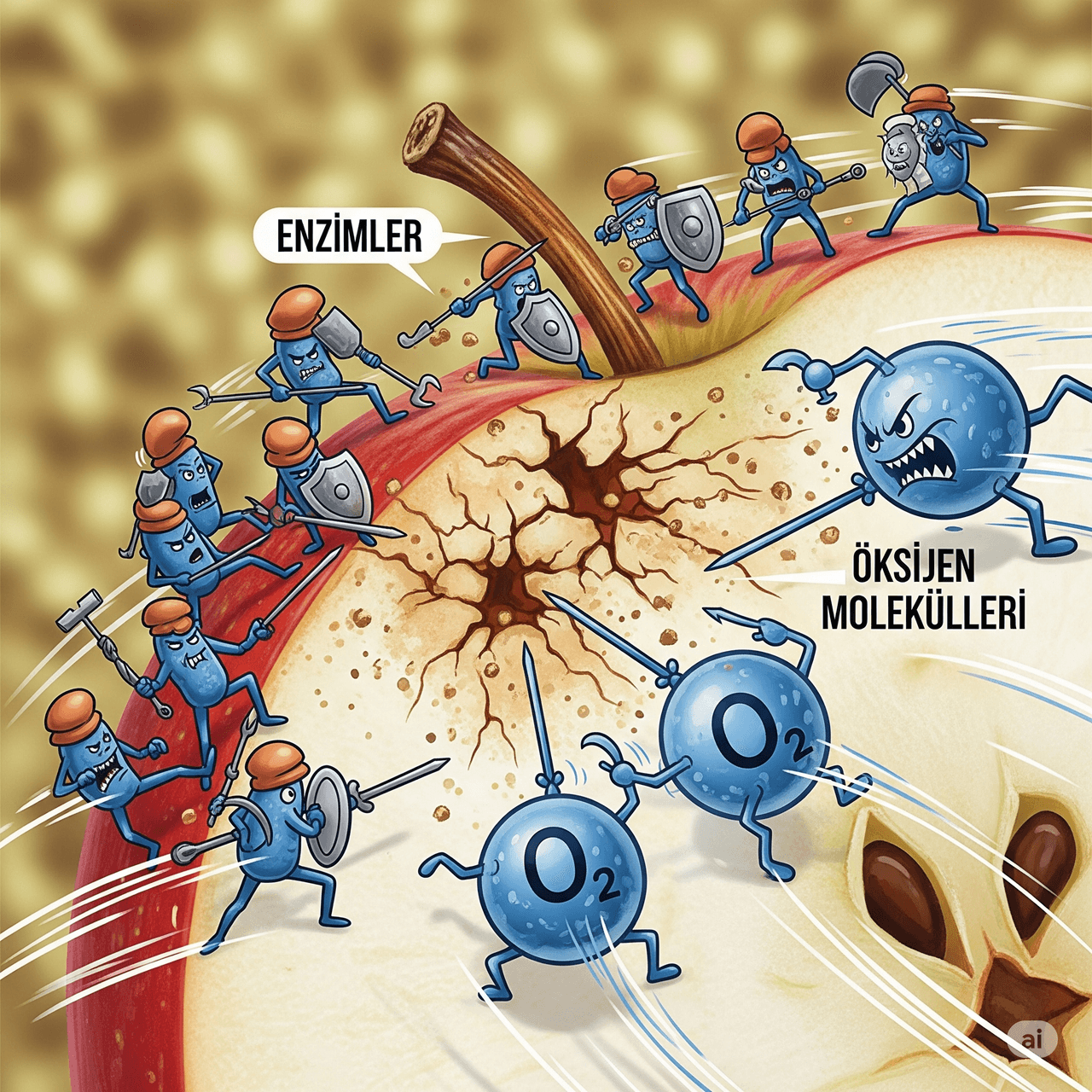
(Generated by artificial intelligence.)
Apple browning is a normal and harmless reaction. This process provides an opportunity to learn about chemical reactions in nature. Children can develop scientific curiosity and food awareness by observing how food changes over time.