


World Nomadic Games
The Nomadic Games are a vibrant, massive international sports and cultural festival that brings together thousands of athletes and visitors from every corner of the world, much like the Summer or Winter Olympics. The most exciting aspect of this event is the revival of unforgettable games once played by legendary heroes, horsemen, and traditional nomadic peoples—games that are not run on tracks or played on football fields.
Origins and History of the Games
- From Epics to the Present: The roots of the Nomadic Games lie in the Manas Epic, one of the greatest works of world literature. The epic describes how ancient peoples gathered for competitions, equestrian displays, and friendship meetings.
- Autumn Toy (Celebration): Traditional nomadic communities, after spending the summer in highland pastures, would complete their seasonal migrations in autumn and hold grand celebrations. The games are typically held in September to honor this ancient “toy,” or festival tradition.
- Grand Beginning: First launched in 2014 in Kyrgyzstan, the games were later held in İznik, Türkiye, and Astana, Kazakhstan, before returning to Kyrgyzstan as host again in 2026.
Purpose and Global Status of the Games
- Preserving Cultural Heritage: The goal is to preserve and introduce to the world the sports, music, crafts, and lifestyles of our ancestors who lived in tents, rode horses, and lived in harmony with nature.
- World Peace and Friendship: Major international organizations such as the United Nations and UNESCO support the games because the Nomadic Games strengthen intercultural friendship by uniting thousands of people speaking different languages under a common banner of entertainment and sport.
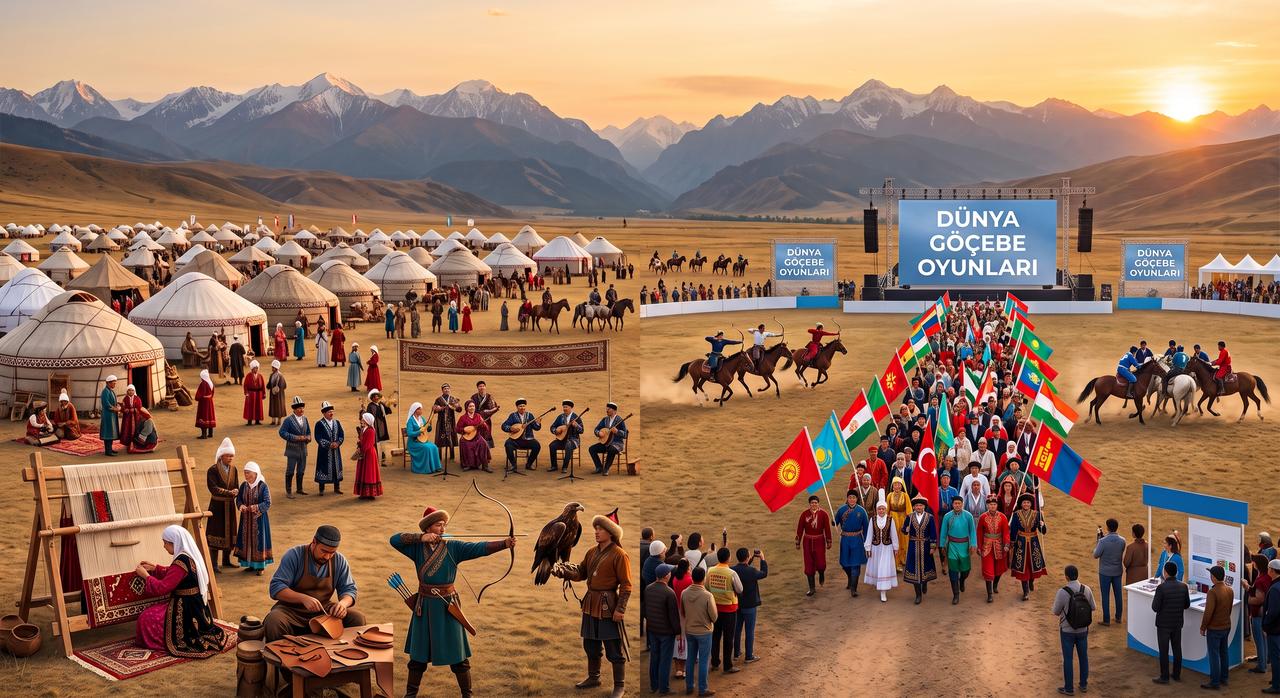
A visual representing the values embodied by the World Nomadic Games. (Generated by artificial intelligence)
What Happens at the Nomadic Games?
The games take place across three main sections: Sports, Culture, and Science. While athletes compete on sports fields, artists and artisans showcase their skills in vast tented cities set up for the event.
Thrilling Sports Disciplines
- Equestrian Sports and Competitions: Heart-pounding displays include shooting arrows while riding at full gallop, horseback wrestling (Er Enişi), and picking up coins or gold from the ground while galloping (Tenge Ilu). The most famous equestrian sport is Kök-Börü (Kokpar), a team-based game played on horseback.
- Strength and Wrestling Games: These disciplines test not only strength but also endurance. Competitors engage in Mas Güreşi, where two opponents seated on the ground pull a wooden stick toward themselves; traditional Belt Wrestling; tug-of-war; and stone-lifting contests (Nomad Strongman).
- Mind and Strategy Games: Nomadic culture places great value not only on physical strength but also on intellect. Contestants compete in strategic board games such as Mangala, Toguz Korgool, and Oware, developing tactics to make the best possible move.
- Traditional Hunting and Skill: Traditional falconry demonstrations (Kuşbegilik), using golden eagles and falcons, are held alongside archery competitions using historical bows.
Vibrant Cultural Festival and Ethno-Village
- Large Tent Cities (Kırçın Yaylası): Hundreds of traditional nomadic tents (yurts) are set up side by side during the games, where competitions for the fastest tent assembly take place.
- Traditional Arts and Cuisine: Blacksmiths and weavers from Türkiye, Kyrgyzstan, and other countries display their crafts. Traditional dishes are cooked in large cauldrons, while bards play the kopuz and recite epics.
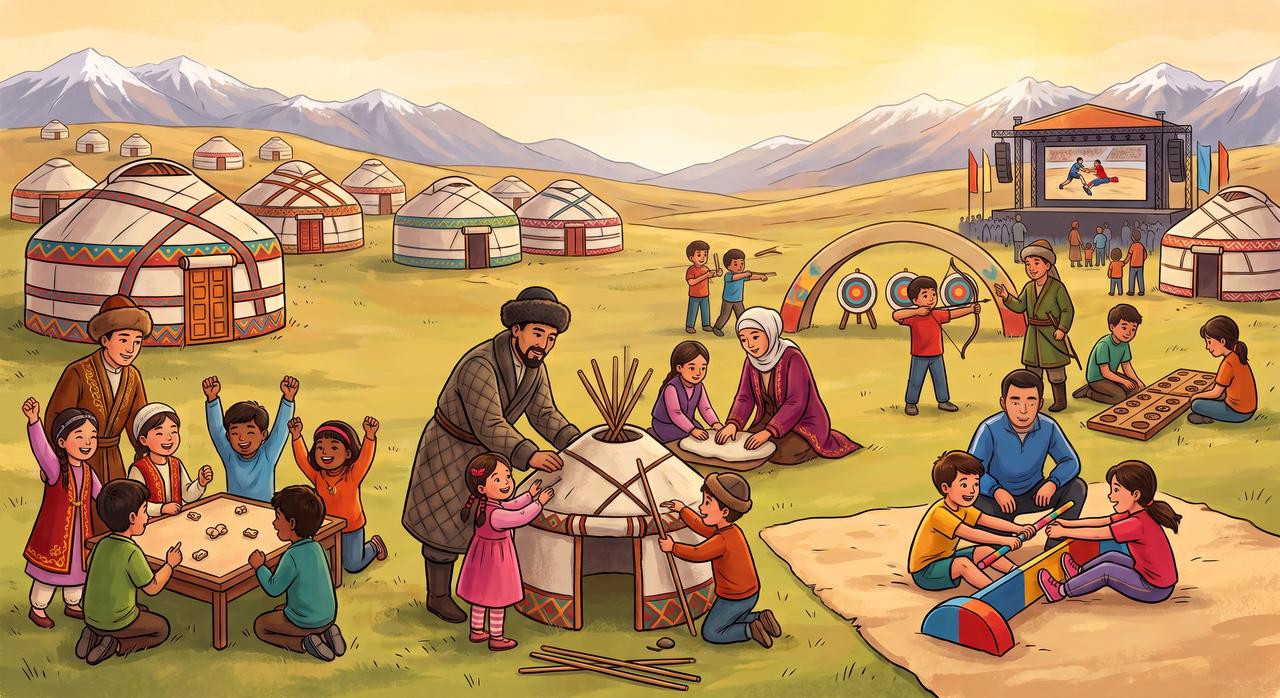
Children at the World Nomad Games. Representative image. (Generated by artificial intelligence)
Special Symbols Children Will Love
- Official Mascot "Batay": The cheerful face of the games is the noble snow leopard (snow panther), Batay, which lives in high mountains. Batay symbolizes strength, freedom, and friendship.
- The Magical Water Caravan Ritual: An unforgettable tradition is revived during the opening ceremony. Clear waters from the sacred springs of the Divine Mountains are mixed in a large vessel with waters brought by representatives of dozens of participating countries. This ritual symbolizes the brotherhood of all children and peoples of the world.