




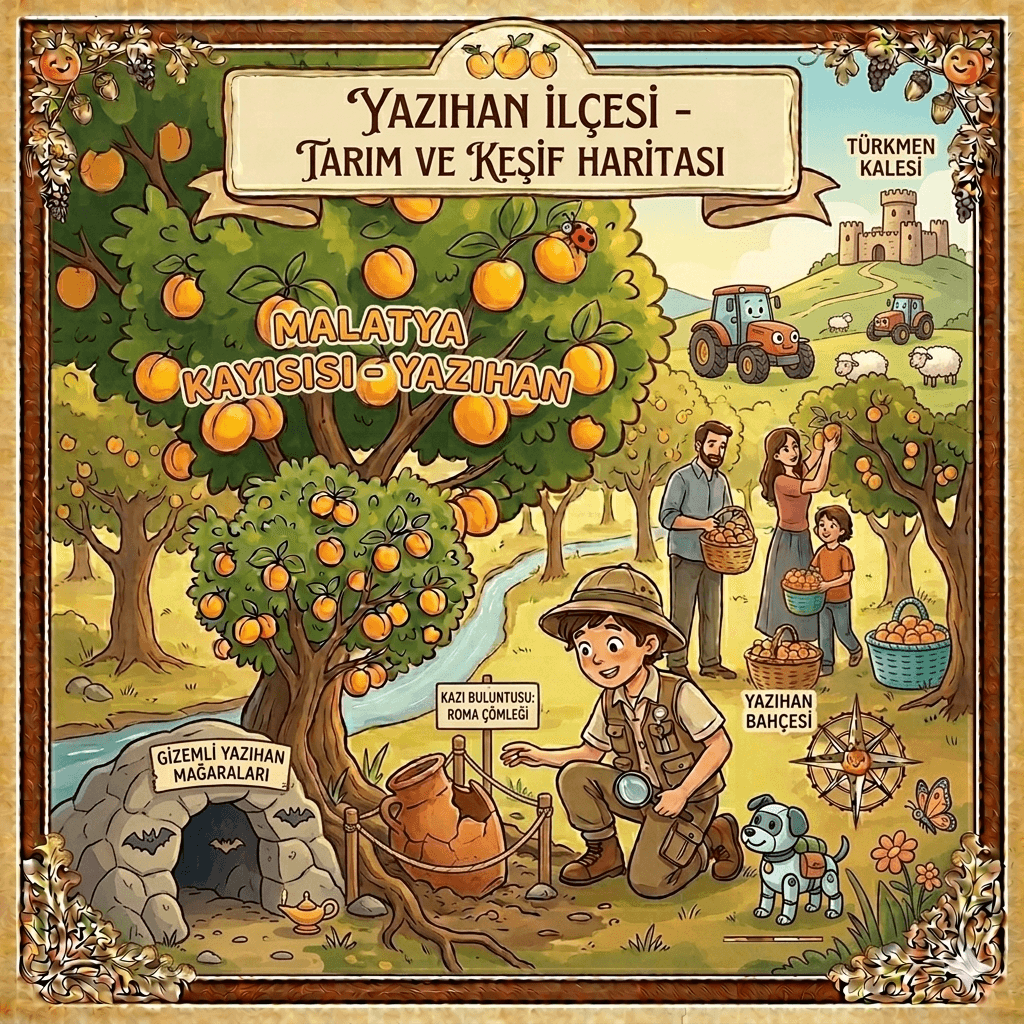
Yazıhan (District)
Malatya is located 40 kilometers away, on a vast flat plain where for thousands of years caravans passed through. Imagine such a place.
Yazıhan, the Plain of the Silk Road and the Caves’ Mysteries
This is Yazıhan, named after a caravanserai built by a sultan. Have you ever wondered how people lived in rooms carved into the rock thousands of years ago? Let us explore this district rich in history and nature together!
The Caravan Routes: Silk and Copper Roads
The history of Yazıhan stretches back to ancient times, when humans were just beginning to adopt a settled lifestyle. Throughout history, it became one of the key stops along the famous Silk Road and Copper Road, which extended from the Chinese capital of Beijing to Europe.
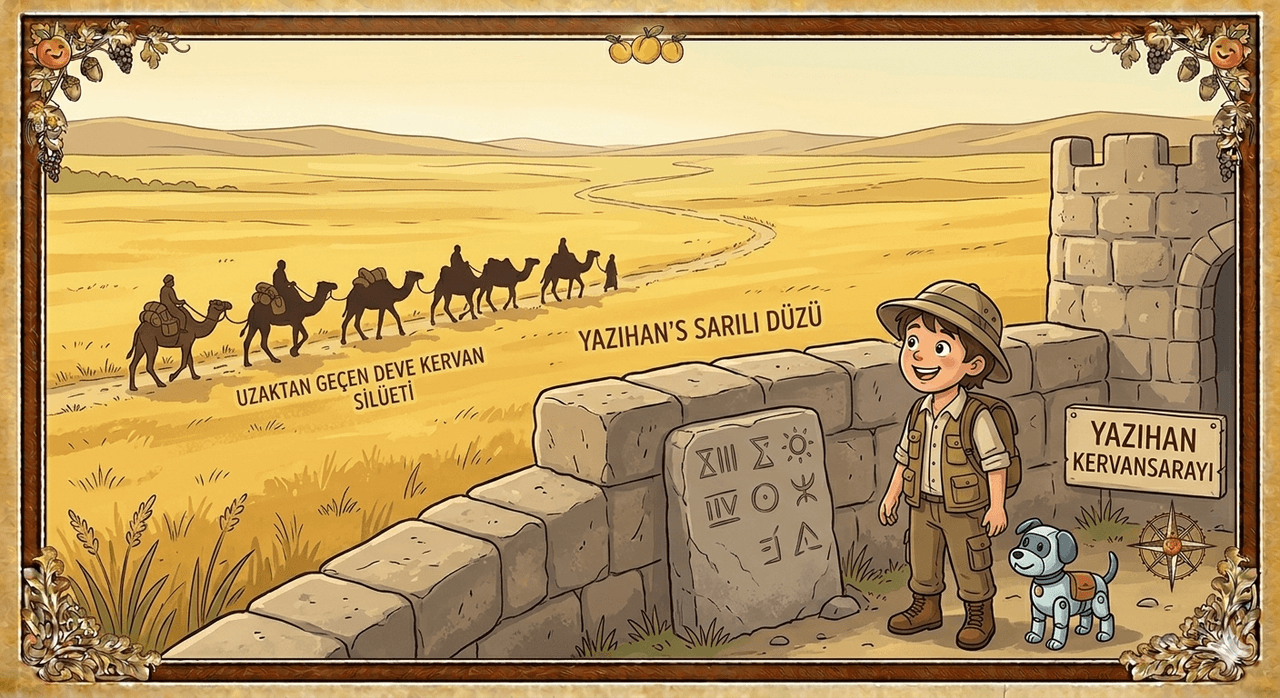
Yazıhan Sarılı Düzü (generated by artificial intelligence)
Merchants traveling along this route passed through here on their way from Syria to Sivas, and from Kayseri to Malatya. Because the district’s terrain is a wide, flat plain, caravans did not neglect to rest and stay here.
Ansır Caves: The City Within the Rocks
Located 10 kilometers west of the district in Buzluk Village are the Ansır Caves, one of the most remarkable sites in the area. These caves contain 40 to 50 room-like chambers and three remnants of ancient churches.
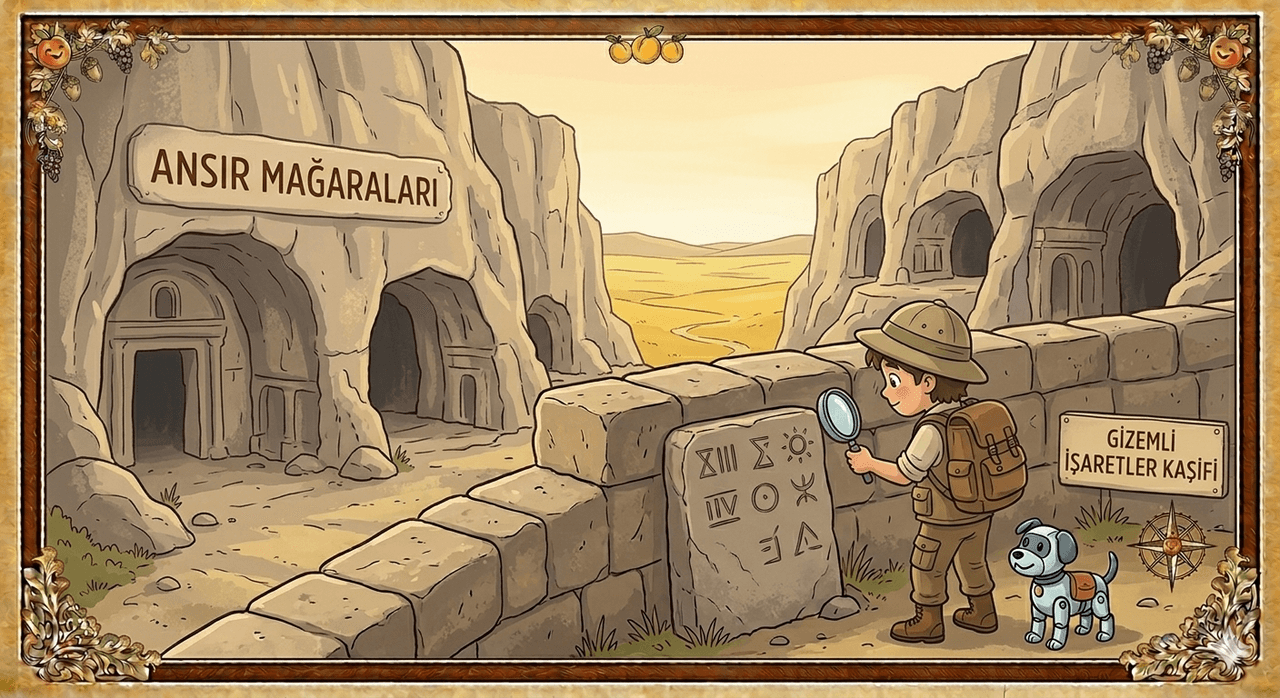
Ansır Caves (generated by artificial intelligence)
Scientists have discovered traces of the Hittite civilization and even older artifacts from the Paleolithic era within these caves. Long ago, people carved rooms into the rocks to create safe and mysterious dwellings.
Historical Structures: The Mosque and the Caravanserai
One of the most important structures in Yazıhan is the Hasan Badırık (Uzun Hasan) Mosque, built in 1566. This mosque has a unique T-shaped plan. In the past, it was not only used for worship but also as a multi-purpose center where children studied and important matters were discussed.
The story of the caravanserai that gave the district its name dates back to 1593. Ottoman Sultan Murad III commissioned a large caravanserai here to accommodate caravans and his army during his campaign to Iran. It was the combination of this famous caravanserai and the surrounding flat land that led the locals to begin calling the area "Yazıhan".【1】
The Taste of Nature and Handicrafts
The terrain of Yazıhan is highly suitable for agriculture. The Karasu River, which flows through the district, serves both as a picnic spot and as a medicinal spring that supplies water to many nearby neighborhoods.
While people here engage in farming and animal husbandry, they also preserve a beautiful tradition: carpet weaving. These colorful carpets, woven during leisure time, reflect the region’s cultural richness stitch by stitch.
A Journey Through Time
- 200 BC – 14th Century AD: Yazıhan was one of the most vibrant stops along the world-famous Silk Road and Copper Road.
- 1566: The Hasan Badırık Mosque was built by Malatya Beylerbeyi Mustafa Pasha.
- 1593: Sultan Murad III commissioned the caravanserai that gave the district its name.
- 1936: A railway reached the district, marking the beginning of its transformation into a modern settlement.
- 1990: Yazıhan officially gained district status.
Citations
[1]
"Yazıhan," Malatya Metropolitan Municipality, accessed April 14, 2026,https://www.malatya.bel.tr/sayfa/yazihan.