




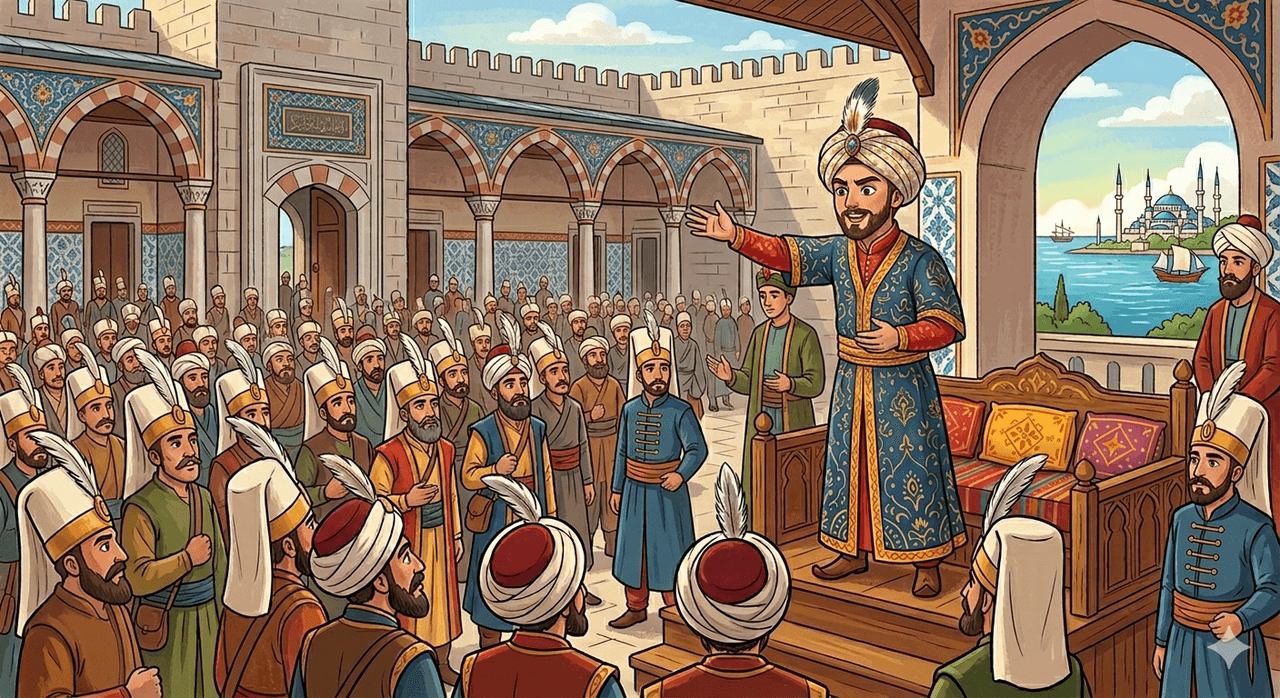
Young Osman
Ottoman Empire’s one of its youngest and most reform-minded sultans. Although he ascended the throne as a child, he harbored grand ambitions to transform his country into a more modern and powerful state.
A Reform-Minded Sultan
Young Osman noticed that some of the state’s institutions were no longer functioning as effectively as before. In particular, he believed the discipline of the Janissary Corps, the army of his time, had deteriorated.
He therefore devised plans to modernize and reorganize the military.
The sultan also wished to introduce changes not only in military affairs but also in palace traditions. For instance, he broke the long-standing custom of marrying only from outside the palace by marrying a woman from the common people. This demonstrated how bold and questioning of tradition he was as a leader.
A Horseman and a Poet
Young Osman was not only an administrator but also a highly skilled horseman and poet. He loved horses so much that he sometimes crafted the saddles of the horses he rode. In his poetry, he used the pen name “Fârisî,” meaning horseman or cavalryman.
Despite his short life, he composed over a hundred poems. In them, he typically used simple language to express his emotions. His artistic side reveals how sensitive and deeply feeling a person he was.
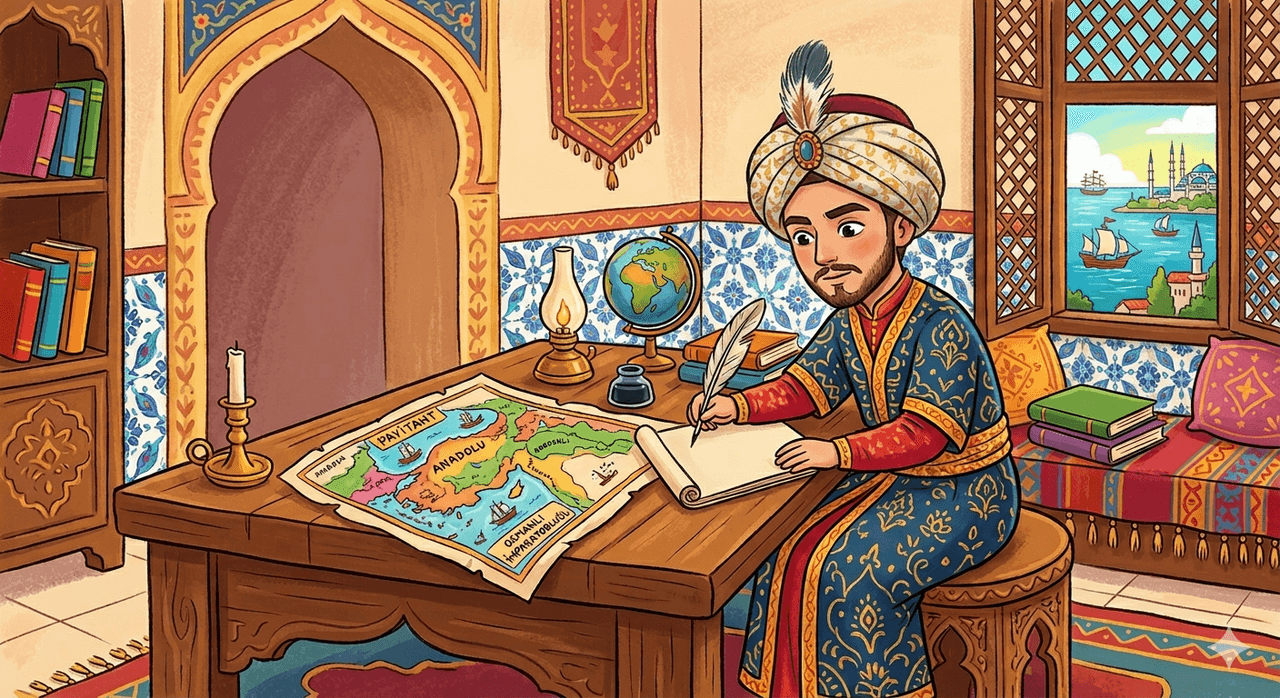
The image shows Young Osman writing poetry with a map on his desk (Generated by artificial intelligence)
Challenges and Grand Ambitions
Young Osman led the Ottoman army in the Hotin Campaign. During this campaign, he witnessed firsthand the weaknesses within his forces, which strengthened his resolve to enact change. However, his reformist ideas provoked resistance from certain soldiers—the Janissaries—who feared losing their power. Unfortunately, these desired reforms met with rebellion. In 1622, at the age of only eighteen, he was deposed from the throne. This event in our history reminds us how difficult reform can sometimes be.
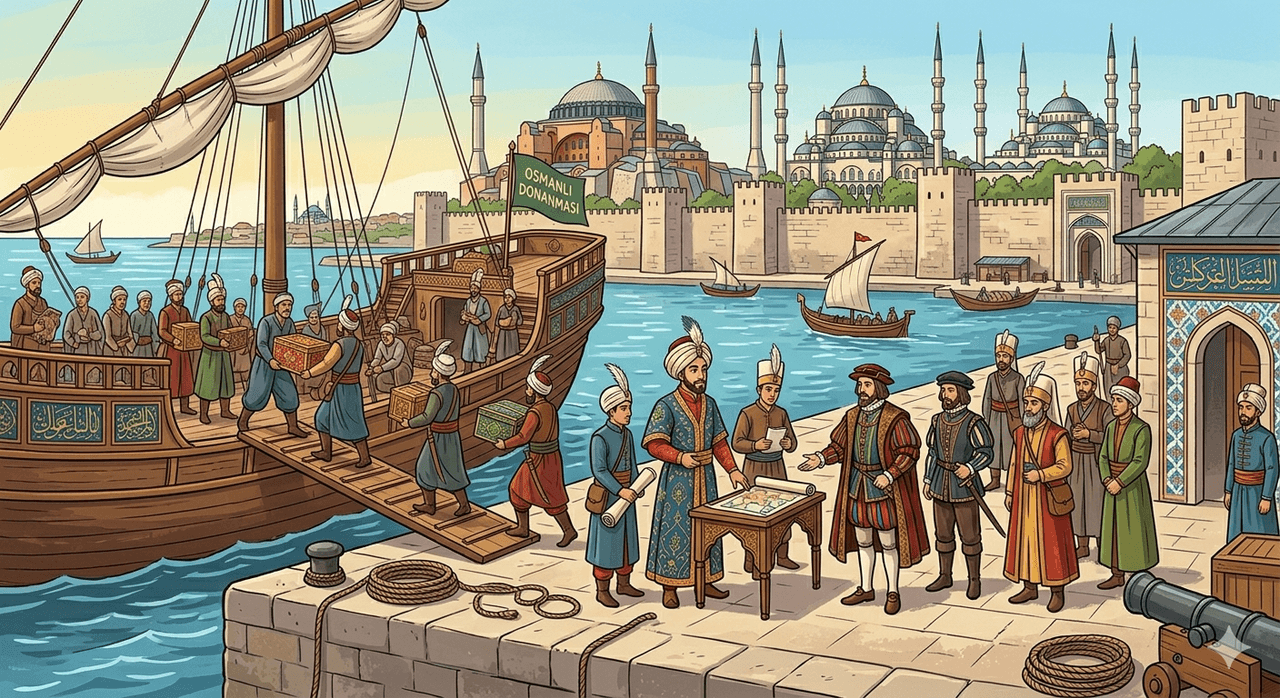
Preparations for the Hotin Campaign (Generated by artificial intelligence)