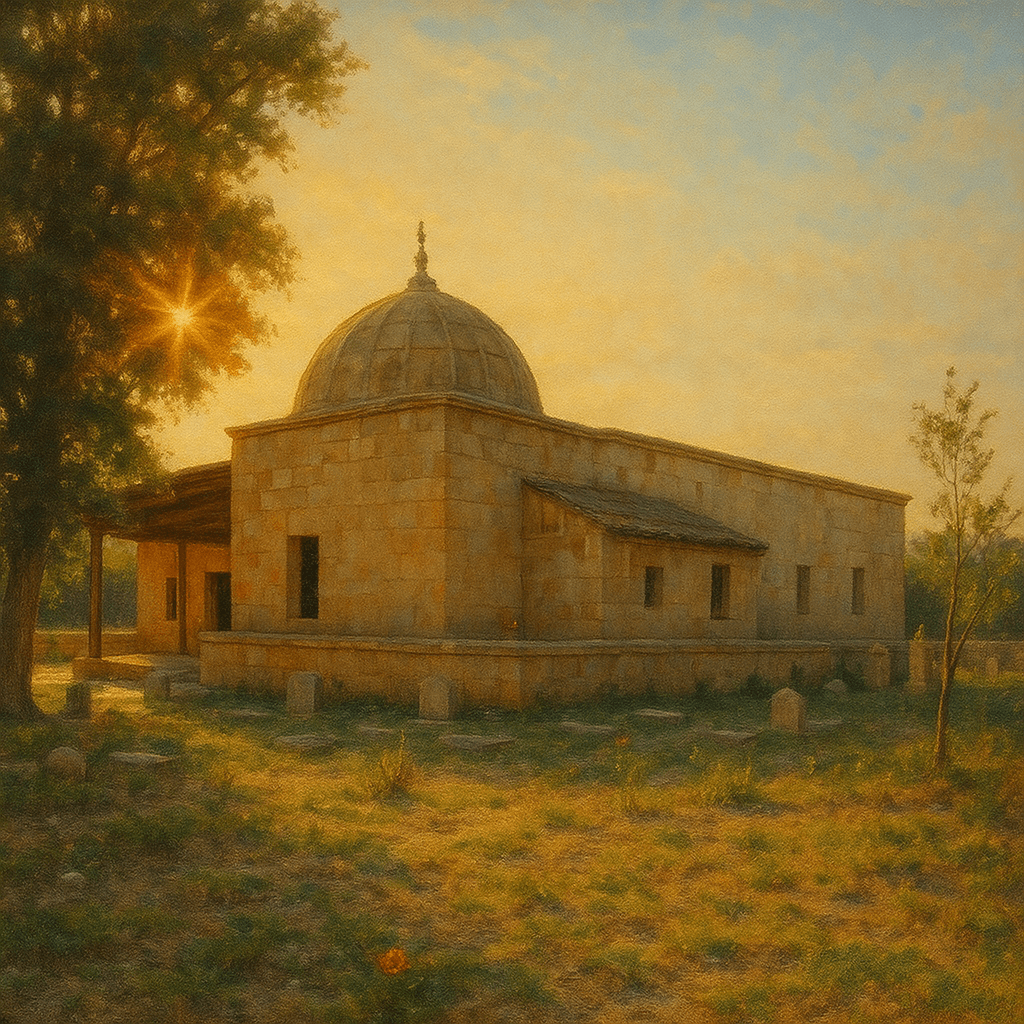




Zeyne Türbesi
Located in the village of Sütlüce (formerly Zeyne), between the districts of Gülnar and Mut in Mersin, the Zeyne Türbesi is one of the region’s most renowned historical structures. It is also known locally as the Şeyh Ali Semerkandi Türbesi. The tomb dates from the Beylikler Period and has gradually become an important site of pilgrimage in local popular belief.
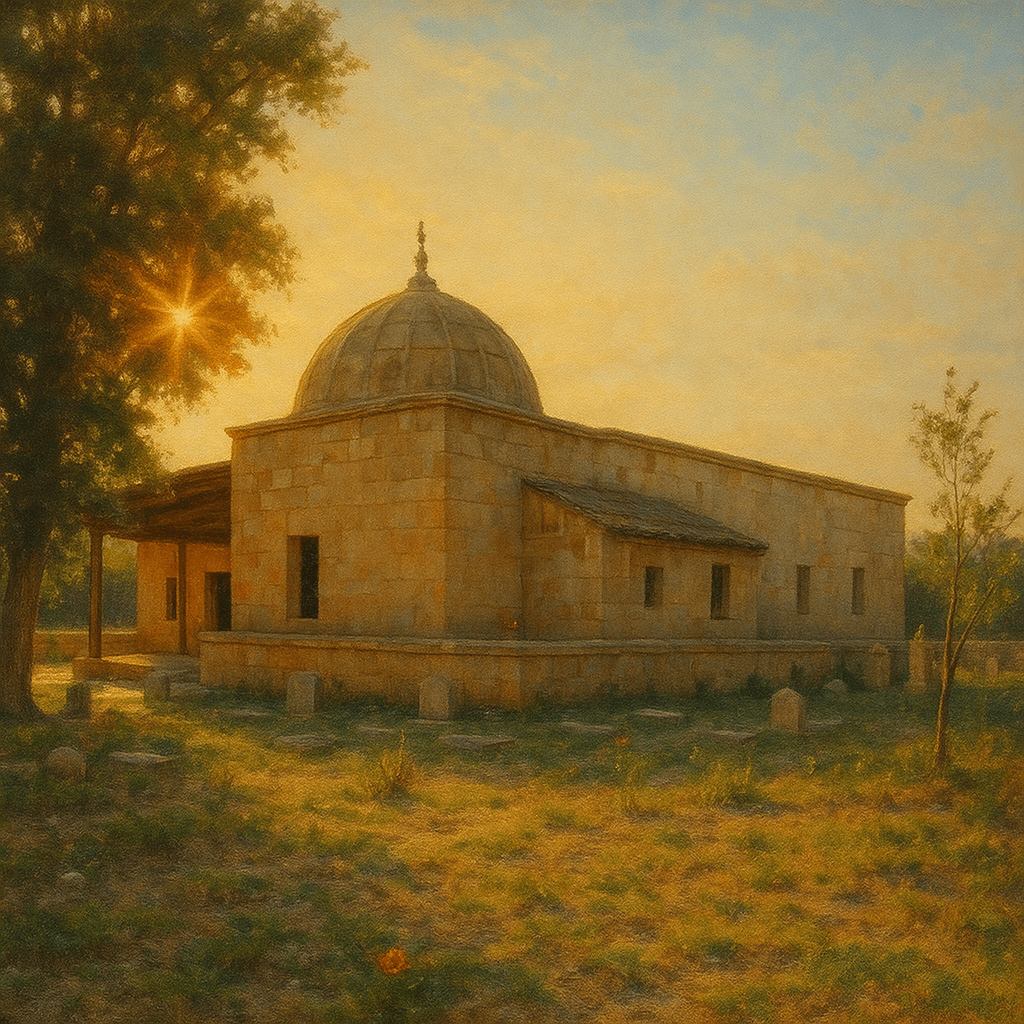
(Generated by Artificial Intelligence)
Features of the Tomb
The tomb is situated within a spacious garden. The main structure is supported by wooden beams and a wooden roof. Over time, additional burial chambers were added, giving the building its current form. Other graves are also found within the garden. Although it is believed that the tomb was originally part of a larger külliye, no written documentation exists to confirm this. Today, only the tomb remains standing.
In the past, it was common for people suffering from psychological ailments to visit the site, offer prayers, and perform sacrifices. This practice underscores the tomb’s significance not only as an architectural monument but also as a deeply cherished element of the community’s spiritual world.
The Story of Ali Semerkandi
The Zeyne Türbesi is named after Şeyh Ali Semerkandi, the figure associated with it. Local legends surround his life, the most widely known of which tells that:
In his youth, while tending his flock on an extremely hot summer day, Ali Semerkandi found his animals exhausted from thirst. A passing Turkmen man spoke harshly to him. Distressed by this, Ali Semerkandi prayed and struck his staff against the rocks. Suddenly, water gushed forth from the stone, and he used it to quench his animals’ thirst, saving them all.
Today, the spot where the water emerged is still used as a recreational area. This legend has strengthened the local community’s devotion and faith in the tomb.
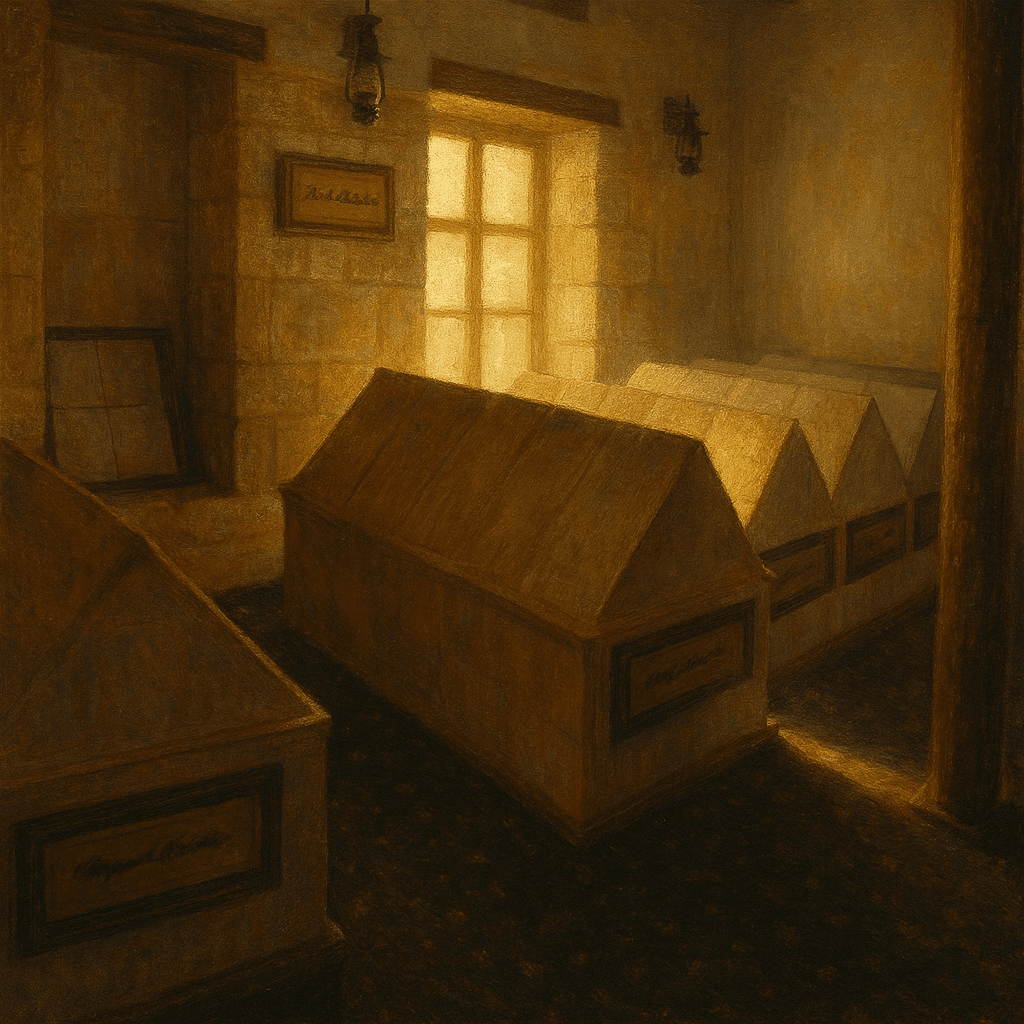
(Generated by Artificial Intelligence)
Location of the Tomb
The Zeyne Türbesi is located at the 26th kilometer of the road from Gülnar to Mut. Its position beside the road makes it easily accessible. Visitors to the region continue to come to see the tomb, offer prayers, and spend time in its garden.