




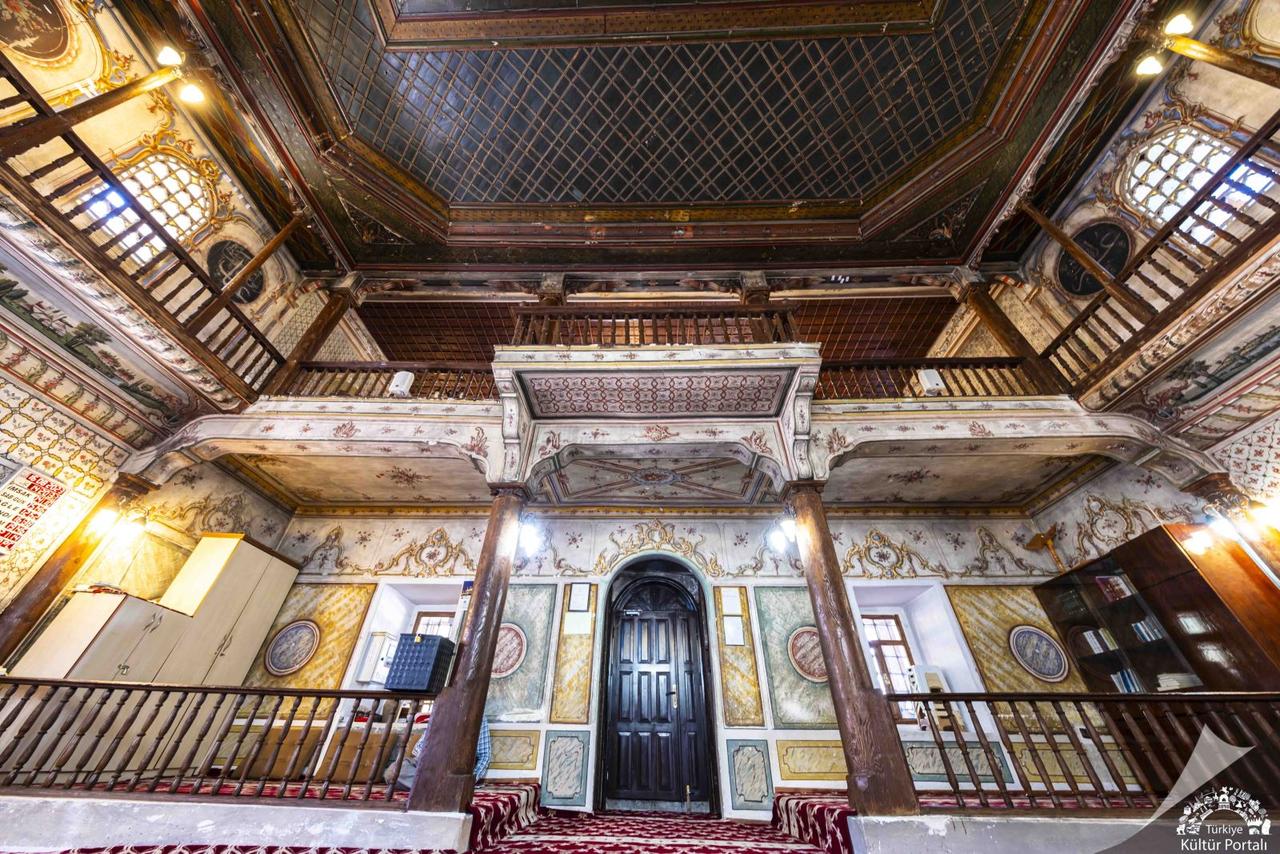
Başçavuşzade Mosque (Yozgat)
Basçavuşzade Camii is a historical structure located in the İstanbulluoğlu Neighborhood of Yozgat. This mosque serves not only as a place of worship but also stands as an important cultural heritage site that reflects the architectural and artistic characteristics of its era. The interior decorations of the mosque are among its most striking features.
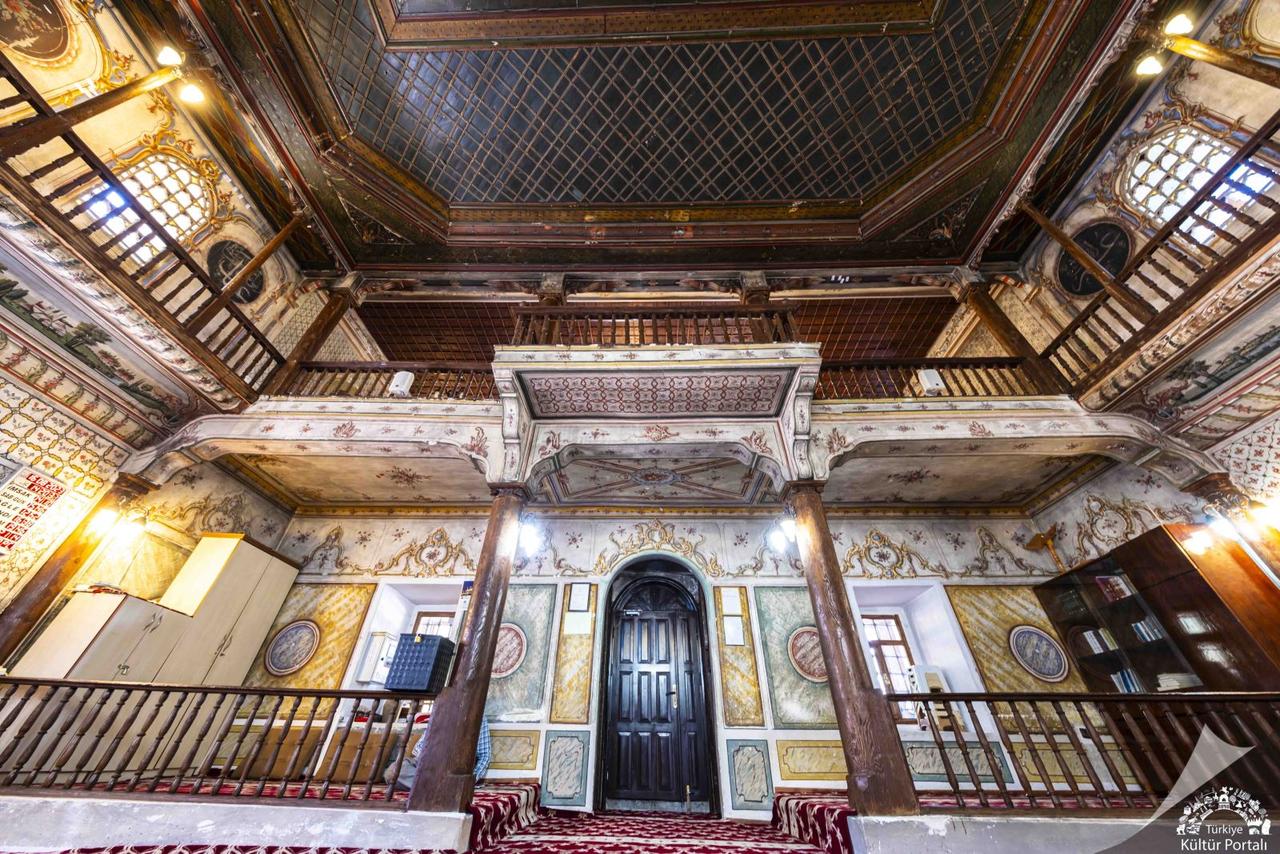
Basçavuşzade Camii (Culture Portal)
Time Travel
The mosque was constructed in 1215 AH, corresponding to 1800–1801 CE. The person responsible for its construction was Halil Ağa, the chief usher of Çapanoğlu Süleyman Bey, a prominent official of the period. Alongside the mosque, Halil Ağa commissioned additional structures including a school, a double bathhouse, and a fountain, transforming the site into a külliye (a complex of buildings centered around a main structure). This architectural ensemble contributed significantly to the social and religious life of the region during that time.
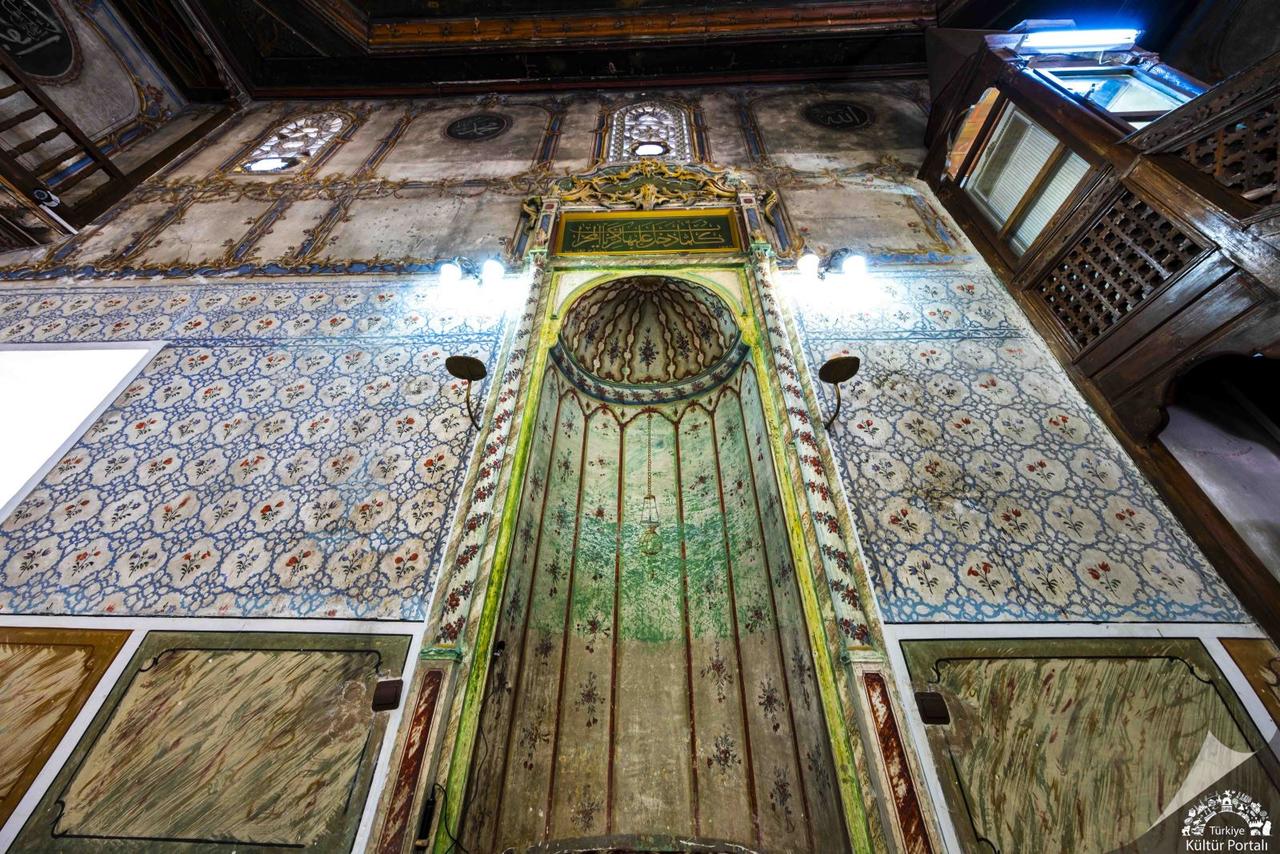
Basçavuşzade Camii (Culture Portal)
Architectural Features and Construction Materials
Basçavuşzade Camii has a rectangular floor plan. Its walls are constructed from a combination of cut stone, roughly hewn stone, and brick. The roof is a broken-pitch type, while the interior ceiling is a flat wooden-supported ceiling. The mosque’s minaret, built adjacent to the northwestern corner of the structure, features a circular shaft.
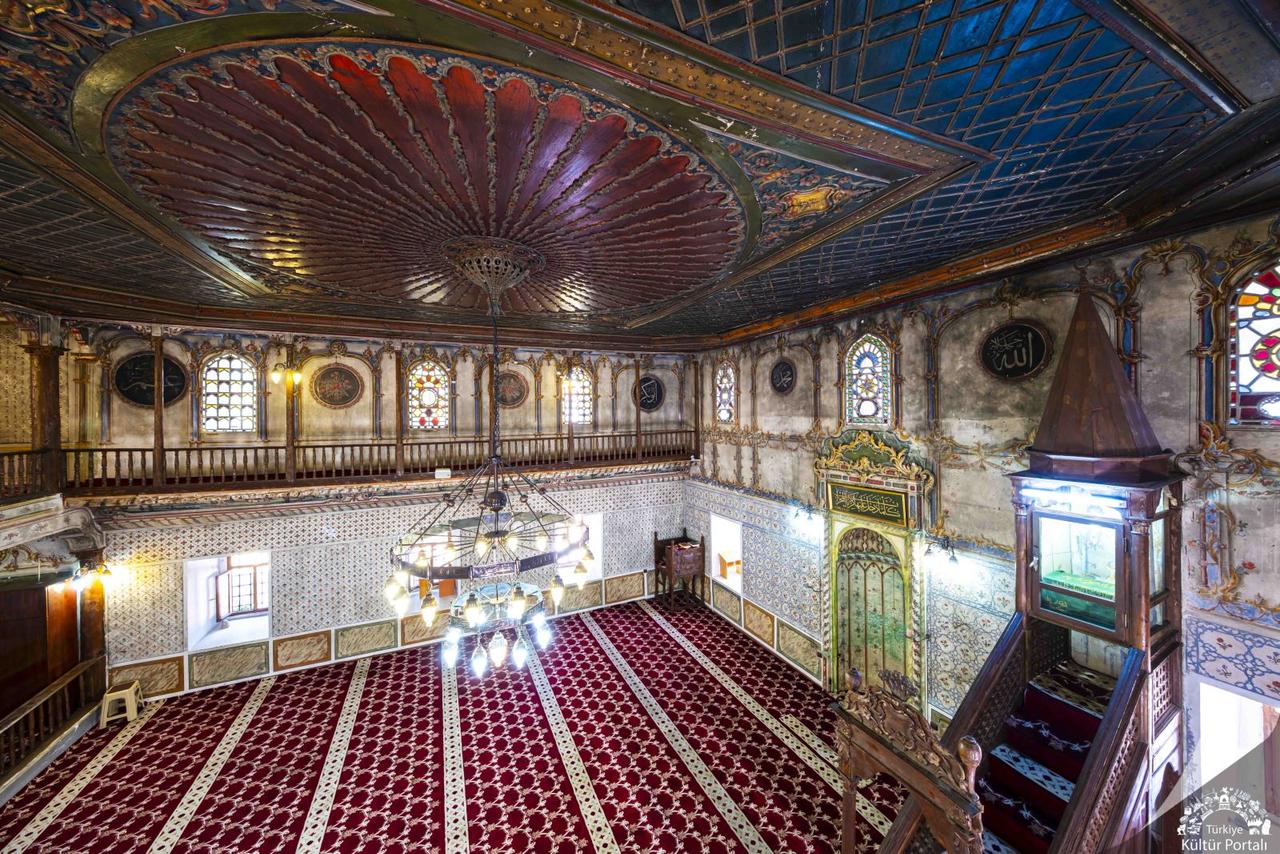
Basçavuşzade Camii (Culture Portal)
Interior Decorations and Artistic Vision
The interior space of the mosque is distinguished by elaborate kalemişi (a form of wall decoration) designs. These decorations predominantly feature botanical and geometric motifs. Additionally, the walls include architectural elements and paintings believed to depict the landscapes of Yozgat during that period. These paintings portray structures such as windmills, bridges, dwellings, and fountains. These artistic works reflect the artistic influences of the Westernization era during which the mosque was constructed.