

+2 More


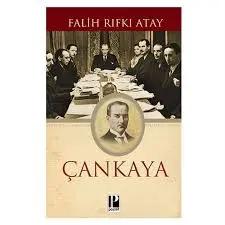
Çankaya (Book)
Çankaya, written by Falih Rıfkı Atay, is a work of political memoir with significant historical value. It recounts the life of Mustafa Kemal Atatürk—the founder of the Republic of Türkiye—and the Turkish War of Independence through the lens of a journalist, comrade, and direct observer. The book not only portrays Atatürk’s personality and leadership but also documents the foundational phases of the Republic, based on first-hand accounts. The title Çankaya refers to the presidential residence where Atatürk spent his final years, offering an insider’s view into Republican history.
The narrative spans from 1908, with particular focus on the years 1919–1938. From Atatürk’s involvement in the Italo-Turkish and Gallipoli Wars to the War of Independence, from the abolition of the sultanate to the sweeping reforms, the book details these developments through the author's direct experiences.
Key themes include:
The book presents not only historical events but also explores the key figures of the period, political rivalries, foreign relations, and Atatürk’s personal traits.
Falih Rıfkı Atay’s style balances journalistic rigor with a semi-literary historical approach. The language is clear, fluent, and informative. Descriptions are rich in detail, and historical events are conveyed not only chronologically but also with emotional and political depth.
Narrative features include:
The author doesn’t merely list events; he analyzes their underlying dynamics and broader implications.
Çankaya provides an insider’s perspective on Türkiye's modernization and the political stance of the ruling elite during the Republic’s formative years. Unlike traditional history books, it is grounded in “lived experience” and personal testimony, giving it a distinct value.
Atatürk’s charismatic leadership, his relations with the public, decision-making processes, vulnerabilities, achievements, and interactions with his inner circle are presented in an objective yet respectful tone.
The work also sheds indirect light on broader issues such as the objectivity of historiography in Türkiye, the cult of leadership, civil-military relations, and the disconnect between the state and the people.

Çankaya (Book)
Content and Themes
Style and Narrative Technique
Historical Figures (Characters)
Intellectual Context
This article was created with the support of artificial intelligence.


