


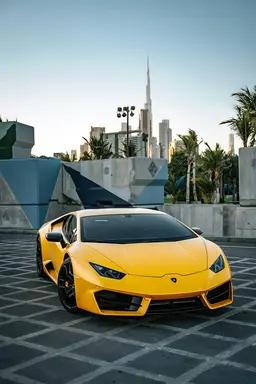
Lamborghini
Founder(s) | Ferruccio Lamborghini | ||||||||
|---|---|---|---|---|---|---|---|---|---|
Year Founded | 1963 | ||||||||
First Model | Lamborghini 350 GT (1964) | ||||||||
Production Center | Sant’Agata Bolognese, Italy | ||||||||
Highest Sales Year | 2023 - 10,112 vehicles sold | ||||||||
Most Popular Models | Lamborghini Urus (SUV), Lamborghini Huracán, Lamborghini Aventador | ||||||||
Engine Technology | Mainly V10 and V12 engines | ||||||||
Electrification | First hybrid model, Lamborghini Revuelto, introduced in 2023 | ||||||||
Motorsports | Actively participates in Lamborghini GT3 races and Super Trofeo series | ||||||||
Automobili Lamborghini S.p.A. was founded in 1963 by Ferruccio Lamborghini in Sant'Agata Bolognese, Italy. The company produces high-performance supercars. In 1998, it was acquired by the Volkswagen Group and became a subsidiary of Audi AG.
Vehicle Design and Chassis Structure
Most Lamborghini vehicles feature a carbon fiber monocoque chassis structure. This design increases the rigidity of the cars while reducing weight. For example:
Aerodynamic efficiency is enhanced through the use of active aerodynamic systems. The Aerodinamica Lamborghini Attiva (ALA) system automatically adjusts active air flaps to increase or decrease downforce at high speeds.

White Lamborghini Countach (Pexels)
Lamborghini is known for its naturally aspirated V10 and V12 engines. As of 2023, the available engine lineup includes:

Lamborghini Logo (Pexels)
Lamborghini models are equipped with performance-focused electronic control systems:

Lamborghini Gallardo (Pexels)
Lamborghini’s engineering approach is based on a combination of lightweight construction, naturally aspirated engines, aerodynamic optimization, and advanced electronic support systems. With the electrification process, internal combustion engines are supplemented by electric motors, resulting in increased performance figures.
"Beyond Design: Mastering the Air." Lamborghini Official Website. Publication Date: March 2024. Accessed May 8, 2025. https://www.lamborghini.com/en-en/news/beyond-design-mastering-the-air.
Brighi, Emanuela. "Dimensioning of a ‘High Volume’ Assembly Line for Lamborghini Automobiles." University of Bologna Repository. Accessed May 8, 2025. https://amslaurea.unibo.it/id/eprint/1750/1/tesi.pdf.
Grange Automotive. "The History of Lamborghini." Accessed May 8, 2025. https://www.grange.co.uk/lamborghini/heritage.
Oltermann, Philip. “Marcello Gandini, Pioneering Italian Car Designer, Dies Aged 85.” The Guardian. March 14, 2024. Accessed May 8, 2025. https://www.theguardian.com/world/2024/mar/14/marcello-gandini-pioneering-italian-car-designer-dies-aged-85.
Pexels. "Benghazi’de Turuncu Lamborghini Gallardo." Accessed May 8, 2025. https://www.pexels.com/tr-tr/fotograf/benghazi-de-turuncu-lamborghini-gallardo-29884358/.
Pexels. "Kaputtaki Lamborghini Logosunun Yakın Çekimi." Accessed May 8, 2025. https://www.pexels.com/tr-tr/fotograf/kaputtaki-lamborghini-logosunun-yakin-cekimi-29527914/.
Pexels. "Yeşil Çimlerde Simgesel Beyaz Lamborghini Countach." Accessed May 8, 2025. https://www.pexels.com/tr-tr/fotograf/yesil-cimlerde-simgesel-beyaz-lamborghini-countach-31124681/.
SW Composite Works. "SW Composite Works Report." Publication Date: March 2021. Accessed May 8, 2025. https://www.swcompositeworks.com/wp-content/uploads/2021/03/08a1d5_7154fa58ce5c4bfcbf0506723c8d0c4b.pdf.
Wired. "Lamborghini Lanzador: The All-Electric Most Powerful Car Ever." Publication Date: August 2023. Accessed May 8, 2025. https://www.wired.com/story/lamborghini-lanzador-all-electric-most-powerful-car-ever/.

Lamborghini
Founder(s) | Ferruccio Lamborghini | ||||||||
|---|---|---|---|---|---|---|---|---|---|
Year Founded | 1963 | ||||||||
First Model | Lamborghini 350 GT (1964) | ||||||||
Production Center | Sant’Agata Bolognese, Italy | ||||||||
Highest Sales Year | 2023 - 10,112 vehicles sold | ||||||||
Most Popular Models | Lamborghini Urus (SUV), Lamborghini Huracán, Lamborghini Aventador | ||||||||
Engine Technology | Mainly V10 and V12 engines | ||||||||
Electrification | First hybrid model, Lamborghini Revuelto, introduced in 2023 | ||||||||
Motorsports | Actively participates in Lamborghini GT3 races and Super Trofeo series | ||||||||
Engine and Drivetrain Systems
Engine Configurations
Transmission and Drivetrain
Suspension and Brake Systems
Electronic Systems and Control
Important Models
This article was created with the support of artificial intelligence.


